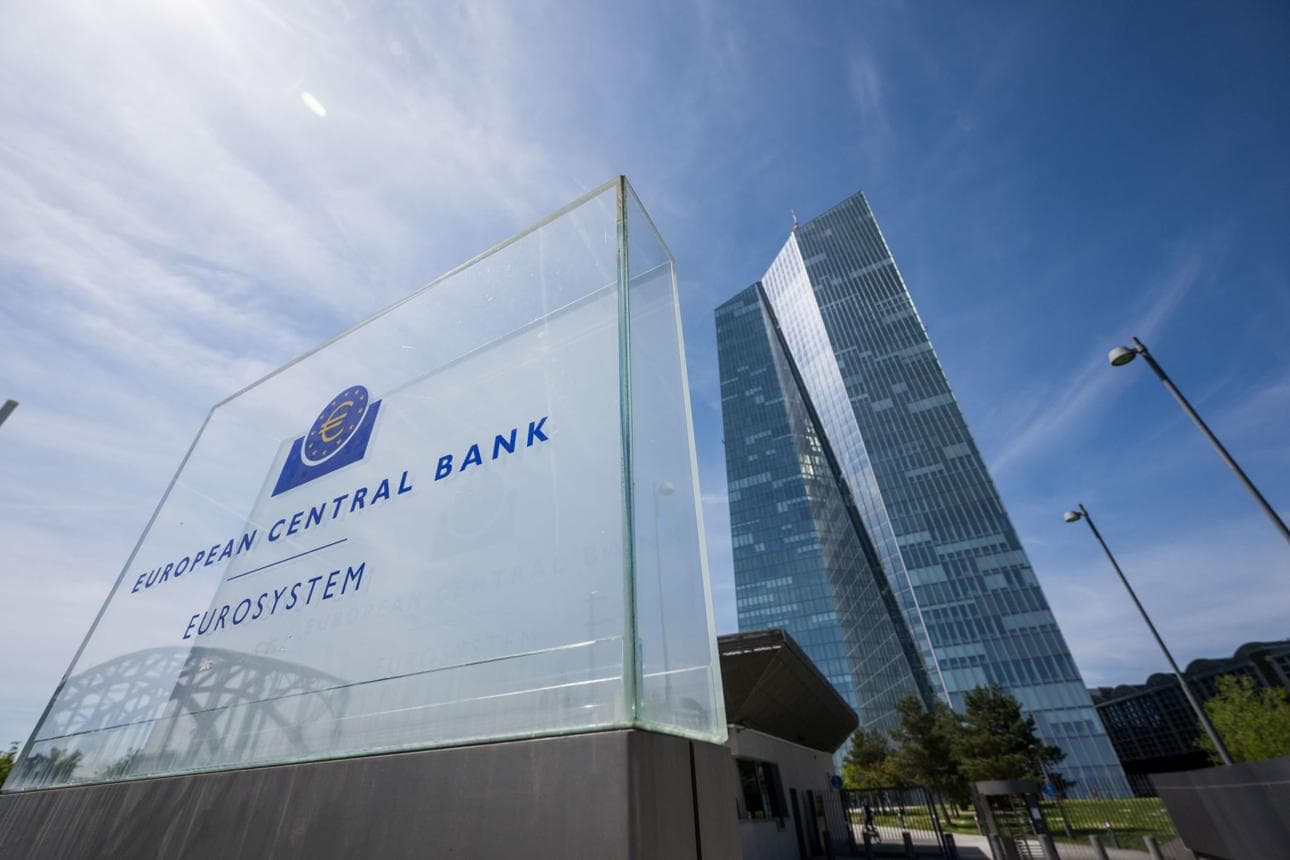
The European Central Bank has done something it has not done since 2023: it has raised interest rates. On 11 June the Governing Council lifted its three key rates by 25 basis points, taking the deposit facility to 2.25 percent, the main refinancing rate to 2.40 percent and the marginal lending rate to 2.65 percent, effective 17 June. After a long and carefully managed easing cycle, the direction of European monetary policy has turned, and the reason lies less in Frankfurt than in the Middle East.
Euro area inflation accelerated to 3.2 percent in May, comfortably above the 2 percent target and far enough from it to force the Bank’s hand. The proximate cause is energy. Conflict in the Middle East has pushed up oil and gas prices, and because Europe imports the bulk of its energy, that shock feeds quickly into headline inflation and, with a lag, into the prices of everything that must be transported, heated or manufactured. The ECB’s new staff projections capture the discomfort: headline inflation is now expected to average 3.0 percent in 2026 before easing to 2.3 percent in 2027 and returning to target only in 2028. Core inflation, stripping out energy and food, is forecast at 2.5 percent across both 2026 and 2027.
The awkwardness for the Bank is that this is the wrong kind of inflation to fight with rate hikes. An energy price shock is a supply-side event; it makes Europe poorer by raising the cost of imports, and tightening policy cannot conjure more gas. What a central bank can do is prevent a one-off jump in prices from becoming a sustained wage-price spiral, anchoring expectations so that firms and unions do not build permanently higher inflation into their decisions. That is the logic behind the move. The ECB has signalled that the decision was robust across a range of scenarios for how the conflict might evolve, which is central-bank language for hedging against the risk that energy prices climb further still.
Markets and member states will feel the consequences unevenly. Higher rates raise borrowing costs for the most indebted governments, and southern economies that spent the easing cycle refinancing cheaply now face a less forgiving environment just as growth softens. The same dynamic squeezes households with variable-rate mortgages, concentrated in particular national markets, and dampens the investment the Union says it needs for defence, energy and the digital transition. A tightening cycle driven by imported energy costs therefore risks slowing the domestic economy precisely when external conditions are already doing damage.
The deeper tension is one the ECB cannot resolve alone. Its mandate is price stability, and on a strict reading a 3.2 percent print leaves little choice but to act. Yet raising rates in response to an energy shock asks European workers and borrowers to bear the cost of a geopolitical event over which they have no control, and invites the criticism that monetary policy is treating a symptom while the disease, Europe’s structural energy dependence, goes unaddressed. The episode is a reminder that the security of energy supply and the stability of prices are now the same problem viewed from two institutions.
For now the Bank has chosen credibility over comfort. By moving early and framing the hike as insurance against second-round effects, it is betting that a modest tightening today prevents a far more painful one later. The risk is the mirror image: if the conflict de-escalates and energy prices retreat, the ECB may find it has tightened into a slowdown, forcing an embarrassing reversal. Either way, the long period in which European monetary policy could glide gently downward has ended. The next decisions will be made in the shadow of events well beyond the Governing Council’s reach, and that, more than the 25 basis points itself, is the signal worth reading.