August 9, 2026
LATEST
New EU Gas Market Rules Take Effect With Consumer SafeguardsDeforestation Regulation Holds Its December Deadline Despite CutsDigital Omnibus Delays Europe’s High-Risk AI Deadline to 2027Europe’s Schools Confront a Widening Basic Skills GapRule of Law Report Finds Progress but Trust Still LagsIRIS2 Gains 66 Satellites as Brussels Signs the Rollout DealNature Restoration Plans Come Due as Member States Race a DeadlineECB Rates Hold at 2.25 Percent as Frankfurt Waits on the DataEU Budget Talks Turn to Cohesion as Ireland Takes OverWildfire Response Stretches Europe’s Emergency Fleet ThinCan Europe’s Quantum Plan Match Its Big Ambitions?Armenia Edges West as Moscow’s Grip Slips AwayEurope Inherits the World’s Aid Bill It Cannot Fully PayAir Passenger Rights Get Their First Overhaul in Two DecadesErasmus Opens a 5 Billion Euro Round for Skills and MobilityCeuta Crisis Pushes the EU Toward Faster Migrant ReturnsBulky Parcels Face a Packaging Crackdown From August 12Can Europe Build Its Drone Wall Before 2030 Arrives?Indonesia’s Trade Deal With Europe Nears Its Final SignatureEurope Leans on Beijing to Keep Climate Talks Alive Before AntalyaNew EU Gas Market Rules Take Effect With Consumer SafeguardsDeforestation Regulation Holds Its December Deadline Despite CutsDigital Omnibus Delays Europe’s High-Risk AI Deadline to 2027Europe’s Schools Confront a Widening Basic Skills GapRule of Law Report Finds Progress but Trust Still LagsIRIS2 Gains 66 Satellites as Brussels Signs the Rollout DealNature Restoration Plans Come Due as Member States Race a DeadlineECB Rates Hold at 2.25 Percent as Frankfurt Waits on the DataEU Budget Talks Turn to Cohesion as Ireland Takes OverWildfire Response Stretches Europe’s Emergency Fleet ThinCan Europe’s Quantum Plan Match Its Big Ambitions?Armenia Edges West as Moscow’s Grip Slips AwayEurope Inherits the World’s Aid Bill It Cannot Fully PayAir Passenger Rights Get Their First Overhaul in Two DecadesErasmus Opens a 5 Billion Euro Round for Skills and MobilityCeuta Crisis Pushes the EU Toward Faster Migrant ReturnsBulky Parcels Face a Packaging Crackdown From August 12Can Europe Build Its Drone Wall Before 2030 Arrives?Indonesia’s Trade Deal With Europe Nears Its Final SignatureEurope Leans on Beijing to Keep Climate Talks Alive Before Antalya
August 9, 2026
LATEST
New EU Gas Market Rules Take Effect With Consumer SafeguardsDeforestation Regulation Holds Its December Deadline Despite CutsDigital Omnibus Delays Europe’s High-Risk AI Deadline to 2027Europe’s Schools Confront a Widening Basic Skills GapRule of Law Report Finds Progress but Trust Still LagsIRIS2 Gains 66 Satellites as Brussels Signs the Rollout DealNature Restoration Plans Come Due as Member States Race a DeadlineECB Rates Hold at 2.25 Percent as Frankfurt Waits on the DataEU Budget Talks Turn to Cohesion as Ireland Takes OverWildfire Response Stretches Europe’s Emergency Fleet ThinCan Europe’s Quantum Plan Match Its Big Ambitions?Armenia Edges West as Moscow’s Grip Slips AwayEurope Inherits the World’s Aid Bill It Cannot Fully PayAir Passenger Rights Get Their First Overhaul in Two DecadesErasmus Opens a 5 Billion Euro Round for Skills and MobilityCeuta Crisis Pushes the EU Toward Faster Migrant ReturnsBulky Parcels Face a Packaging Crackdown From August 12Can Europe Build Its Drone Wall Before 2030 Arrives?Indonesia’s Trade Deal With Europe Nears Its Final SignatureEurope Leans on Beijing to Keep Climate Talks Alive Before AntalyaNew EU Gas Market Rules Take Effect With Consumer SafeguardsDeforestation Regulation Holds Its December Deadline Despite CutsDigital Omnibus Delays Europe’s High-Risk AI Deadline to 2027Europe’s Schools Confront a Widening Basic Skills GapRule of Law Report Finds Progress but Trust Still LagsIRIS2 Gains 66 Satellites as Brussels Signs the Rollout DealNature Restoration Plans Come Due as Member States Race a DeadlineECB Rates Hold at 2.25 Percent as Frankfurt Waits on the DataEU Budget Talks Turn to Cohesion as Ireland Takes OverWildfire Response Stretches Europe’s Emergency Fleet ThinCan Europe’s Quantum Plan Match Its Big Ambitions?Armenia Edges West as Moscow’s Grip Slips AwayEurope Inherits the World’s Aid Bill It Cannot Fully PayAir Passenger Rights Get Their First Overhaul in Two DecadesErasmus Opens a 5 Billion Euro Round for Skills and MobilityCeuta Crisis Pushes the EU Toward Faster Migrant ReturnsBulky Parcels Face a Packaging Crackdown From August 12Can Europe Build Its Drone Wall Before 2030 Arrives?Indonesia’s Trade Deal With Europe Nears Its Final SignatureEurope Leans on Beijing to Keep Climate Talks Alive Before Antalya

Regions Win Fresh Freedom To Spend EU Money On Their Defence

Brussels: The vast pots of money the European Union sends to its poorer regions were built for a calmer world, one of roads, retraining and rural broadband. A sweeping mid-term overhaul has now bent those funds toward the anxieties of a harder decade, letting member states and regions pour cohesion money into defence, border security, housing and the energy transition in ways the original rulebook never imagined.

The reform was set in motion when the Commission proposed amending the regulations governing the main regional funds, and was sealed when the Council adopted the new laws last September after striking a deal with Parliament over the summer. Its mechanism is the flexibility reserve, a portion of cohesion allocations for 2026 and 2027 that governments can now redirect toward a list of newly blessed priorities. The early uptake has been striking. Just under 35 billion euros has already been reprogrammed toward emerging challenges, a sign of how eagerly capitals seized the chance to repurpose money that was proving slow to spend under the old constraints.

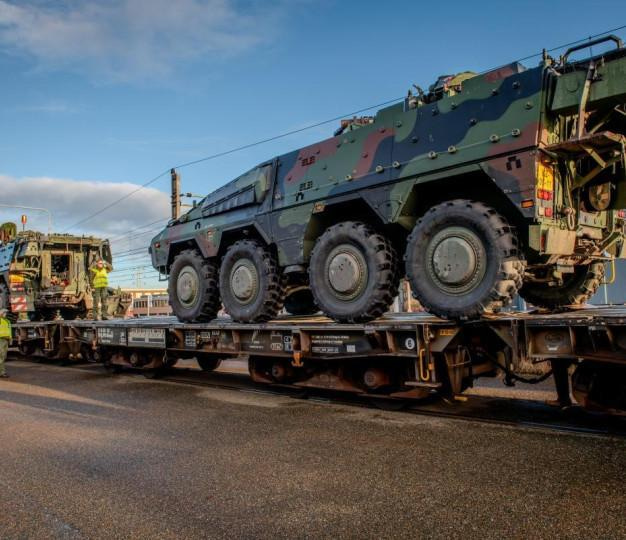
The new priority list reads like a catalogue of the Union’s current preoccupations. Defence and security feature prominently, framed around competitiveness and the urgent rearmament that the war in Ukraine has forced onto reluctant agendas. Eastern border regions, long on the front line of migration and now of military anxiety, get special attention. So do affordable and social housing, secure access to water and sustainable water management, decarbonisation and the resilience of cities. The bloc’s regional-policy chief has underlined the breadth of the new flexibility, noting that the funds can even be marshalled to help regions weather energy-price shocks.

Why this matters cuts to the identity of cohesion policy itself, the largest single block of EU spending after farm support and the bloc’s chief instrument for narrowing the gap between rich and poor regions. For decades its purpose was convergence, lifting lagging areas toward the prosperous core through long-term investment. Redirecting it toward defence and crisis response answers immediate political pressures, but it also raises a pointed question. Money spent on security or energy bills is money not spent on the patient, structural investment that convergence requires, and some fear the policy is being quietly hollowed of its original mission.

The tension is sharpened by the budget fights looming over the Union’s next long-term financial framework, in which cohesion funding faces pressure from every direction. Allowing existing money to be stretched across ever more purposes can look like flexibility or like papering over a shortfall, depending on where one sits. Poorer regions worry that priorities set in wealthier capitals will pull resources away from the development they were promised.

What comes next is implementation, region by region, as managing authorities decide how much of their flexibility reserve to redirect and toward what. The 35 billion euros already moved is only the opening figure, and the choices made over the next two years will reveal whether the mid-term review has modernised cohesion policy or begun to dissolve it into a general-purpose fund for whatever crisis shouts loudest.