August 9, 2026
LATEST
New EU Gas Market Rules Take Effect With Consumer SafeguardsDeforestation Regulation Holds Its December Deadline Despite CutsDigital Omnibus Delays Europe’s High-Risk AI Deadline to 2027Europe’s Schools Confront a Widening Basic Skills GapRule of Law Report Finds Progress but Trust Still LagsIRIS2 Gains 66 Satellites as Brussels Signs the Rollout DealNature Restoration Plans Come Due as Member States Race a DeadlineECB Rates Hold at 2.25 Percent as Frankfurt Waits on the DataEU Budget Talks Turn to Cohesion as Ireland Takes OverWildfire Response Stretches Europe’s Emergency Fleet ThinCan Europe’s Quantum Plan Match Its Big Ambitions?Armenia Edges West as Moscow’s Grip Slips AwayEurope Inherits the World’s Aid Bill It Cannot Fully PayAir Passenger Rights Get Their First Overhaul in Two DecadesErasmus Opens a 5 Billion Euro Round for Skills and MobilityCeuta Crisis Pushes the EU Toward Faster Migrant ReturnsBulky Parcels Face a Packaging Crackdown From August 12Can Europe Build Its Drone Wall Before 2030 Arrives?Indonesia’s Trade Deal With Europe Nears Its Final SignatureEurope Leans on Beijing to Keep Climate Talks Alive Before AntalyaNew EU Gas Market Rules Take Effect With Consumer SafeguardsDeforestation Regulation Holds Its December Deadline Despite CutsDigital Omnibus Delays Europe’s High-Risk AI Deadline to 2027Europe’s Schools Confront a Widening Basic Skills GapRule of Law Report Finds Progress but Trust Still LagsIRIS2 Gains 66 Satellites as Brussels Signs the Rollout DealNature Restoration Plans Come Due as Member States Race a DeadlineECB Rates Hold at 2.25 Percent as Frankfurt Waits on the DataEU Budget Talks Turn to Cohesion as Ireland Takes OverWildfire Response Stretches Europe’s Emergency Fleet ThinCan Europe’s Quantum Plan Match Its Big Ambitions?Armenia Edges West as Moscow’s Grip Slips AwayEurope Inherits the World’s Aid Bill It Cannot Fully PayAir Passenger Rights Get Their First Overhaul in Two DecadesErasmus Opens a 5 Billion Euro Round for Skills and MobilityCeuta Crisis Pushes the EU Toward Faster Migrant ReturnsBulky Parcels Face a Packaging Crackdown From August 12Can Europe Build Its Drone Wall Before 2030 Arrives?Indonesia’s Trade Deal With Europe Nears Its Final SignatureEurope Leans on Beijing to Keep Climate Talks Alive Before Antalya
August 9, 2026
LATEST
New EU Gas Market Rules Take Effect With Consumer SafeguardsDeforestation Regulation Holds Its December Deadline Despite CutsDigital Omnibus Delays Europe’s High-Risk AI Deadline to 2027Europe’s Schools Confront a Widening Basic Skills GapRule of Law Report Finds Progress but Trust Still LagsIRIS2 Gains 66 Satellites as Brussels Signs the Rollout DealNature Restoration Plans Come Due as Member States Race a DeadlineECB Rates Hold at 2.25 Percent as Frankfurt Waits on the DataEU Budget Talks Turn to Cohesion as Ireland Takes OverWildfire Response Stretches Europe’s Emergency Fleet ThinCan Europe’s Quantum Plan Match Its Big Ambitions?Armenia Edges West as Moscow’s Grip Slips AwayEurope Inherits the World’s Aid Bill It Cannot Fully PayAir Passenger Rights Get Their First Overhaul in Two DecadesErasmus Opens a 5 Billion Euro Round for Skills and MobilityCeuta Crisis Pushes the EU Toward Faster Migrant ReturnsBulky Parcels Face a Packaging Crackdown From August 12Can Europe Build Its Drone Wall Before 2030 Arrives?Indonesia’s Trade Deal With Europe Nears Its Final SignatureEurope Leans on Beijing to Keep Climate Talks Alive Before AntalyaNew EU Gas Market Rules Take Effect With Consumer SafeguardsDeforestation Regulation Holds Its December Deadline Despite CutsDigital Omnibus Delays Europe’s High-Risk AI Deadline to 2027Europe’s Schools Confront a Widening Basic Skills GapRule of Law Report Finds Progress but Trust Still LagsIRIS2 Gains 66 Satellites as Brussels Signs the Rollout DealNature Restoration Plans Come Due as Member States Race a DeadlineECB Rates Hold at 2.25 Percent as Frankfurt Waits on the DataEU Budget Talks Turn to Cohesion as Ireland Takes OverWildfire Response Stretches Europe’s Emergency Fleet ThinCan Europe’s Quantum Plan Match Its Big Ambitions?Armenia Edges West as Moscow’s Grip Slips AwayEurope Inherits the World’s Aid Bill It Cannot Fully PayAir Passenger Rights Get Their First Overhaul in Two DecadesErasmus Opens a 5 Billion Euro Round for Skills and MobilityCeuta Crisis Pushes the EU Toward Faster Migrant ReturnsBulky Parcels Face a Packaging Crackdown From August 12Can Europe Build Its Drone Wall Before 2030 Arrives?Indonesia’s Trade Deal With Europe Nears Its Final SignatureEurope Leans on Beijing to Keep Climate Talks Alive Before Antalya

Can Cheaper Paperwork Make Europe Rearm Any Faster

Brussels: For a continent that has spent two years declaring a defence emergency, Europe has been remarkably slow at the unglamorous work of actually buying weapons together. A provisional agreement struck on 10 June 2026 between Council negotiators and the European Parliament is meant to attack that problem from an unexpected angle, not money but bureaucracy. The deal simplifies the rules governing security and defence procurement, speeds permitting for defence plants, eases the transfer of military products across internal borders and pushes member states toward buying as a bloc rather than twenty-seven times over.

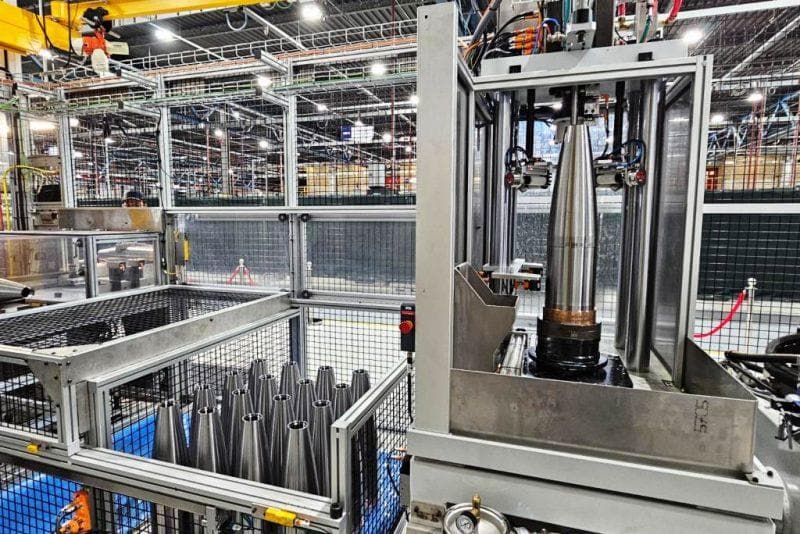
The premise is that Europe’s weakness is no longer primarily fiscal. The ReArm Europe plan has already promised to mobilise up to 800 billion euro, and the SAFE instrument is lending as much as 150 billion to capitals that ask for it, while seventeen states have activated the fiscal escape clause that lets them spend more on defence without breaching budget rules. The bottleneck has shifted downstream. Money can be committed in a single Council meeting; turning it into ammunition requires permits, certifications and cross-border shipments that can take years. When a howitzer shell ordered in one country must clear separate national licences before it crosses a border to be assembled in another, the friction is measured in months that a wartime supply chain does not have.

This is why the latest agreement, though modest in headline terms, may matter more than its size suggests. It accompanies the European Defence Industry Programme, formally adopted in December 2025 with a 1.5 billion euro budget in grants, of which 300 million is earmarked for Ukraine’s own defence industry. EDIP’s purpose is to reward joint procurement and to knit national industrial bases into something closer to a single market for arms. The simplification deal removes the administrative gravel that has kept that machinery from turning. Faster permitting and smoother intra-EU transfers are the plumbing without which the larger financing schemes simply pool.

Yet the structural obstacle is political, not procedural, and no omnibus can legislate it away. Joint procurement asks governments to surrender a cherished instrument of industrial patronage. Defence contracts sustain national champions, regional employment and parliamentary goodwill, and ministers who can direct that spending to domestic firms are reluctant to pool it into a common pot where the work might flow elsewhere. The European preference rules attached to these programmes try to ensure the money stays inside the bloc, but they cannot dictate which national flag ends up on the factory. That is why aggregated demand, the single most effective way to lower unit costs and signal long-term orders to industry, has consistently underperformed its promise.

There is also the question of whether speed and scrutiny can coexist. Accelerated permitting and lighter procurement rules are precisely the conditions under which oversight erodes and costs inflate. A defence build-up financed partly by common borrowing, run through expedited processes, will test whether Europe can move quickly without recreating the waste that has historically dogged large public procurement. The institutions racing to spend will face auditors asking, in a few years, whether the rush was worth what it bought.

The realistic verdict is that the June deal is necessary but not sufficient. It clears genuine obstacles and signals that Brussels understands its problem is execution rather than ambition. But the harder conversion, from twenty-seven defence policies into one industrial strategy, depends on capitals choosing collective capability over national advantage. Cheaper paperwork helps the willing move faster. It cannot make the reluctant want to share.