Summer arrives this week, and with it the annual test of whether the continent’s shared firefighting reserve can keep pace with a threat that no longer respects the old calendar. The rescEU fleet, the EU-funded pool of aircraft and equipment held in common for disasters that overwhelm any single country, enters the 2026 wildfire season stronger than last year but still leaning heavily on borrowed capacity and good luck.
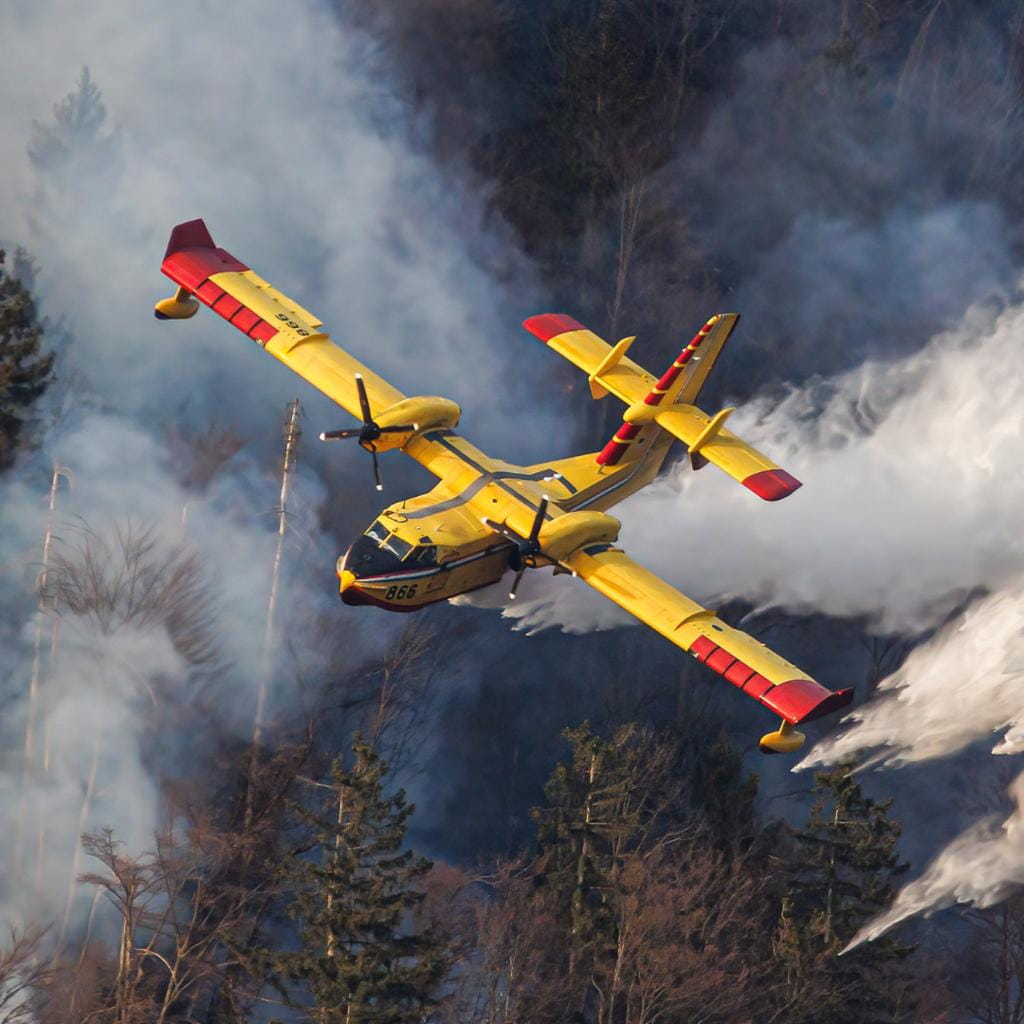
The headline addition is modest: a single firefighting helicopter, delivered to Romania at the start of the year, will be operational for the season ahead. It is the first tangible piece of a far larger plan to build a permanent fleet rather than renting one each summer. Twelve firefighting planes and five helicopters are on order, with the aircraft destined for Portugal, Spain, France, Italy, Croatia and Greece, and helicopters for Slovakia, Czechia and Romania. The catch is the timeline. The first planes are not expected before early 2028, which means the next two fire seasons will be fought largely with the patchwork of nationally owned aircraft that member states agree to put at the bloc’s disposal.
That gap between ambition and delivery is the uncomfortable centre of the story. The Commission has been candid that the wildfire threat is escalating faster than the response can be built, and in March it launched a modernised strategy to reflect that. Fires now routinely jump from one member state to several at once, exhausting the spare capacity that the whole pooling model depends on. When everyone needs planes in the same fortnight, there are no planes to lend. A permanent reserve owned by the Union rather than borrowed from its members is the only durable fix, and it is precisely the thing that takes years and heavy budgets to stand up.
The plan to base a European firefighting hub in Cyprus points in the right direction. Conceived as a regional centre for training, exercises and seasonal readiness, with the ability to launch operational responses across the eastern Mediterranean, it treats wildfire as a permanent feature of the European year rather than a recurring emergency to be improvised against. That shift in mindset, from reactive deployment to standing readiness, matters as much as any aircraft, because it changes how member states plan and budget between seasons rather than scrambling once the smoke appears.
None of it helps a region that burns in July 2026. For this season the bloc will rely on the Civil Protection Mechanism in its established form: requests for assistance routed through Brussels, capacity matched against need, and the Commission coordinating who sends what where. It has worked before, sometimes impressively, but it works best when fires are staggered and worst when they are simultaneous, and the trend is firmly toward simultaneous. The single Romanian helicopter is a down payment on a system that does not yet exist.
There is a quieter lesson in the arithmetic. A reserve assembled in a hurry, season by season, will always trail the hazard it is meant to meet, because the hazard is growing on a curve and the procurement runs in straight lines. The permanent fleet is the right answer arriving late. Until it lands, Europe’s wildfire defence rests on coordination, mutual aid and the hope that the worst fires do not all come at once. That hope has held so far. The point of building the fleet is to stop depending on it.