August 9, 2026
LATEST
New EU Gas Market Rules Take Effect With Consumer SafeguardsDeforestation Regulation Holds Its December Deadline Despite CutsDigital Omnibus Delays Europe’s High-Risk AI Deadline to 2027Europe’s Schools Confront a Widening Basic Skills GapRule of Law Report Finds Progress but Trust Still LagsIRIS2 Gains 66 Satellites as Brussels Signs the Rollout DealNature Restoration Plans Come Due as Member States Race a DeadlineECB Rates Hold at 2.25 Percent as Frankfurt Waits on the DataEU Budget Talks Turn to Cohesion as Ireland Takes OverWildfire Response Stretches Europe’s Emergency Fleet ThinCan Europe’s Quantum Plan Match Its Big Ambitions?Armenia Edges West as Moscow’s Grip Slips AwayEurope Inherits the World’s Aid Bill It Cannot Fully PayAir Passenger Rights Get Their First Overhaul in Two DecadesErasmus Opens a 5 Billion Euro Round for Skills and MobilityCeuta Crisis Pushes the EU Toward Faster Migrant ReturnsBulky Parcels Face a Packaging Crackdown From August 12Can Europe Build Its Drone Wall Before 2030 Arrives?Indonesia’s Trade Deal With Europe Nears Its Final SignatureEurope Leans on Beijing to Keep Climate Talks Alive Before AntalyaNew EU Gas Market Rules Take Effect With Consumer SafeguardsDeforestation Regulation Holds Its December Deadline Despite CutsDigital Omnibus Delays Europe’s High-Risk AI Deadline to 2027Europe’s Schools Confront a Widening Basic Skills GapRule of Law Report Finds Progress but Trust Still LagsIRIS2 Gains 66 Satellites as Brussels Signs the Rollout DealNature Restoration Plans Come Due as Member States Race a DeadlineECB Rates Hold at 2.25 Percent as Frankfurt Waits on the DataEU Budget Talks Turn to Cohesion as Ireland Takes OverWildfire Response Stretches Europe’s Emergency Fleet ThinCan Europe’s Quantum Plan Match Its Big Ambitions?Armenia Edges West as Moscow’s Grip Slips AwayEurope Inherits the World’s Aid Bill It Cannot Fully PayAir Passenger Rights Get Their First Overhaul in Two DecadesErasmus Opens a 5 Billion Euro Round for Skills and MobilityCeuta Crisis Pushes the EU Toward Faster Migrant ReturnsBulky Parcels Face a Packaging Crackdown From August 12Can Europe Build Its Drone Wall Before 2030 Arrives?Indonesia’s Trade Deal With Europe Nears Its Final SignatureEurope Leans on Beijing to Keep Climate Talks Alive Before Antalya
August 9, 2026
LATEST
New EU Gas Market Rules Take Effect With Consumer SafeguardsDeforestation Regulation Holds Its December Deadline Despite CutsDigital Omnibus Delays Europe’s High-Risk AI Deadline to 2027Europe’s Schools Confront a Widening Basic Skills GapRule of Law Report Finds Progress but Trust Still LagsIRIS2 Gains 66 Satellites as Brussels Signs the Rollout DealNature Restoration Plans Come Due as Member States Race a DeadlineECB Rates Hold at 2.25 Percent as Frankfurt Waits on the DataEU Budget Talks Turn to Cohesion as Ireland Takes OverWildfire Response Stretches Europe’s Emergency Fleet ThinCan Europe’s Quantum Plan Match Its Big Ambitions?Armenia Edges West as Moscow’s Grip Slips AwayEurope Inherits the World’s Aid Bill It Cannot Fully PayAir Passenger Rights Get Their First Overhaul in Two DecadesErasmus Opens a 5 Billion Euro Round for Skills and MobilityCeuta Crisis Pushes the EU Toward Faster Migrant ReturnsBulky Parcels Face a Packaging Crackdown From August 12Can Europe Build Its Drone Wall Before 2030 Arrives?Indonesia’s Trade Deal With Europe Nears Its Final SignatureEurope Leans on Beijing to Keep Climate Talks Alive Before AntalyaNew EU Gas Market Rules Take Effect With Consumer SafeguardsDeforestation Regulation Holds Its December Deadline Despite CutsDigital Omnibus Delays Europe’s High-Risk AI Deadline to 2027Europe’s Schools Confront a Widening Basic Skills GapRule of Law Report Finds Progress but Trust Still LagsIRIS2 Gains 66 Satellites as Brussels Signs the Rollout DealNature Restoration Plans Come Due as Member States Race a DeadlineECB Rates Hold at 2.25 Percent as Frankfurt Waits on the DataEU Budget Talks Turn to Cohesion as Ireland Takes OverWildfire Response Stretches Europe’s Emergency Fleet ThinCan Europe’s Quantum Plan Match Its Big Ambitions?Armenia Edges West as Moscow’s Grip Slips AwayEurope Inherits the World’s Aid Bill It Cannot Fully PayAir Passenger Rights Get Their First Overhaul in Two DecadesErasmus Opens a 5 Billion Euro Round for Skills and MobilityCeuta Crisis Pushes the EU Toward Faster Migrant ReturnsBulky Parcels Face a Packaging Crackdown From August 12Can Europe Build Its Drone Wall Before 2030 Arrives?Indonesia’s Trade Deal With Europe Nears Its Final SignatureEurope Leans on Beijing to Keep Climate Talks Alive Before Antalya

Council Greenlights Negotiating Mandate on Reworked Erasmus Plus Programme for 2028-2034 Window

Brussels: The Education, Youth, Culture and Sport Council agreed its partial general approach on the Erasmus+ regulation for 2028-2034 at its meeting on 11 May, opening the way for trilogue negotiations with the European Parliament on the Union’s most recognisable funding programme. The decision is procedurally modest — a mandate to start negotiations, not a final agreement — but politically meaningful, given that the final budget envelope will hinge on the parallel negotiation of the next multiannual financial framework.

The Commission’s underlying proposal, published on 16 July 2025 as part of the broader MFF package, allocates €40.8 billion in current prices, or €36.2 billion in 2025 prices. That headline figure reflects the proposed merger of Erasmus+ with the European Solidarity Corps, which has hitherto operated as a separate programme covering youth volunteering and the European Voluntary Humanitarian Aid Corps. Treated as a combined allocation, the increase relative to the current 2021-2027 programmes is roughly thirty percent. Treated against the proposed near-doubling of the overall EU budget, the relative growth is more modest, a fact noted with some discomfort by the higher education sector.

The architecture has been simplified into two pillars: learning opportunities for all, and capacity-building support. The European Voluntary Humanitarian Aid Corps is preserved within the structure, and the Council position emphasises that volunteering should remain clearly distinct from paid work — a clarification driven by Member State concerns about labour-market displacement and the appropriate boundary between civic engagement and employment.

Several substantive design questions have animated the technical-level discussions. The European University Association and the German Academic Exchange Service have argued that the minimum share of the budget previously earmarked for the higher education sector — historically thirty-four percent — should be preserved in the new regulation to ensure that university mobility does not lose ground to other priorities. The sport sector, which received earmarked funding under the current programme, has raised parallel concerns about visibility under a more flexible architecture.

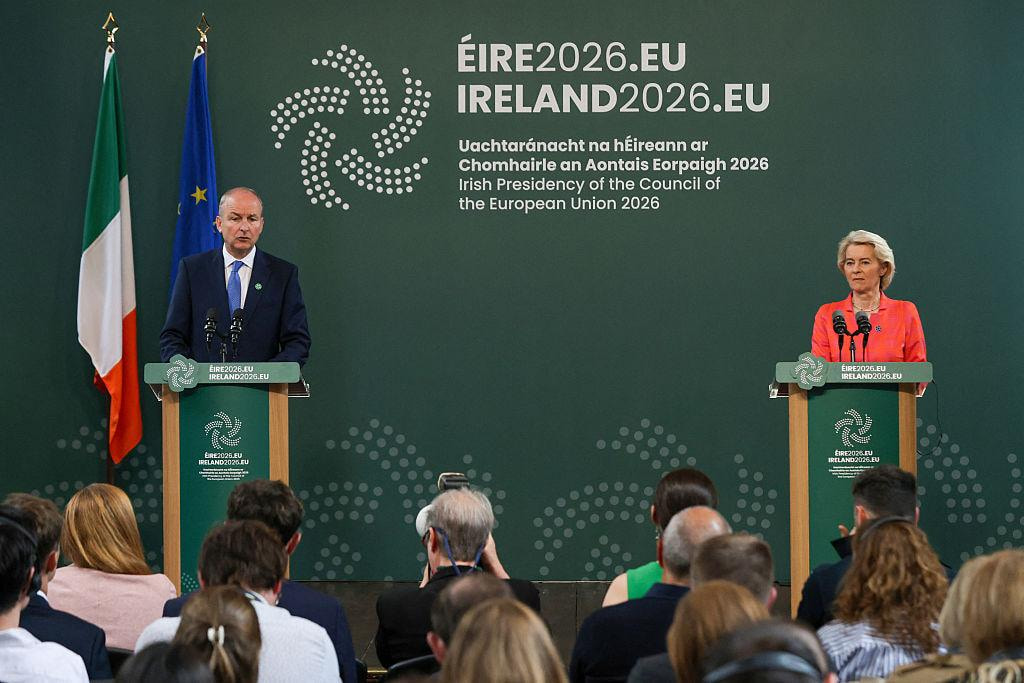
Council work under the Danish presidency focused on programme objectives, the committee procedure governing delegated implementation, the visibility of all sectors within the merged framework, and the inclusion of athletes in the programme scope. The Irish presidency will pick up the negotiations in the second half of 2026, with Minister Hildegarde Naughton chairing the Education and Youth Council meetings.

The programme’s geographical reach also continues to expand. Negotiations on the United Kingdom’s association to Erasmus+ have been advancing, a politically sensitive file given the breadth of UK university involvement before Brexit. Partial association arrangements for selected third countries are being designed around a predefined contribution-benefit package, with predecessor-programme participation as one criterion among several.

Beyond the regulation itself, ministers also approved conclusions on teachers in the era of artificial intelligence, calling for an ethical, safe, and human-centred approach that strengthens digital and AI literacy while supporting the well-being of teachers and learners. The conclusions sit alongside an exchange on basic skills, where Member States acknowledged that foundational literacy and numeracy gaps risk eroding the labour market premium Erasmus+ is intended to support.

The strategic framing of the next Erasmus+ is explicit in the Council text: the programme is positioned as central to the Union of Skills initiative and to the European Education Area, with measurable targets including the goal that twenty-three percent of university graduates will have undertaken a mobility period during their studies by 2030. Whether that target survives intact through the trilogue, and whether the budget proves sufficient to support it, will be the substantive test of the negotiation.