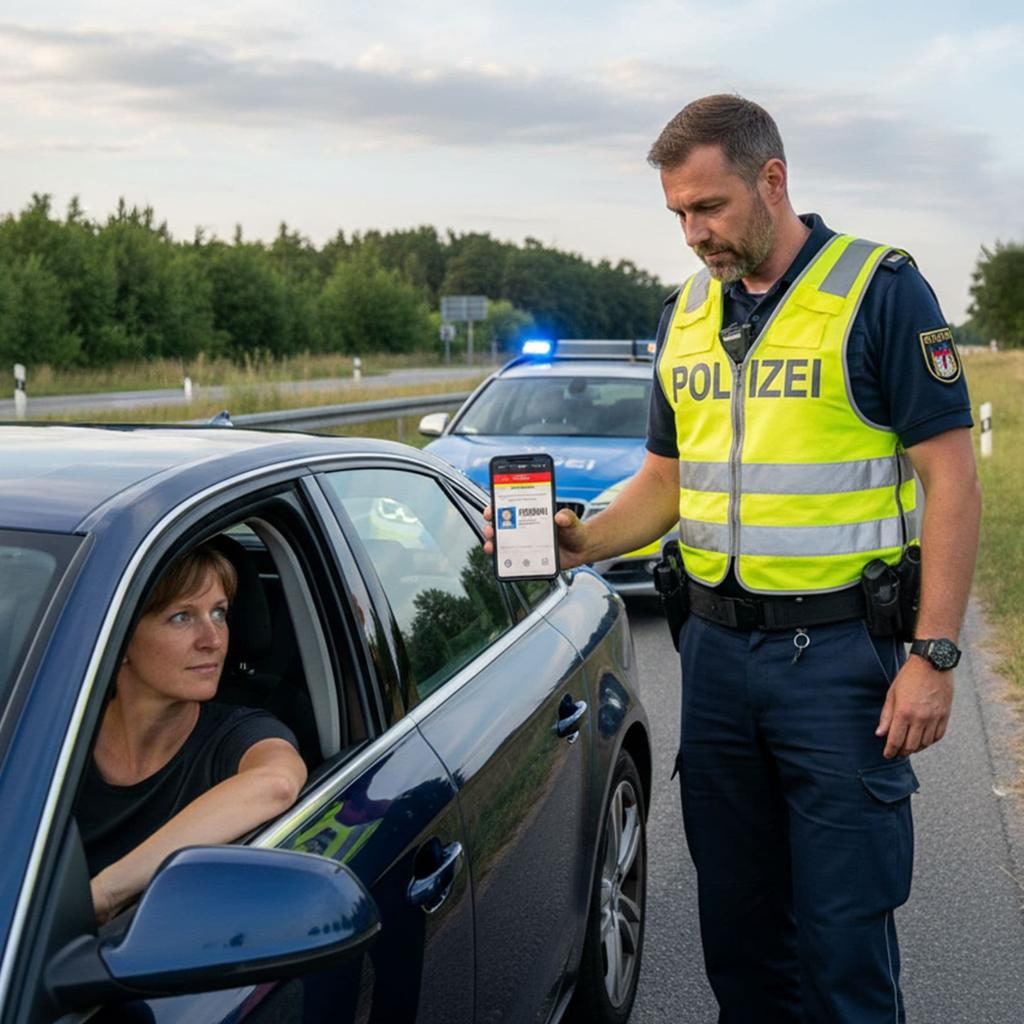
The EU’s digital driving licence has moved a decisive step closer, with the Commission’s draft technical rules reaching the end of their public feedback window on 14 July. The framework, published in mid-June, sets out how a phone-based licence will work across all 27 member states. It is the plumbing behind a reform that will eventually let drivers carry their credentials on a smartphone rather than a plastic card.
## What the digital driving licence rules cover
The draft implementing regulation fills in the detail left open by the broader driving licence directive agreed last year. It covers the parts that decide whether a digital document is trustworthy: interoperability, security, and data protection.
Interoperability is the hardest of the three. A licence issued in one country has to be readable and verifiable by police, rental firms and authorities in another, without every member state building its own incompatible system. The technical specifications aim to guarantee that a mobile licence checked in Lisbon is accepted the same way in Warsaw.
## How the rollout fits the EU wallet
The digital driving licence is not a standalone app. It is designed to live inside the European Digital Identity Wallet, the same framework meant to hold other official credentials.
That integration is the point. Rather than a patchwork of national apps, the bloc wants one secure container that citizens already use for identity, into which the licence simply slots. It also means the licence inherits the wallet’s security and privacy safeguards, which matters for a document that reveals where and when a person is entitled to drive.
Crucially, the reform does not force anyone to go digital. Drivers keep the right to request a physical licence, and the plastic card is not being abolished. The digital version is an addition, not a replacement, which softens the transition for people wary of putting official documents on a phone.
## What drivers can expect and when
The timeline is deliberately gradual. The harmonised digital licence is scheduled to roll out by the end of 2030, while member states have until November 2028 to transpose the underlying directive into national law.
That long runway reflects the scale of the task. Beyond the technology, the reform ties into road-safety measures on novice drivers, age limits, health checks and EU-wide recognition of driving disqualifications, so a ban imposed in one country can follow the driver home. With nearly 20,000 lives lost on EU roads each year, that cross-border enforcement is arguably the bigger prize.
## What happens next
Once the feedback period closes, the Commission will finalise the implementing rules and the technical standards that national authorities must build against. The current consultation is a checkpoint, not the finish line, but it locks in the design choices that will shape how the system feels in practice.
For drivers, little changes overnight. The plastic card stays valid, and the phone version arrives country by country over the rest of the decade. The significance of the digital driving licence lies less in convenience than in what it signals: a bloc slowly stitching its identity systems together, one credential at a time. The Commission’s account of how the modernised licence rules entered into force sets out the road-safety logic behind the overhaul.