A new piece of the European Innovation Council architecture is going live this month as the Commission opens applications under the EIC 2026 work programme, with more than 1.4 billion euros lined up for strategic technologies and a first-of-its-kind Advanced Innovation Challenges pilot now drawing comparisons to the US Advanced Research Projects Agency model. The pilot’s launch coincides with broader recalibration of EIC instruments, including a larger Pathfinder envelope per project and an expanded EIC Transition window that now admits research results from Horizon Europe and Horizon 2020 Research Infrastructures.
Funding intensity per Pathfinder project rises to 4 million euros under the 2026 cycle, a change the Commission has framed as a deliberate push toward proof-of-concept work that takes deep-tech research closer to market readiness. The increase responds to a long-running complaint from European universities and research-intensive SMEs that earlier-stage grants were too thin to bridge the gap between laboratory results and the kind of demonstrator stage required to attract follow-on capital from accelerators or institutional investors.
The Advanced Innovation Challenges pilot is the more conceptually disruptive change. Modelled on the US DARPA-style mission-oriented funding pattern, AIC calls will be structured around defined societal or industrial challenges rather than the open bottom-up calls that have defined Pathfinder and Accelerator instruments. The first call window opens in May 2026, with the Commission preserving discretion on challenge selection and project management style — including programme manager autonomy that has been notably absent from earlier EIC tools.
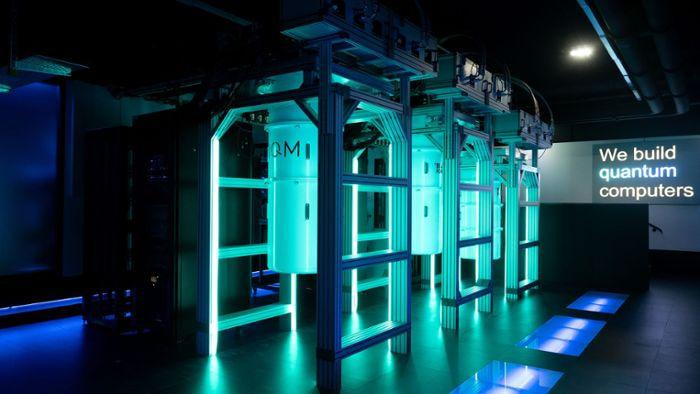
Reaction from the European research base has been mixed. Senior figures inside the European Research Council have welcomed the AIC pilot as a long-overdue experiment in mission funding, while warning that DARPA-style management requires staffing levels and contracting flexibility that EIC officials have not always enjoyed. Industry voices, particularly in quantum technology, advanced materials and clean industrial processes, have pushed for AIC challenges to align with the broader Strategic Technologies for Europe Platform priorities rather than fragment into separate funding silos.
Beyond AIC, the 2026 work programme tightens links between the EIC and the European Research Council itself. ERC frontier research projects feeding into EIC Transition open a clearer commercial pathway for principal investigators who previously hit funding cliffs at the proof-of-concept stage. The expansion of Transition eligibility to include Horizon 2020 Research Infrastructure outputs widens the pool of mature scientific results that can be channelled into market-facing development.
The institutional politics behind the package are equally telling. ERC governance reform, scheduled to land in 2028, is meant to position the EU frontier research fund as a magnet for researchers globally — a clear response to mobility flows that have favoured the United States and, to a lesser degree, the United Kingdom. The Commission’s reasoning is that frontier excellence and applied innovation must share a coherent pipeline rather than compete for talent and visibility within Framework Programme budgets.
Two practical risks shadow the rollout. The first is administrative absorption: the EIC’s budget growth has outpaced its staffing trajectory, and AIC oversight requires sectoral expertise the agency has been trying to recruit. The second is national co-investment alignment; Member States have routinely under-leveraged EIC accelerator equity windows, and AIC challenges will demand even tighter coordination with national procurement and venture capital ecosystems.
Funding deadlines are now public across the Pathfinder, Transition and Accelerator strands, with the AIC pilot call closing details expected in the coming weeks. For research-intensive sectors watching the post-2027 Framework Programme negotiation, the 2026 work programme is the most concrete test yet of whether the Commission can translate strategic technology priorities into instruments that attract the right applicant pool — and convert frontier science into commercial scale.