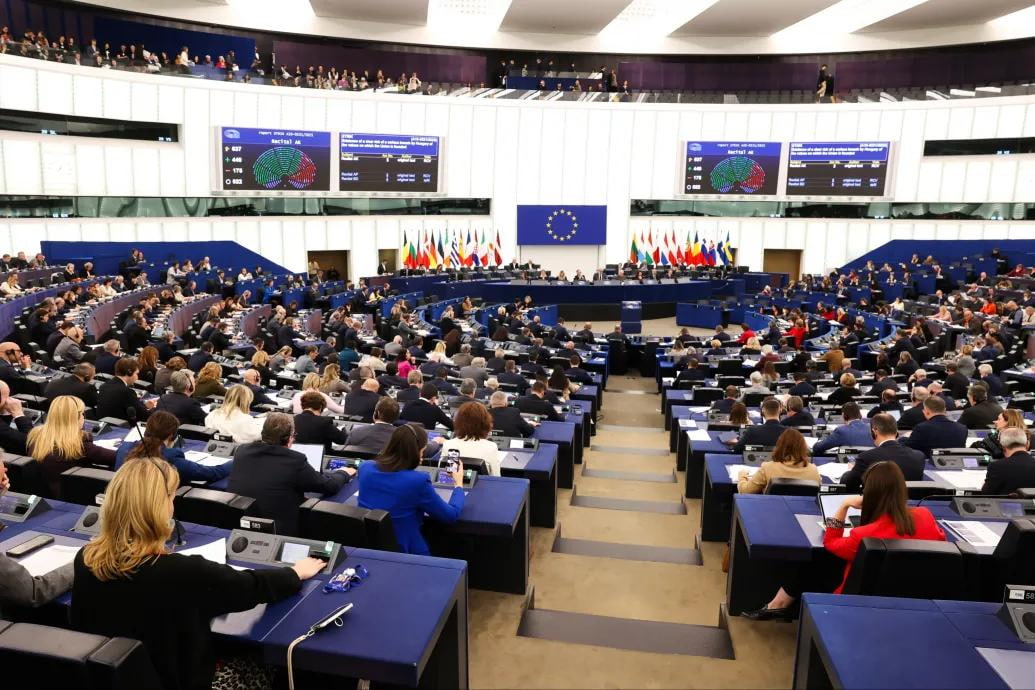
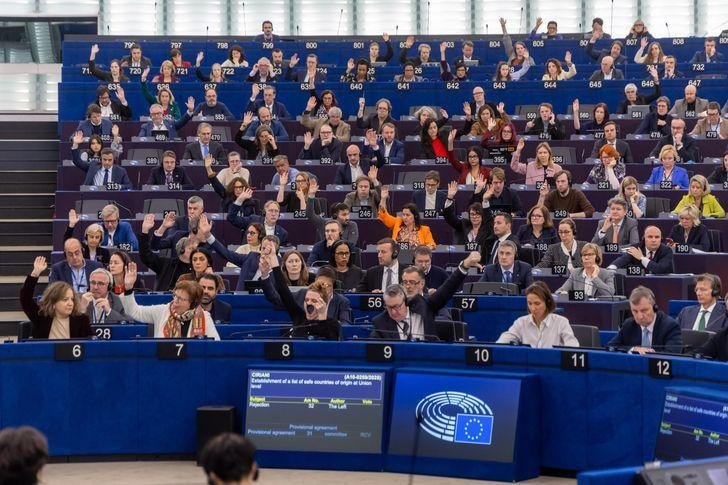
Parliament adopted the ETS2 market stability reserve in Strasbourg by 467 votes to 158 with 41 abstentions, handing Europe’s second carbon market a reinforced safety valve more than a year before it starts charging fuel suppliers. The reform doubles the allowances released when prices breach a defined trigger and extends the reserve’s life beyond 2030. It closes a file that 19 member states opened out of fear that ETS2 would launch badly.
ETS2 covers the distributors that supply fuel to buildings, road transport and certain other sectors. Those suppliers monitor and report emissions from the fuel they sell and surrender allowances to match, against a total supply that shrinks each year. The sectors must cut emissions 42% by 2030 against 2005 levels.
The market stability reserve corrects supply and demand imbalances by adjusting how many allowances circulate. Under the amendment agreed with the Council in June and confirmed this week, it keeps operating past 2030 instead of expiring mid-decade.
The headline change targets the price control mechanism. When carbon costs exceed 45 euros per tonne of CO2 equivalent in 2020 prices, the volume of allowances released rises from 20 million to 40 million. Doubling that release strengthens the market’s capacity to absorb a spike without emergency politics, which is exactly what the governments behind the July 2025 initiative wanted to avoid. It does not cap the price.
The second change draws less attention and may prove more useful. Allowances will now flow more gradually and responsively once the number in circulation drops below 260 million, rather than arriving in a single step at the threshold. Cliff edges invite gaming: a fixed trigger tells traders precisely when supply lands, and pricing ahead of that date generates the volatility the reserve exists to suppress. Smoothing the release removes a predictable arbitrage.
Road transport carries the political exposure. Fuel suppliers pass carbon costs to the pump, diesel across the EU has already moved above two euros a litre and petrol sits near 1.90, and ETS2 adds to those numbers from 2028 — a year when several member states go to the polls. The reform addresses volatility, not the underlying price level.
Co-legislators attached a few additions to the Commission’s proposal. They wrote in a reference to using ETS2 auction revenue for transition measures in buildings and road transport, in line with existing provisions. They also required the Commission’s future review to examine the allowances remaining in the reserve, and to assess the price stability mechanisms and the reserve’s rules as part of the wider ETS2 review.
The Social Climate Fund remains the designed answer to household exposure, and whether it is adequate is an argument this file deliberately left shut. Cypriot environment minister Maria Panayiotou framed the June deal around liquidity, reduced volatility and predictability for households, businesses and member states, which is the language of a presidency that wanted the file closed quickly rather than reopened.
It worked. The Council settled its position in February and the deal followed in June, which for a carbon-pricing file is unusually fast and reflects how little appetite existed for another public fight over fuel costs. Parliament chose predictability over ambition on this instrument, and the vote margin suggests the centre accepts that trade.
Formal adoption follows legal-linguistic revision, timed for the full launch of ETS2 in 2028, the date fixed during the European Climate Law negotiations. The review clauses mean the reserve’s calibration gets revisited once real ETS2 prices exist rather than modelled ones. That is when the 45 euro trigger meets something other than an assumption.