Months before the first heatwaves settle over the Mediterranean, the machinery for fighting Europe’s wildfires is being reassembled on a noticeably larger scale. The coming season will be the first to draw on a permanent rapid reaction firefighting force, a 300-strong unit announced earlier this year and built to move across borders the moment a member state is overwhelmed.
The force operates within the EU Civil Protection Mechanism and is coordinated from the Emergency Response Coordination Centre, the round-the-clock hub that tracks disasters and matches offers of help to requests for it. The idea is to convert what has until now been an improvised, season-by-season scramble into something closer to a standing capability, with crews trained to common standards and ready to deploy rather than assembled at the last minute as flames spread.
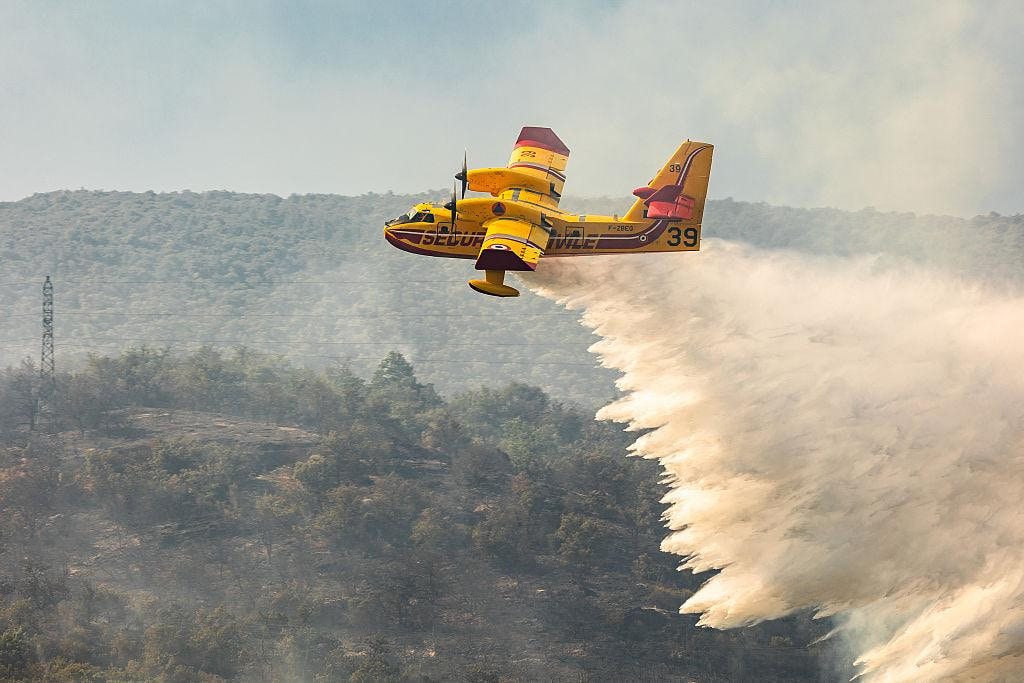
Hardware is being added alongside the personnel. The reserve fleet of aircraft held in common, a pool that governments can call on when their own assets are stretched, is expanding through the purchase of a dozen new firefighting planes earmarked for Portugal, Spain, France, Italy, Croatia and Greece, together with three helicopters destined for Slovakia, Czechia and Romania. The first of those helicopters, delivered to Romania at the start of the year, is expected to be operational in time for the summer. The Commission is also working to set up a dedicated firefighting hub in Cyprus, intended to serve as a regional centre for training, joint exercises and seasonal readiness.
The build-up reflects a blunt reality. Wildfire seasons across southern Europe have grown longer, fiercer and less predictable, with blazes increasingly reaching countries and latitudes once considered low risk. A new strategy unveiled this spring leans toward prevention and preparedness rather than waiting for emergencies to escalate, acknowledging that the cheapest fire to fight is the one that never takes hold. Pre-positioning crews in the south during the high-risk months, a practice running since 2022, is now paired with a force designed to surge wherever the worst fires break out.
For the bloc, the arrangement carries a deliberate symbolism as well as a practical purpose. Civil protection has become one of the more visible expressions of European solidarity, the kind of cooperation citizens can see when a Greek fire is fought partly by French aircraft or a flood is met with pumps from half a dozen countries. Pooling expensive assets that no single government wants to fund alone makes economic sense, and it spares smaller states the impossible choice between buying aircraft they rarely use and going without when disaster strikes.
Questions remain about whether the new structures will match the scale of what is coming. A 300-person force and a few dozen aircraft can blunt the worst of a bad season, but a summer of simultaneous fires across several countries would test the pool quickly, and shared assets cannot be in two places at once. Funding the expansion over the long term, and persuading national services to lean on a common reserve rather than guard their own, will shape how much the system can actually deliver.
For now, the direction of travel is clear. The continent is treating wildfire not as a recurring local misfortune but as a shared emergency that warrants shared infrastructure. The next few months, as the thermometer climbs, will show how far that ambition holds up against the fires themselves.