August 8, 2026
LATEST
New EU Gas Market Rules Take Effect With Consumer SafeguardsDeforestation Regulation Holds Its December Deadline Despite CutsDigital Omnibus Delays Europe’s High-Risk AI Deadline to 2027Europe’s Schools Confront a Widening Basic Skills GapRule of Law Report Finds Progress but Trust Still LagsIRIS2 Gains 66 Satellites as Brussels Signs the Rollout DealNature Restoration Plans Come Due as Member States Race a DeadlineECB Rates Hold at 2.25 Percent as Frankfurt Waits on the DataEU Budget Talks Turn to Cohesion as Ireland Takes OverWildfire Response Stretches Europe’s Emergency Fleet ThinCan Europe’s Quantum Plan Match Its Big Ambitions?Armenia Edges West as Moscow’s Grip Slips AwayEurope Inherits the World’s Aid Bill It Cannot Fully PayAir Passenger Rights Get Their First Overhaul in Two DecadesErasmus Opens a 5 Billion Euro Round for Skills and MobilityCeuta Crisis Pushes the EU Toward Faster Migrant ReturnsBulky Parcels Face a Packaging Crackdown From August 12Can Europe Build Its Drone Wall Before 2030 Arrives?Indonesia’s Trade Deal With Europe Nears Its Final SignatureEurope Leans on Beijing to Keep Climate Talks Alive Before AntalyaNew EU Gas Market Rules Take Effect With Consumer SafeguardsDeforestation Regulation Holds Its December Deadline Despite CutsDigital Omnibus Delays Europe’s High-Risk AI Deadline to 2027Europe’s Schools Confront a Widening Basic Skills GapRule of Law Report Finds Progress but Trust Still LagsIRIS2 Gains 66 Satellites as Brussels Signs the Rollout DealNature Restoration Plans Come Due as Member States Race a DeadlineECB Rates Hold at 2.25 Percent as Frankfurt Waits on the DataEU Budget Talks Turn to Cohesion as Ireland Takes OverWildfire Response Stretches Europe’s Emergency Fleet ThinCan Europe’s Quantum Plan Match Its Big Ambitions?Armenia Edges West as Moscow’s Grip Slips AwayEurope Inherits the World’s Aid Bill It Cannot Fully PayAir Passenger Rights Get Their First Overhaul in Two DecadesErasmus Opens a 5 Billion Euro Round for Skills and MobilityCeuta Crisis Pushes the EU Toward Faster Migrant ReturnsBulky Parcels Face a Packaging Crackdown From August 12Can Europe Build Its Drone Wall Before 2030 Arrives?Indonesia’s Trade Deal With Europe Nears Its Final SignatureEurope Leans on Beijing to Keep Climate Talks Alive Before Antalya
August 8, 2026
LATEST
New EU Gas Market Rules Take Effect With Consumer SafeguardsDeforestation Regulation Holds Its December Deadline Despite CutsDigital Omnibus Delays Europe’s High-Risk AI Deadline to 2027Europe’s Schools Confront a Widening Basic Skills GapRule of Law Report Finds Progress but Trust Still LagsIRIS2 Gains 66 Satellites as Brussels Signs the Rollout DealNature Restoration Plans Come Due as Member States Race a DeadlineECB Rates Hold at 2.25 Percent as Frankfurt Waits on the DataEU Budget Talks Turn to Cohesion as Ireland Takes OverWildfire Response Stretches Europe’s Emergency Fleet ThinCan Europe’s Quantum Plan Match Its Big Ambitions?Armenia Edges West as Moscow’s Grip Slips AwayEurope Inherits the World’s Aid Bill It Cannot Fully PayAir Passenger Rights Get Their First Overhaul in Two DecadesErasmus Opens a 5 Billion Euro Round for Skills and MobilityCeuta Crisis Pushes the EU Toward Faster Migrant ReturnsBulky Parcels Face a Packaging Crackdown From August 12Can Europe Build Its Drone Wall Before 2030 Arrives?Indonesia’s Trade Deal With Europe Nears Its Final SignatureEurope Leans on Beijing to Keep Climate Talks Alive Before AntalyaNew EU Gas Market Rules Take Effect With Consumer SafeguardsDeforestation Regulation Holds Its December Deadline Despite CutsDigital Omnibus Delays Europe’s High-Risk AI Deadline to 2027Europe’s Schools Confront a Widening Basic Skills GapRule of Law Report Finds Progress but Trust Still LagsIRIS2 Gains 66 Satellites as Brussels Signs the Rollout DealNature Restoration Plans Come Due as Member States Race a DeadlineECB Rates Hold at 2.25 Percent as Frankfurt Waits on the DataEU Budget Talks Turn to Cohesion as Ireland Takes OverWildfire Response Stretches Europe’s Emergency Fleet ThinCan Europe’s Quantum Plan Match Its Big Ambitions?Armenia Edges West as Moscow’s Grip Slips AwayEurope Inherits the World’s Aid Bill It Cannot Fully PayAir Passenger Rights Get Their First Overhaul in Two DecadesErasmus Opens a 5 Billion Euro Round for Skills and MobilityCeuta Crisis Pushes the EU Toward Faster Migrant ReturnsBulky Parcels Face a Packaging Crackdown From August 12Can Europe Build Its Drone Wall Before 2030 Arrives?Indonesia’s Trade Deal With Europe Nears Its Final SignatureEurope Leans on Beijing to Keep Climate Talks Alive Before Antalya

Galileo’s Next Satellites Line Up for an Ariane Ride

Galileo is about to gain fresh muscle, as Europe lines up its next batch of navigation satellites for a ride on the continent’s own heavy-lift rocket.

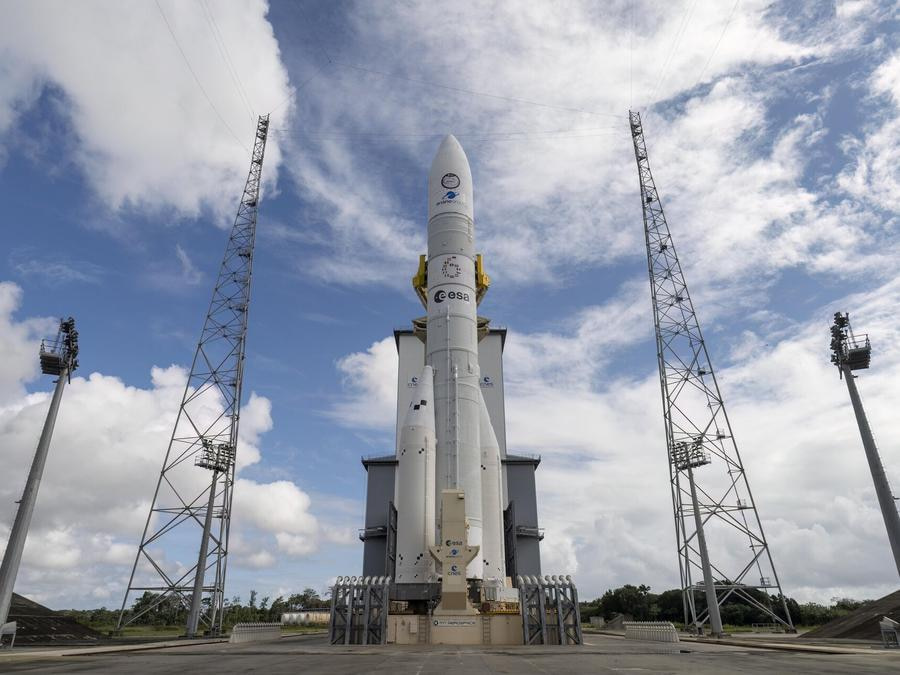
The EU Agency for the Space Programme signed a launch contract covering the Galileo L18 mission, which will carry the second pair of second-generation spacecraft into orbit aboard an Ariane 6. Officials announced the deal at the European Space Conference in the Belgian capital in late January.

The move matters because it ties two of Europe’s strategic bets together. Galileo gives the bloc a satellite-positioning system it controls itself, free of any reliance on the American GPS network, while Ariane 6 gives it an independent way to reach orbit after years of launcher uncertainty. Arianespace confirmed that L18 will mark the rocket’s fifth mission in service of the constellation.

The sequencing tells the story. Two further Ariane 6 flights will finish deploying the first-generation fleet, then L17 will loft the first pair of second-generation satellites, with L18 following close behind. The upgraded spacecraft promise stronger signals, better accuracy and easier maintenance across a constellation that already guides more than four billion devices worldwide.

Galileo has quietly become critical infrastructure. Its High Accuracy Service sharpens positioning for farming, surveying and autonomous machines, its Search and Rescue function relays distress calls from remote seas and mountains, and engineers are preparing an emergency-warning service that could push alerts straight to phones during disasters.

National space agencies and industry read the contract as a vote of confidence in Ariane 6 itself. The rocket endured a long and bumpy path to its first flights, and a steady order book of Galileo missions gives its manufacturers the cadence they need to bring down costs and prove reliability. Each successful launch, in turn, strengthens the case that Europe never again wants to depend on foreign providers to put its most sensitive assets in orbit.

Money and sovereignty drive the urgency. Commission officials frame every Galileo contract as an investment in jobs, industry and strategic autonomy at a moment when other powers are racing to expand their own navigation and communication networks.

The programme also feeds a wider ambition. Alongside the Earth-observation network Copernicus and the incoming secure-connectivity system built around a fresh constellation of satellites, Galileo anchors a space policy that Brussels increasingly treats as a pillar of security rather than a scientific luxury.

Launch dates for L18 stayed off the contract papers, and slippage remains a familiar hazard in any space schedule. Yet the signature sends a clear signal: Europe intends to keep its own satellites flying on its own rockets, and it will sign the cheques to make that happen.