August 9, 2026
LATEST
New EU Gas Market Rules Take Effect With Consumer SafeguardsDeforestation Regulation Holds Its December Deadline Despite CutsDigital Omnibus Delays Europe’s High-Risk AI Deadline to 2027Europe’s Schools Confront a Widening Basic Skills GapRule of Law Report Finds Progress but Trust Still LagsIRIS2 Gains 66 Satellites as Brussels Signs the Rollout DealNature Restoration Plans Come Due as Member States Race a DeadlineECB Rates Hold at 2.25 Percent as Frankfurt Waits on the DataEU Budget Talks Turn to Cohesion as Ireland Takes OverWildfire Response Stretches Europe’s Emergency Fleet ThinCan Europe’s Quantum Plan Match Its Big Ambitions?Armenia Edges West as Moscow’s Grip Slips AwayEurope Inherits the World’s Aid Bill It Cannot Fully PayAir Passenger Rights Get Their First Overhaul in Two DecadesErasmus Opens a 5 Billion Euro Round for Skills and MobilityCeuta Crisis Pushes the EU Toward Faster Migrant ReturnsBulky Parcels Face a Packaging Crackdown From August 12Can Europe Build Its Drone Wall Before 2030 Arrives?Indonesia’s Trade Deal With Europe Nears Its Final SignatureEurope Leans on Beijing to Keep Climate Talks Alive Before AntalyaNew EU Gas Market Rules Take Effect With Consumer SafeguardsDeforestation Regulation Holds Its December Deadline Despite CutsDigital Omnibus Delays Europe’s High-Risk AI Deadline to 2027Europe’s Schools Confront a Widening Basic Skills GapRule of Law Report Finds Progress but Trust Still LagsIRIS2 Gains 66 Satellites as Brussels Signs the Rollout DealNature Restoration Plans Come Due as Member States Race a DeadlineECB Rates Hold at 2.25 Percent as Frankfurt Waits on the DataEU Budget Talks Turn to Cohesion as Ireland Takes OverWildfire Response Stretches Europe’s Emergency Fleet ThinCan Europe’s Quantum Plan Match Its Big Ambitions?Armenia Edges West as Moscow’s Grip Slips AwayEurope Inherits the World’s Aid Bill It Cannot Fully PayAir Passenger Rights Get Their First Overhaul in Two DecadesErasmus Opens a 5 Billion Euro Round for Skills and MobilityCeuta Crisis Pushes the EU Toward Faster Migrant ReturnsBulky Parcels Face a Packaging Crackdown From August 12Can Europe Build Its Drone Wall Before 2030 Arrives?Indonesia’s Trade Deal With Europe Nears Its Final SignatureEurope Leans on Beijing to Keep Climate Talks Alive Before Antalya
August 9, 2026
LATEST
New EU Gas Market Rules Take Effect With Consumer SafeguardsDeforestation Regulation Holds Its December Deadline Despite CutsDigital Omnibus Delays Europe’s High-Risk AI Deadline to 2027Europe’s Schools Confront a Widening Basic Skills GapRule of Law Report Finds Progress but Trust Still LagsIRIS2 Gains 66 Satellites as Brussels Signs the Rollout DealNature Restoration Plans Come Due as Member States Race a DeadlineECB Rates Hold at 2.25 Percent as Frankfurt Waits on the DataEU Budget Talks Turn to Cohesion as Ireland Takes OverWildfire Response Stretches Europe’s Emergency Fleet ThinCan Europe’s Quantum Plan Match Its Big Ambitions?Armenia Edges West as Moscow’s Grip Slips AwayEurope Inherits the World’s Aid Bill It Cannot Fully PayAir Passenger Rights Get Their First Overhaul in Two DecadesErasmus Opens a 5 Billion Euro Round for Skills and MobilityCeuta Crisis Pushes the EU Toward Faster Migrant ReturnsBulky Parcels Face a Packaging Crackdown From August 12Can Europe Build Its Drone Wall Before 2030 Arrives?Indonesia’s Trade Deal With Europe Nears Its Final SignatureEurope Leans on Beijing to Keep Climate Talks Alive Before AntalyaNew EU Gas Market Rules Take Effect With Consumer SafeguardsDeforestation Regulation Holds Its December Deadline Despite CutsDigital Omnibus Delays Europe’s High-Risk AI Deadline to 2027Europe’s Schools Confront a Widening Basic Skills GapRule of Law Report Finds Progress but Trust Still LagsIRIS2 Gains 66 Satellites as Brussels Signs the Rollout DealNature Restoration Plans Come Due as Member States Race a DeadlineECB Rates Hold at 2.25 Percent as Frankfurt Waits on the DataEU Budget Talks Turn to Cohesion as Ireland Takes OverWildfire Response Stretches Europe’s Emergency Fleet ThinCan Europe’s Quantum Plan Match Its Big Ambitions?Armenia Edges West as Moscow’s Grip Slips AwayEurope Inherits the World’s Aid Bill It Cannot Fully PayAir Passenger Rights Get Their First Overhaul in Two DecadesErasmus Opens a 5 Billion Euro Round for Skills and MobilityCeuta Crisis Pushes the EU Toward Faster Migrant ReturnsBulky Parcels Face a Packaging Crackdown From August 12Can Europe Build Its Drone Wall Before 2030 Arrives?Indonesia’s Trade Deal With Europe Nears Its Final SignatureEurope Leans on Beijing to Keep Climate Talks Alive Before Antalya

GOVSATCOM Hub Goes Live as IRIS2 Bridge to 2029 Constellation

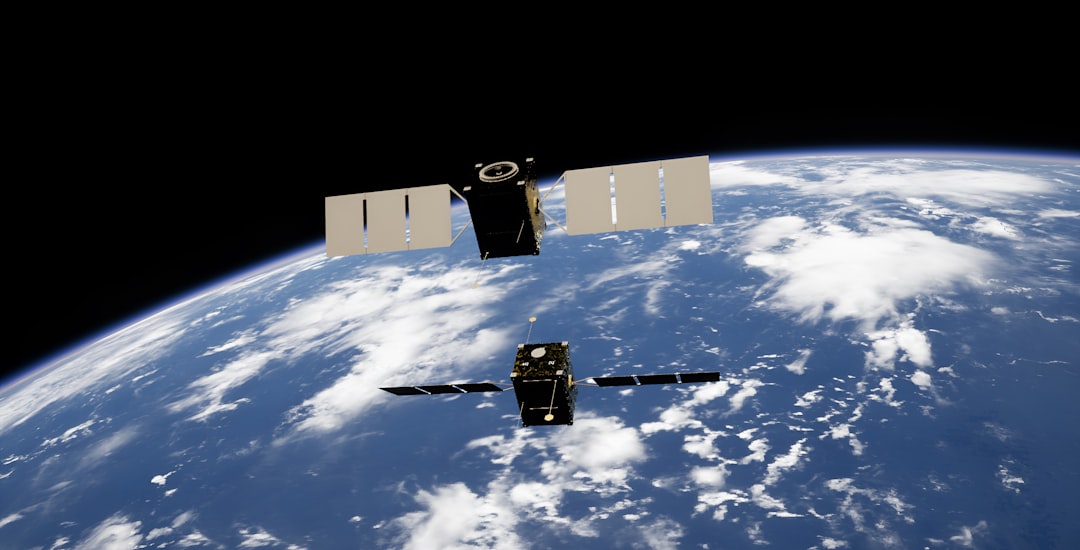
Secure satellite communications, an EU competence on paper since 2023 and a fully operational capability only since January, have moved from regulatory abstraction to working infrastructure faster than anyone in DG DEFIS expected. The European Union Agency for the Space Programme confirmed in its 14 May 2026 newsroom note that the GOVSATCOM Hub, the central node managing service delivery to authorised government users, is now routing live traffic across the eight satellites contributed by five Member States that make up the programme’s initial pool of contracted capacity.

The hub is run from EUSPA’s Madrid premises by an industrial consortium led by GMV and including Indra and Hisdesat. The contract, signed in 2024 for an initial value of 107 million euros, covers design, deployment and the early years of operations through 2029, with options to extend as additional capacity is federated into the system. GMV has stated that the hub is built to accommodate future feeds from IRIS², the multi-orbit constellation whose design and development phase is already running and whose first simplified services are scheduled for 2029.

For the moment, GOVSATCOM remains a capacity-aggregation service rather than a sovereign asset. It does not own satellites. Instead, it pools capacity made available by Member States operating military and dual-use platforms, screens it against accredited security standards and offers it to qualified users across defence ministries, civil protection authorities, customs services and the External Action Service. The Madrid hub handles the contracting, routing and incident management that previously required bespoke arrangements between bilateral national operators, an arrangement the Commission’s February policy paper described as fragmented to the point of operational risk.

Operationalisation has come at a moment when European demand for secure satcom is being reshaped by three pressures. The first is the gap left by sovereignty doubts over commercial providers, particularly in Ukrainian and Black Sea theatres, which European militaries have been quietly modelling since the second half of 2025. The second is the steady growth of crisis management missions outside the Union’s immediate neighbourhood, where civilian planners now demand encrypted bandwidth as a default rather than an enhancement. The third is the maturing Ka-band military spectrum allocation, brought into use in January, which gives GOVSATCOM the radio frequency footprint to scale meaningfully against alliance requirements.

The Hub’s deeper significance, however, lies in the bridge it builds to the IRIS² constellation. The 10.6-billion-euro programme is structured around a design and development window from 2025 to 2028, deployment between 2029 and 2030, and an exploitation phase running to 2037. That long deployment horizon is one of the reasons the Commission insisted on bringing GOVSATCOM online ahead of IRIS²: it provides the secure backbone, certifications and user community that the larger constellation will inherit, rather than forcing a parallel build-out in 2030.

Open questions remain on each side of the architecture. On the user side, accreditation for non-defence applicants, including border agencies and humanitarian operators inside ECHO’s mandate, is moving more slowly than DG DEFIS had projected. On the industrial side, the prime contractors for IRIS² will need to demonstrate that their multi-orbit topology can be physically and electronically integrated with the Hub without a costly re-tooling cycle. Both questions are now sitting on Commissioner Andrius Kubilius’s desk, and both are likely to surface during the June Competitiveness Council, where defence-industrial agenda items continue to crowd out the more conventional space items the directorate is otherwise trying to advance.

For now, the Hub working live is the operational milestone European space policy has been promising for the better part of a decade.