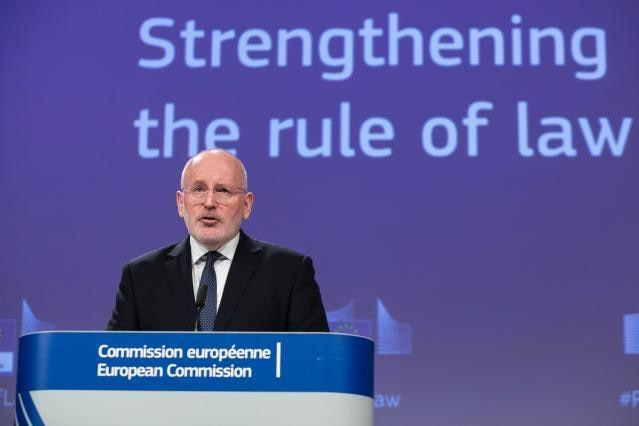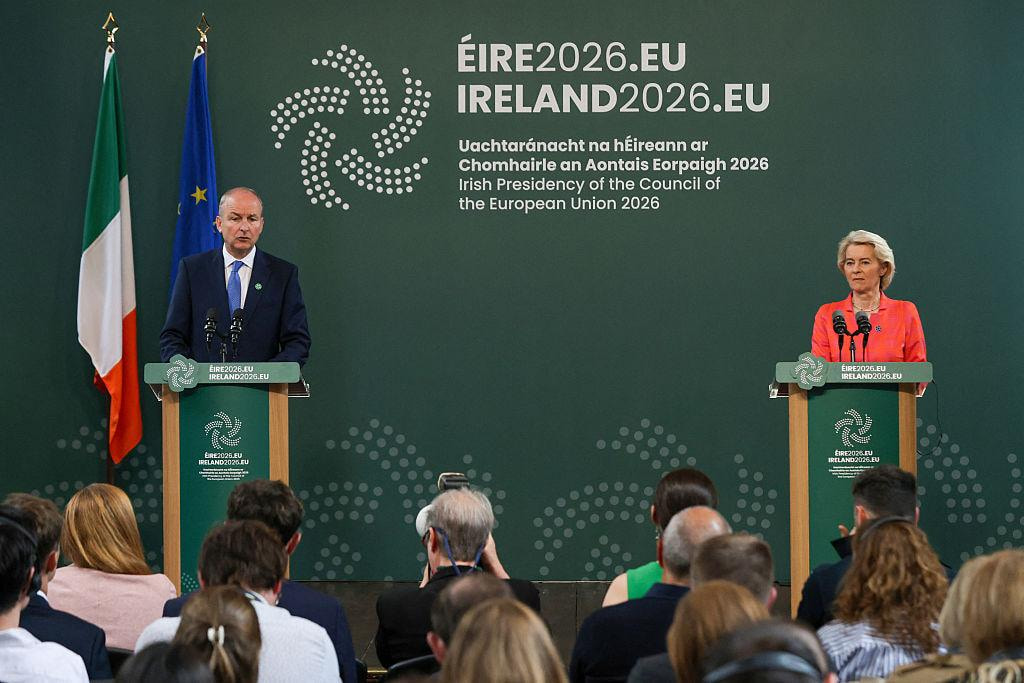
Budapest: Roughly €18 billion of EU funds earmarked for Hungary remain frozen as the country approaches a parliamentary election in which the Article 7 procedure has become a campaign issue in its own right. The Commission’s posture, hardened over the past eighteen months, is that conditionality cannot be relaxed while concerns about judicial independence, media pluralism and the misuse of EU money remain unresolved. The Hungarian government’s posture, equally hardened, is that the procedure is a political instrument disguised as a legal one.
The contrast with Poland is the part that Budapest finds most difficult to accept. The first von der Leyen Commission closed the Article 7 procedure against Warsaw in May 2024 after the new Polish government published an action plan to remedy earlier rule-of-law deficiencies, even though implementation of that plan has, by most independent assessments, moved slowly. Hungary’s interpretation — that the closure was as much a reward for political alignment as for legal progress — has been echoed by sympathetic voices in other capitals. The Commission’s view is that the two cases differ on the merits, but the perception asymmetry has been hard to dispel.
The European Parliament’s November 2025 resolution sharpened the debate further. MEPs pointed to judicial interference, restrictions on media and academic freedom, and the use of unlabelled AI-generated content in the run-up to the 2026 election as evidence of a deepening rule-of-law crisis. The resolution also raised the spectre that Hungary has conducted surveillance against the EU institutions themselves, a claim the Commission has neither confirmed nor denied but which has fed into the wider deterioration of trust.
The financial stakes are concrete. The frozen €18 billion includes cohesion funds and components of the Recovery and Resilience Facility. For an economy that has struggled with stagnant growth and persistently elevated inflation, those funds matter materially. The Hungarian government has argued that the freeze constitutes collective punishment of citizens for the alleged failings of their leaders. The Commission’s position is that the conditionality regulation requires demonstrable safeguards before disbursement, and that the structural reforms required are not unreasonable.
The election itself is the variable that will reshape this debate one way or the other. If the incumbent government wins decisively, the standoff is likely to deepen, with the possibility of further escalation under the conditionality regulation and renewed calls in Parliament for sanctions under Article 7. If the opposition prevails, the trajectory could shift quickly — though the Polish precedent suggests that procedural rehabilitation does not depend on full implementation of reforms, only on credible commitment to them.
What this episode has clarified, more than anything else, is the limit of the EU’s rule-of-law toolkit. Article 7 cannot impose sanctions without unanimity minus one in Council, a threshold designed to be unreachable. The conditionality regulation does work — the €18 billion is proof — but it works as a financial brake rather than as a political remedy. Whether the next Commission concludes that this is adequate, or whether it pushes for new instruments, will depend in part on what Budapest does after the vote.