August 9, 2026
LATEST
New EU Gas Market Rules Take Effect With Consumer SafeguardsDeforestation Regulation Holds Its December Deadline Despite CutsDigital Omnibus Delays Europe’s High-Risk AI Deadline to 2027Europe’s Schools Confront a Widening Basic Skills GapRule of Law Report Finds Progress but Trust Still LagsIRIS2 Gains 66 Satellites as Brussels Signs the Rollout DealNature Restoration Plans Come Due as Member States Race a DeadlineECB Rates Hold at 2.25 Percent as Frankfurt Waits on the DataEU Budget Talks Turn to Cohesion as Ireland Takes OverWildfire Response Stretches Europe’s Emergency Fleet ThinCan Europe’s Quantum Plan Match Its Big Ambitions?Armenia Edges West as Moscow’s Grip Slips AwayEurope Inherits the World’s Aid Bill It Cannot Fully PayAir Passenger Rights Get Their First Overhaul in Two DecadesErasmus Opens a 5 Billion Euro Round for Skills and MobilityCeuta Crisis Pushes the EU Toward Faster Migrant ReturnsBulky Parcels Face a Packaging Crackdown From August 12Can Europe Build Its Drone Wall Before 2030 Arrives?Indonesia’s Trade Deal With Europe Nears Its Final SignatureEurope Leans on Beijing to Keep Climate Talks Alive Before AntalyaNew EU Gas Market Rules Take Effect With Consumer SafeguardsDeforestation Regulation Holds Its December Deadline Despite CutsDigital Omnibus Delays Europe’s High-Risk AI Deadline to 2027Europe’s Schools Confront a Widening Basic Skills GapRule of Law Report Finds Progress but Trust Still LagsIRIS2 Gains 66 Satellites as Brussels Signs the Rollout DealNature Restoration Plans Come Due as Member States Race a DeadlineECB Rates Hold at 2.25 Percent as Frankfurt Waits on the DataEU Budget Talks Turn to Cohesion as Ireland Takes OverWildfire Response Stretches Europe’s Emergency Fleet ThinCan Europe’s Quantum Plan Match Its Big Ambitions?Armenia Edges West as Moscow’s Grip Slips AwayEurope Inherits the World’s Aid Bill It Cannot Fully PayAir Passenger Rights Get Their First Overhaul in Two DecadesErasmus Opens a 5 Billion Euro Round for Skills and MobilityCeuta Crisis Pushes the EU Toward Faster Migrant ReturnsBulky Parcels Face a Packaging Crackdown From August 12Can Europe Build Its Drone Wall Before 2030 Arrives?Indonesia’s Trade Deal With Europe Nears Its Final SignatureEurope Leans on Beijing to Keep Climate Talks Alive Before Antalya
August 9, 2026
LATEST
New EU Gas Market Rules Take Effect With Consumer SafeguardsDeforestation Regulation Holds Its December Deadline Despite CutsDigital Omnibus Delays Europe’s High-Risk AI Deadline to 2027Europe’s Schools Confront a Widening Basic Skills GapRule of Law Report Finds Progress but Trust Still LagsIRIS2 Gains 66 Satellites as Brussels Signs the Rollout DealNature Restoration Plans Come Due as Member States Race a DeadlineECB Rates Hold at 2.25 Percent as Frankfurt Waits on the DataEU Budget Talks Turn to Cohesion as Ireland Takes OverWildfire Response Stretches Europe’s Emergency Fleet ThinCan Europe’s Quantum Plan Match Its Big Ambitions?Armenia Edges West as Moscow’s Grip Slips AwayEurope Inherits the World’s Aid Bill It Cannot Fully PayAir Passenger Rights Get Their First Overhaul in Two DecadesErasmus Opens a 5 Billion Euro Round for Skills and MobilityCeuta Crisis Pushes the EU Toward Faster Migrant ReturnsBulky Parcels Face a Packaging Crackdown From August 12Can Europe Build Its Drone Wall Before 2030 Arrives?Indonesia’s Trade Deal With Europe Nears Its Final SignatureEurope Leans on Beijing to Keep Climate Talks Alive Before AntalyaNew EU Gas Market Rules Take Effect With Consumer SafeguardsDeforestation Regulation Holds Its December Deadline Despite CutsDigital Omnibus Delays Europe’s High-Risk AI Deadline to 2027Europe’s Schools Confront a Widening Basic Skills GapRule of Law Report Finds Progress but Trust Still LagsIRIS2 Gains 66 Satellites as Brussels Signs the Rollout DealNature Restoration Plans Come Due as Member States Race a DeadlineECB Rates Hold at 2.25 Percent as Frankfurt Waits on the DataEU Budget Talks Turn to Cohesion as Ireland Takes OverWildfire Response Stretches Europe’s Emergency Fleet ThinCan Europe’s Quantum Plan Match Its Big Ambitions?Armenia Edges West as Moscow’s Grip Slips AwayEurope Inherits the World’s Aid Bill It Cannot Fully PayAir Passenger Rights Get Their First Overhaul in Two DecadesErasmus Opens a 5 Billion Euro Round for Skills and MobilityCeuta Crisis Pushes the EU Toward Faster Migrant ReturnsBulky Parcels Face a Packaging Crackdown From August 12Can Europe Build Its Drone Wall Before 2030 Arrives?Indonesia’s Trade Deal With Europe Nears Its Final SignatureEurope Leans on Beijing to Keep Climate Talks Alive Before Antalya

Kallas Warns EU Defence Industry Failing to Match Spending Surge

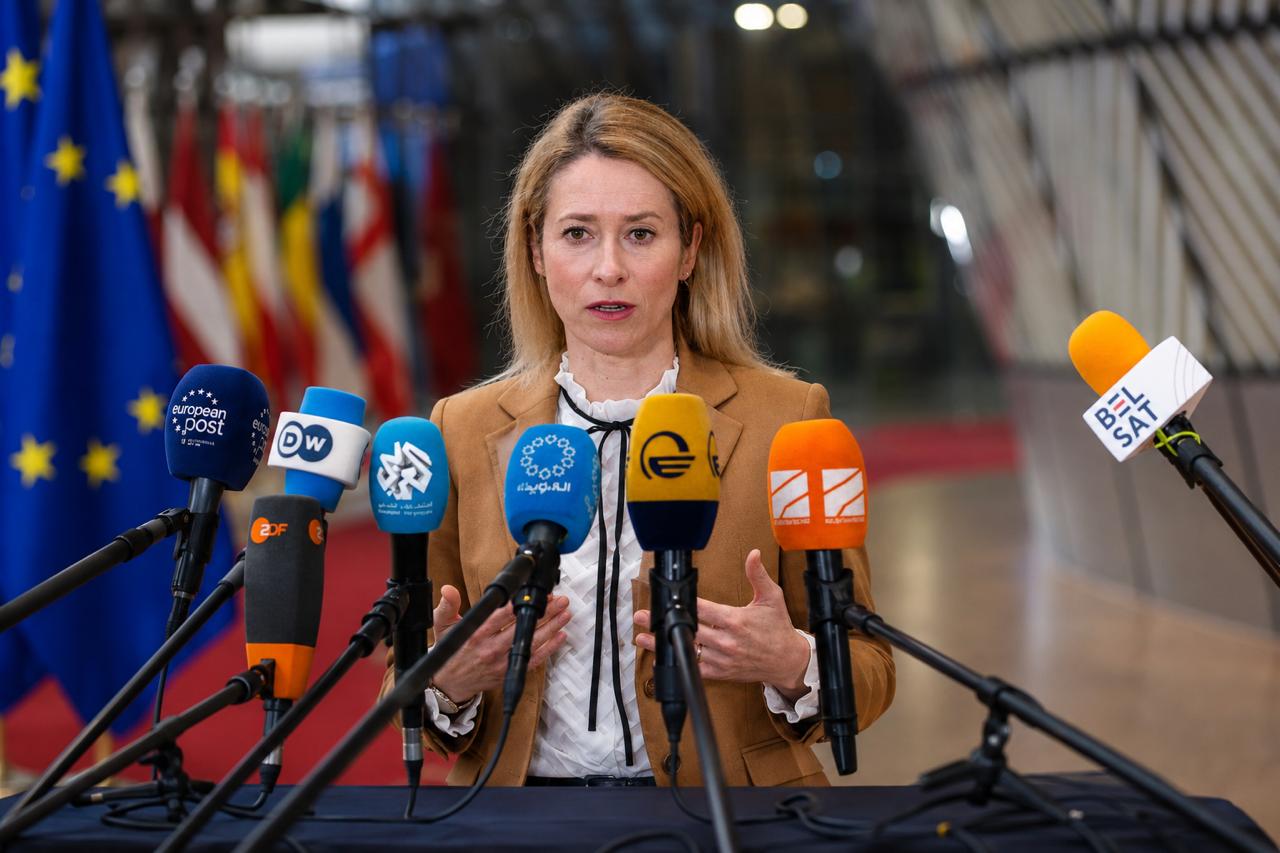
A widening gap between Europe’s defence budgets and what its factories can actually deliver has moved from a technocratic concern to the central anxiety of EU security policy. At the Foreign Affairs Council in defence configuration on 12 May 2026, High Representative Kaja Kallas told ministers and industry representatives that despite the unprecedented financial firepower mobilised by capitals, output is not rising at anywhere near the necessary pace. Her words — that countries have allocated substantial funds but the defence industry is not increasing production or accelerating its tempo — carry a sharp political edge, because the credibility of the Union’s deterrence posture depends on closing that gap quickly.

The structural picture explains the frustration. Member states are channelling tens of billions through national budgets, the SAFE instrument, and the wider rearmament agenda that has crystallised since 2024. The first disbursement of the €90 billion loan to Ukraine is scheduled for June, and ministers used the meeting to coordinate continued military assistance while NATO Deputy Secretary General Radmila Shekerinska and Ukrainian Defence Minister Mykhailo Fedorov joined the exchange. Yet the production curves for ammunition, air defence interceptors, and armoured platforms continue to lag the contracts, suggesting that liquidity is no longer the binding constraint. The real choke points lie in component supply chains, skilled labour, certification timelines, and the patchwork of national procurement procedures that fragments demand.

It is this fragmentation that the Council moved most decisively to address. Ministers endorsed a strengthening of the European Defence Agency, equipping it with dedicated structures for innovation and experimentation and, more consequentially, a collaborative defence procurement centre. By pooling contractual and armament expertise, the agency will be able to run multiple procurement projects in parallel, focused first on contracted services and off-the-shelf equipment where consolidation can move fastest. The political wager is straightforward: if national orders can be aggregated into longer, larger, and more predictable demand signals, manufacturers will have the confidence to expand capacity rather than continue extracting margin from short and uncertain runs.

That wager remains unproven. European primes have repeatedly told policymakers that they need multi-year framework contracts before they will commit private capital to new lines. Some, particularly in ammunition, have begun expanding, but at a pace that disappoints ministers who watch Russian output continue to outstrip allied production for several core categories. The updated EU Threat Analysis presented to ministers reinforced the urgency by linking the Ukraine theatre with the broader instability radiating from the Middle East, a connection that complicates assumptions about reserve stockpiles and energy resilience simultaneously.

The political economy is delicate. Capitals do not all share the same threat perceptions, the same industrial bases, or the same appetite for centralised procurement. France, Germany, Poland, and the Nordics are pulling harder than southern partners on industrial integration, and there are unresolved questions about how third-country suppliers — particularly American, South Korean, and Turkish — fit into a model that is also meant to build European strategic autonomy. Kallas’s intervention was less a complaint than a signal that the political tolerance for slow industrial response is shrinking, and that the agency reforms agreed in Brussels are intended to deliver visible acceleration before the next ministerial cycle.

For the institutions, the test will be measured not in communiqués but in delivery schedules. Ministers left the Council with a clearer mandate to push the Commission, the EDA, and national procurement bodies into tighter coordination, and with the uncomfortable recognition that money is no longer the alibi. If output does not move within the next year, the political ground beneath Europe’s rearmament narrative will start to give way.