August 9, 2026
LATEST
New EU Gas Market Rules Take Effect With Consumer SafeguardsDeforestation Regulation Holds Its December Deadline Despite CutsDigital Omnibus Delays Europe’s High-Risk AI Deadline to 2027Europe’s Schools Confront a Widening Basic Skills GapRule of Law Report Finds Progress but Trust Still LagsIRIS2 Gains 66 Satellites as Brussels Signs the Rollout DealNature Restoration Plans Come Due as Member States Race a DeadlineECB Rates Hold at 2.25 Percent as Frankfurt Waits on the DataEU Budget Talks Turn to Cohesion as Ireland Takes OverWildfire Response Stretches Europe’s Emergency Fleet ThinCan Europe’s Quantum Plan Match Its Big Ambitions?Armenia Edges West as Moscow’s Grip Slips AwayEurope Inherits the World’s Aid Bill It Cannot Fully PayAir Passenger Rights Get Their First Overhaul in Two DecadesErasmus Opens a 5 Billion Euro Round for Skills and MobilityCeuta Crisis Pushes the EU Toward Faster Migrant ReturnsBulky Parcels Face a Packaging Crackdown From August 12Can Europe Build Its Drone Wall Before 2030 Arrives?Indonesia’s Trade Deal With Europe Nears Its Final SignatureEurope Leans on Beijing to Keep Climate Talks Alive Before AntalyaNew EU Gas Market Rules Take Effect With Consumer SafeguardsDeforestation Regulation Holds Its December Deadline Despite CutsDigital Omnibus Delays Europe’s High-Risk AI Deadline to 2027Europe’s Schools Confront a Widening Basic Skills GapRule of Law Report Finds Progress but Trust Still LagsIRIS2 Gains 66 Satellites as Brussels Signs the Rollout DealNature Restoration Plans Come Due as Member States Race a DeadlineECB Rates Hold at 2.25 Percent as Frankfurt Waits on the DataEU Budget Talks Turn to Cohesion as Ireland Takes OverWildfire Response Stretches Europe’s Emergency Fleet ThinCan Europe’s Quantum Plan Match Its Big Ambitions?Armenia Edges West as Moscow’s Grip Slips AwayEurope Inherits the World’s Aid Bill It Cannot Fully PayAir Passenger Rights Get Their First Overhaul in Two DecadesErasmus Opens a 5 Billion Euro Round for Skills and MobilityCeuta Crisis Pushes the EU Toward Faster Migrant ReturnsBulky Parcels Face a Packaging Crackdown From August 12Can Europe Build Its Drone Wall Before 2030 Arrives?Indonesia’s Trade Deal With Europe Nears Its Final SignatureEurope Leans on Beijing to Keep Climate Talks Alive Before Antalya
August 9, 2026
LATEST
New EU Gas Market Rules Take Effect With Consumer SafeguardsDeforestation Regulation Holds Its December Deadline Despite CutsDigital Omnibus Delays Europe’s High-Risk AI Deadline to 2027Europe’s Schools Confront a Widening Basic Skills GapRule of Law Report Finds Progress but Trust Still LagsIRIS2 Gains 66 Satellites as Brussels Signs the Rollout DealNature Restoration Plans Come Due as Member States Race a DeadlineECB Rates Hold at 2.25 Percent as Frankfurt Waits on the DataEU Budget Talks Turn to Cohesion as Ireland Takes OverWildfire Response Stretches Europe’s Emergency Fleet ThinCan Europe’s Quantum Plan Match Its Big Ambitions?Armenia Edges West as Moscow’s Grip Slips AwayEurope Inherits the World’s Aid Bill It Cannot Fully PayAir Passenger Rights Get Their First Overhaul in Two DecadesErasmus Opens a 5 Billion Euro Round for Skills and MobilityCeuta Crisis Pushes the EU Toward Faster Migrant ReturnsBulky Parcels Face a Packaging Crackdown From August 12Can Europe Build Its Drone Wall Before 2030 Arrives?Indonesia’s Trade Deal With Europe Nears Its Final SignatureEurope Leans on Beijing to Keep Climate Talks Alive Before AntalyaNew EU Gas Market Rules Take Effect With Consumer SafeguardsDeforestation Regulation Holds Its December Deadline Despite CutsDigital Omnibus Delays Europe’s High-Risk AI Deadline to 2027Europe’s Schools Confront a Widening Basic Skills GapRule of Law Report Finds Progress but Trust Still LagsIRIS2 Gains 66 Satellites as Brussels Signs the Rollout DealNature Restoration Plans Come Due as Member States Race a DeadlineECB Rates Hold at 2.25 Percent as Frankfurt Waits on the DataEU Budget Talks Turn to Cohesion as Ireland Takes OverWildfire Response Stretches Europe’s Emergency Fleet ThinCan Europe’s Quantum Plan Match Its Big Ambitions?Armenia Edges West as Moscow’s Grip Slips AwayEurope Inherits the World’s Aid Bill It Cannot Fully PayAir Passenger Rights Get Their First Overhaul in Two DecadesErasmus Opens a 5 Billion Euro Round for Skills and MobilityCeuta Crisis Pushes the EU Toward Faster Migrant ReturnsBulky Parcels Face a Packaging Crackdown From August 12Can Europe Build Its Drone Wall Before 2030 Arrives?Indonesia’s Trade Deal With Europe Nears Its Final SignatureEurope Leans on Beijing to Keep Climate Talks Alive Before Antalya

Media Freedom Slides as the EU’s Rule-of-Law Audit Lands

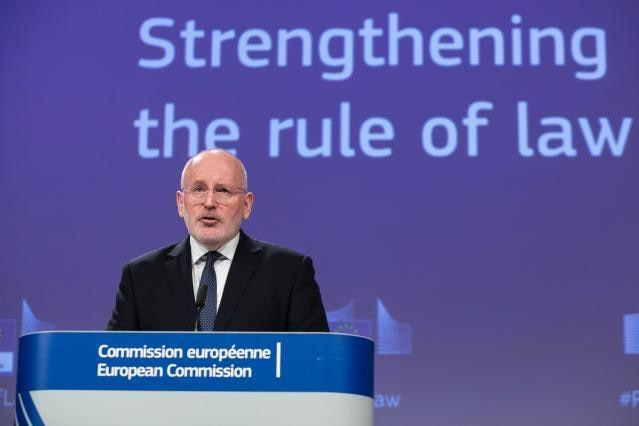
The European Commission delivered its verdict on the health of democracy across the bloc this week, and the picture it paints is one of stagnation rather than repair. Its seventh annual Rule of Law Report, published on 15 July, tracks judicial independence, media freedom, anti-corruption efforts and institutional checks in all 27 member states.

The recurring frustration is that recommendations pile up faster than reforms. Civil-society monitors found that 93% of the recommendations issued in the previous cycle simply repeated earlier ones, often word for word, while the number of genuinely new recommendations halved compared with the year before.

Hungary again sits at the bottom of most rankings. It has still not implemented the European Media Freedom Act, prompting an infringement procedure, and its media regulator remains under scrutiny as state advertising continues to distort the market. On seven of eight priority reforms, Budapest made no measurable progress.

Slovakia draws the sharpest warnings about trajectory. Monitors describe a government following a path similar to Hungary’s, with strategic lawsuits against journalists hardening into a systemic tool of intimidation and six of seven earlier recommendations left unaddressed.

Press-freedom groups have tracked the same slide. Slovakia fell to 38th in the most recent World Press Freedom Index, its lowest placing in fifteen years, a drop reporters link to open hostility from the governing coalition. You can read one detailed assessment from Liberties.

The report lands in an awkward political moment. Rule-of-law debates increasingly compete for attention with security and defence, and critics worry the annual exercise has settled into a box-ticking ritual that documents decline without arresting it. The Commission insists the report works as a diagnostic tool, not a court.

That defence only goes so far when the same problems reappear each summer. Watchdogs argue the EU’s mechanisms, from the report to budget conditionality, have proven largely ineffective at reversing backsliding once a government commits to it, because guidance without enforcement rarely changes behaviour.

There are brighter spots. Several member states have strengthened judicial appointment procedures and tightened lobbying transparency, and the Commission uses the report to acknowledge progress as well as failure. The trouble is that gains in one capital rarely offset entrenchment in another.

The deeper question is what the exercise achieves. If naming and shaming no longer moves the worst offenders, pressure will grow to link findings more tightly to EU money, a step that pits the defence of media freedom and judicial independence against the political cost of freezing funds to elected governments.

For now, the 2026 edition reads less as a turning point than as a careful record of a Union struggling to hold its own members to the standards it demands of applicants. Whether that record ever converts into consequences remains the open question.