Justice ministers meeting in the Council this week are set to throw their weight behind a dedicated pot of money for courts, judges and cross-border legal cooperation, agreeing a partial mandate on the new Justice programme that would run from 2028 to 2034. The move is a quiet rebuke to anyone who assumed judicial funding could be folded anonymously into a larger budget line and forgotten.
The programme is part of the next multiannual financial framework, the seven-year budget whose every euro is currently being fought over. What ministers want to protect is a ring-fenced instrument that pays for judicial cooperation in civil and criminal matters, funds the training that lets a magistrate in one member state trust a ruling from another, and underwrites projects promoting the independence and impartiality of the judiciary. Those are unglamorous items, easy to trim when negotiators hunt for savings, which is precisely why their defenders want them named and protected rather than absorbed.
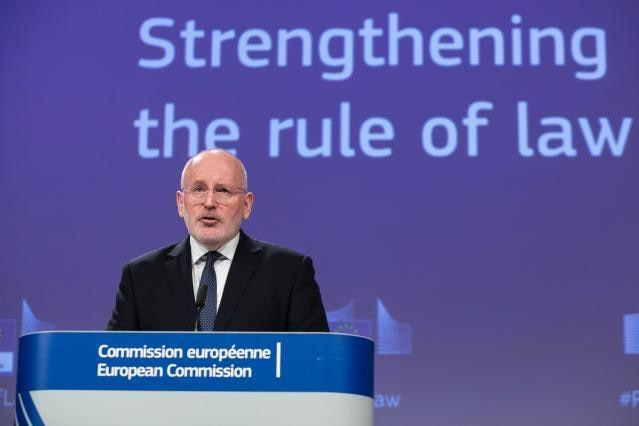
The political subtext is hard to miss. Judicial independence has become one of the most contested phrases in the Union, invoked in long-running disputes over how some governments appoint, discipline and pressure their judges. A funding line that explicitly bankrolls independence is therefore never merely administrative. It signals that the bloc intends to keep paying for the scaffolding of the rule of law even as it argues, sometimes bitterly, over who is undermining it.
A partial mandate is not the finished article. It hands the Council presidency authority to open negotiations with the European Parliament on the parts ministers have agreed, while leaving the most sensitive numbers hostage to the wider budget endgame. In practice that means the programme’s existence and shape can be settled now, with its actual envelope decided later, once the overall size of the 2028-2034 framework stops being a moving target.
Supporters argue the structure is sensible. Judicial cooperation is the kind of slow, technical work that withers without predictable money: databases that let courts exchange evidence, networks that speed up the return of abducted children across borders, exchanges that send prosecutors to learn how their counterparts operate. None of it generates headlines, and all of it collapses if funding arrives in unpredictable bursts. A multi-year programme offers the continuity that one-off grants cannot.
Critics, where they exist, tend to question leverage rather than principle. Money for judicial training is welcome, they say, but a cheque does little to restrain a government determined to lean on its own courts. The harder tools, the ones that actually condition cash on compliance, sit elsewhere in the EU’s machinery. A friendly funding programme and a punitive conditionality mechanism are not substitutes; the Union has tended to need both.
For now, the signal matters. By insisting that justice keeps its own clearly labelled line in the next budget, ministers are betting that what gets named gets defended. The figures will follow the broader haggling, but the architecture is taking shape, and it places the independence of Europe’s courts where its champions wanted it: in writing, in the budget, and hard to quietly delete.