The European Parliament inaugurated its highest civic distinction on 19 May, conferring the new European Order of Merit on its first cohort of twenty laureates during a ceremony in the Strasbourg hemicycle. The award, created last year on the initiative of President Roberta Metsola and approved by the Bureau, is designed as the institution’s symbolic answer to a moment when Europe’s democratic project is being tested both at its borders and inside its member states.
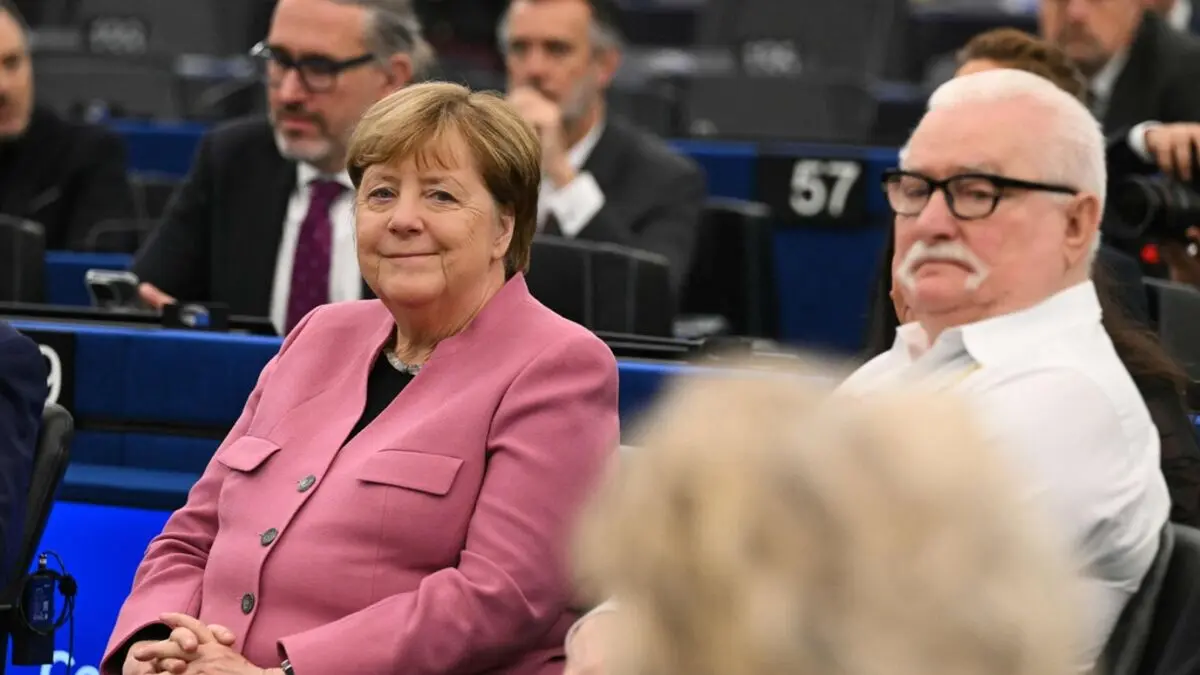
The ceremony was anchored by the elevation of three figures to the Order’s senior class of Distinguished Member. Former German Chancellor Angela Merkel, former Polish President Lech Walesa and Ukrainian President Volodymyr Zelenskyy received their insignia from Metsola and Commission President Ursula von der Leyen. Each delivered a short address that linked a personal trajectory to a chapter of the European story: Walesa’s Solidarity movement and the rebuilding of post-1989 Poland inside the Union, Merkel’s stewardship through eurozone and migration crises, and Zelenskyy’s wartime defence of Ukraine and continued candidacy for EU membership.
Of the twenty recipients announced earlier in spring, thirteen attended in person. The remaining names include former heads of state, civil society organisers, scientists associated with Europe’s vaccine response, and cultural figures connected to the Erasmus generation. The Bureau opted to keep the inaugural list politically balanced, with recipients drawn from across the Union as well as from candidate countries, a choice intended to forestall any perception that the Order would become a partisan instrument of one parliamentary group.
The decision to anoint Merkel was perhaps the most contested in the run-up to the ceremony. Critics in the chamber and in the wider European press argued that her government’s reliance on Russian gas through the Nord Stream projects, and her handling of the 2015 migration emergency, did not lend themselves to celebration without qualification. Supporters countered that the Order recognises sustained service to European integration over a career, not a final judgement on every policy choice. Metsola’s address explicitly named the debate, framing the Order as an invitation to discuss rather than a closing statement.
Beyond personalities, the Parliament is using the Order to reinforce a wider institutional message. With Western democracies under pressure from disinformation campaigns, growing illiberal sentiment in several member states and a return to transactional foreign policy across the Atlantic, the institution wants a visible instrument to celebrate the values written into Article 2 of the Treaty. The Order is consciously modelled on the French Legion d’honneur and other national systems, but its remit is European, and its insignia, ribbon and citation are designed by a panel chaired by the Parliament’s culture committee.
Future cohorts will be smaller, with the Bureau intending to award no more than ten honours per year, and nominations will involve the political groups, the President and an advisory panel of cultural and academic figures. National parliaments will be invited to propose candidates from 2027 onwards. The chamber’s ushers, in newly designed uniforms, opened the ceremonial procession to mark the institution’s entry into a tradition that European federalists have long argued was overdue. Whether the Order succeeds in shaping the broader civic memory of the Union will depend on the company that the next class of laureates keeps.