August 9, 2026
LATEST
New EU Gas Market Rules Take Effect With Consumer SafeguardsDeforestation Regulation Holds Its December Deadline Despite CutsDigital Omnibus Delays Europe’s High-Risk AI Deadline to 2027Europe’s Schools Confront a Widening Basic Skills GapRule of Law Report Finds Progress but Trust Still LagsIRIS2 Gains 66 Satellites as Brussels Signs the Rollout DealNature Restoration Plans Come Due as Member States Race a DeadlineECB Rates Hold at 2.25 Percent as Frankfurt Waits on the DataEU Budget Talks Turn to Cohesion as Ireland Takes OverWildfire Response Stretches Europe’s Emergency Fleet ThinCan Europe’s Quantum Plan Match Its Big Ambitions?Armenia Edges West as Moscow’s Grip Slips AwayEurope Inherits the World’s Aid Bill It Cannot Fully PayAir Passenger Rights Get Their First Overhaul in Two DecadesErasmus Opens a 5 Billion Euro Round for Skills and MobilityCeuta Crisis Pushes the EU Toward Faster Migrant ReturnsBulky Parcels Face a Packaging Crackdown From August 12Can Europe Build Its Drone Wall Before 2030 Arrives?Indonesia’s Trade Deal With Europe Nears Its Final SignatureEurope Leans on Beijing to Keep Climate Talks Alive Before AntalyaNew EU Gas Market Rules Take Effect With Consumer SafeguardsDeforestation Regulation Holds Its December Deadline Despite CutsDigital Omnibus Delays Europe’s High-Risk AI Deadline to 2027Europe’s Schools Confront a Widening Basic Skills GapRule of Law Report Finds Progress but Trust Still LagsIRIS2 Gains 66 Satellites as Brussels Signs the Rollout DealNature Restoration Plans Come Due as Member States Race a DeadlineECB Rates Hold at 2.25 Percent as Frankfurt Waits on the DataEU Budget Talks Turn to Cohesion as Ireland Takes OverWildfire Response Stretches Europe’s Emergency Fleet ThinCan Europe’s Quantum Plan Match Its Big Ambitions?Armenia Edges West as Moscow’s Grip Slips AwayEurope Inherits the World’s Aid Bill It Cannot Fully PayAir Passenger Rights Get Their First Overhaul in Two DecadesErasmus Opens a 5 Billion Euro Round for Skills and MobilityCeuta Crisis Pushes the EU Toward Faster Migrant ReturnsBulky Parcels Face a Packaging Crackdown From August 12Can Europe Build Its Drone Wall Before 2030 Arrives?Indonesia’s Trade Deal With Europe Nears Its Final SignatureEurope Leans on Beijing to Keep Climate Talks Alive Before Antalya
August 9, 2026
LATEST
New EU Gas Market Rules Take Effect With Consumer SafeguardsDeforestation Regulation Holds Its December Deadline Despite CutsDigital Omnibus Delays Europe’s High-Risk AI Deadline to 2027Europe’s Schools Confront a Widening Basic Skills GapRule of Law Report Finds Progress but Trust Still LagsIRIS2 Gains 66 Satellites as Brussels Signs the Rollout DealNature Restoration Plans Come Due as Member States Race a DeadlineECB Rates Hold at 2.25 Percent as Frankfurt Waits on the DataEU Budget Talks Turn to Cohesion as Ireland Takes OverWildfire Response Stretches Europe’s Emergency Fleet ThinCan Europe’s Quantum Plan Match Its Big Ambitions?Armenia Edges West as Moscow’s Grip Slips AwayEurope Inherits the World’s Aid Bill It Cannot Fully PayAir Passenger Rights Get Their First Overhaul in Two DecadesErasmus Opens a 5 Billion Euro Round for Skills and MobilityCeuta Crisis Pushes the EU Toward Faster Migrant ReturnsBulky Parcels Face a Packaging Crackdown From August 12Can Europe Build Its Drone Wall Before 2030 Arrives?Indonesia’s Trade Deal With Europe Nears Its Final SignatureEurope Leans on Beijing to Keep Climate Talks Alive Before AntalyaNew EU Gas Market Rules Take Effect With Consumer SafeguardsDeforestation Regulation Holds Its December Deadline Despite CutsDigital Omnibus Delays Europe’s High-Risk AI Deadline to 2027Europe’s Schools Confront a Widening Basic Skills GapRule of Law Report Finds Progress but Trust Still LagsIRIS2 Gains 66 Satellites as Brussels Signs the Rollout DealNature Restoration Plans Come Due as Member States Race a DeadlineECB Rates Hold at 2.25 Percent as Frankfurt Waits on the DataEU Budget Talks Turn to Cohesion as Ireland Takes OverWildfire Response Stretches Europe’s Emergency Fleet ThinCan Europe’s Quantum Plan Match Its Big Ambitions?Armenia Edges West as Moscow’s Grip Slips AwayEurope Inherits the World’s Aid Bill It Cannot Fully PayAir Passenger Rights Get Their First Overhaul in Two DecadesErasmus Opens a 5 Billion Euro Round for Skills and MobilityCeuta Crisis Pushes the EU Toward Faster Migrant ReturnsBulky Parcels Face a Packaging Crackdown From August 12Can Europe Build Its Drone Wall Before 2030 Arrives?Indonesia’s Trade Deal With Europe Nears Its Final SignatureEurope Leans on Beijing to Keep Climate Talks Alive Before Antalya

Rule of Law Report Nears as EU Scrutiny of Hungary Grows

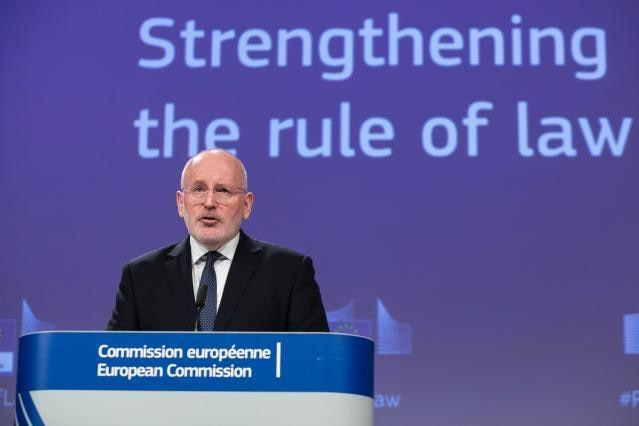
The EU Rule of Law Report 2026 is due within weeks, and few chapters will draw more scrutiny than Hungary’s. The European Commission publishes this annual health check each July, and last year’s edition landed on 8 July 2025. This year’s report arrives amid a sharp political shift in Budapest that could reshape the debate.

## What the rule of law report tracks

The report is not a ranking but a structured assessment of every member state across four pillars: the justice system, the anti-corruption framework, media pluralism and freedom, and the wider system of institutional checks and balances.

Each country receives its own chapter with specific recommendations, and the Commission then measures how far governments act on them the following year. That follow-up is where Hungary has repeatedly fallen short.

## Why Hungary dominates the 2026 report

Media freedom remains the sharpest concern. Hungary has not implemented the European Media Freedom Act, prompting an infringement procedure from the Commission.

Watchdogs describe a system of media capture built through dominance of public broadcasting, consolidation of private outlets under allied ownership, and state advertising that distorts the market. The Commission’s 2025 recommendations on media independence went largely unaddressed, and in some areas conditions deteriorated further.

Independent outlets have felt the pressure directly. In late 2025, one news portal faced a state investigation over alleged foreign financing, while criminal proceedings were opened against the owner of another major publisher. Civil-society groups have again fed detailed submissions into the 2026 assessment.

## A changed political landscape

The context is unusual this year. On 12 April 2026, the Tisza party won national elections with more than a two-thirds parliamentary majority, ending a long period of single-party dominance.

That result opens a path to reform. A supermajority gives the incoming government the numbers to rebuild checks and balances and to overhaul media regulation. Yet observers caution that dismantling entrenched structures takes far longer than winning an election, and that captured institutions rarely unwind on their own.

## What happens next

Once the report is published, its recommendations feed into the EU’s broader rule of law toolbox, which can include infringement cases and, in the most serious situations, budget conditionality that ties funding to compliance.

For Budapest, the 2026 report may read less as a verdict on the past and more as a benchmark for the reforms now promised. The Commission’s targeted consultation is complete, the country chapters are drafted, and the coming weeks will show how far Brussels judges Hungary to have moved, and how far it still has to go. The answer will shape both the funds at stake and the wider signal to other governments watching how the EU polices its own rules. It will also test the Commission’s own credibility, since critics have long argued that its annual reports diagnose problems without forcing change. A cooperative government in Budapest could, for once, turn recommendations into results, offering a rare case study in whether the rule of law cycle can actually reverse democratic backsliding rather than merely document it.