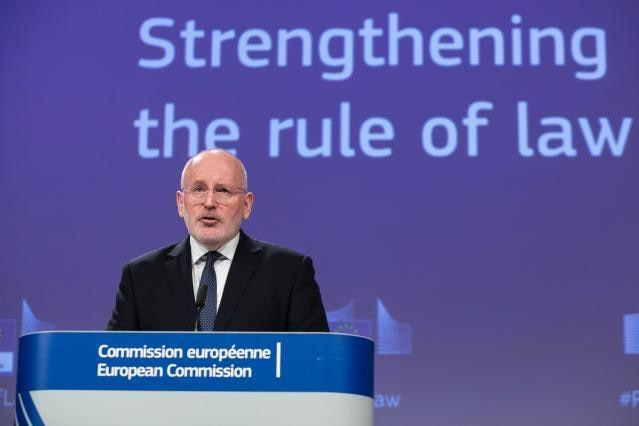
Rule of law in the European Union faces its annual audit this week, as the Commission prepares to publish its seventh yearly report on how the bloc’s governments treat courts, media and anti-corruption safeguards.
The report, due on 15 July, has become a fixture of the EU calendar. It reviews all 27 member states and, increasingly, the countries queuing to join, grading each on judicial independence, press freedom, checks on power and the fight against graft. The Commission builds its findings from country visits, national submissions and a wide net of stakeholder input.
Independent watchdogs have already set the tone. The civil liberties network Liberties, in its own parallel review, labelled the governments of Bulgaria, Croatia, Hungary, Italy and Slovakia “dismantlers” that it says are actively chipping away at democratic guardrails. It placed a larger cluster, including Czechia, Estonia, Greece, Ireland, Lithuania, the Netherlands, Romania and Spain, among the “stagnators” where little moves in either direction.
Only Latvia earned the network’s top billing as a genuine “hard worker” pushing standards upward. That lopsided scorecard hands the Commission an awkward backdrop, because it suggests the pressure of six previous reports has failed to shift most capitals off their current path.
The sharpest criticism targets the exercise itself. Analysts who tracked last year’s edition found that governments recycled the overwhelming majority of the Commission’s recommendations from earlier years, often word for word, while Brussels roughly halved the number of new recommendations it issued. To critics, that pattern turns a serious accountability tool into a box-ticking ritual.
The Commission defends the approach as a marathon rather than a sprint. Officials argue that naming problems every year, and tying some findings to the bloc’s budget rules, slowly narrows the space for backsliding governments to act with impunity. They also note that the mere existence of a public, comparable ranking gives reformers at home a lever to demand change.
Hungary remains the sternest test. Brussels has frozen billions in funds over concerns about judicial independence and corruption, and the report’s language on Budapest will be read closely for any hint of movement. Slovakia and, more recently, other capitals have drawn similar scrutiny over changes to their courts and public broadcasters.
Journalist groups want teeth, not prose. They have pressed the Commission to pair its diagnosis with faster enforcement, warning that endless documentation without consequences erodes faith in the whole system. Their frustration underlines a deeper question hanging over the exercise: whether a report can defend democracy if governments feel free to ignore it.
The full assessment will appear on the Commission’s rule of law portal. What it recommends matters less than what member states finally choose to do, and on that score the past six years offer little comfort.