August 9, 2026
LATEST
New EU Gas Market Rules Take Effect With Consumer SafeguardsDeforestation Regulation Holds Its December Deadline Despite CutsDigital Omnibus Delays Europe’s High-Risk AI Deadline to 2027Europe’s Schools Confront a Widening Basic Skills GapRule of Law Report Finds Progress but Trust Still LagsIRIS2 Gains 66 Satellites as Brussels Signs the Rollout DealNature Restoration Plans Come Due as Member States Race a DeadlineECB Rates Hold at 2.25 Percent as Frankfurt Waits on the DataEU Budget Talks Turn to Cohesion as Ireland Takes OverWildfire Response Stretches Europe’s Emergency Fleet ThinCan Europe’s Quantum Plan Match Its Big Ambitions?Armenia Edges West as Moscow’s Grip Slips AwayEurope Inherits the World’s Aid Bill It Cannot Fully PayAir Passenger Rights Get Their First Overhaul in Two DecadesErasmus Opens a 5 Billion Euro Round for Skills and MobilityCeuta Crisis Pushes the EU Toward Faster Migrant ReturnsBulky Parcels Face a Packaging Crackdown From August 12Can Europe Build Its Drone Wall Before 2030 Arrives?Indonesia’s Trade Deal With Europe Nears Its Final SignatureEurope Leans on Beijing to Keep Climate Talks Alive Before AntalyaNew EU Gas Market Rules Take Effect With Consumer SafeguardsDeforestation Regulation Holds Its December Deadline Despite CutsDigital Omnibus Delays Europe’s High-Risk AI Deadline to 2027Europe’s Schools Confront a Widening Basic Skills GapRule of Law Report Finds Progress but Trust Still LagsIRIS2 Gains 66 Satellites as Brussels Signs the Rollout DealNature Restoration Plans Come Due as Member States Race a DeadlineECB Rates Hold at 2.25 Percent as Frankfurt Waits on the DataEU Budget Talks Turn to Cohesion as Ireland Takes OverWildfire Response Stretches Europe’s Emergency Fleet ThinCan Europe’s Quantum Plan Match Its Big Ambitions?Armenia Edges West as Moscow’s Grip Slips AwayEurope Inherits the World’s Aid Bill It Cannot Fully PayAir Passenger Rights Get Their First Overhaul in Two DecadesErasmus Opens a 5 Billion Euro Round for Skills and MobilityCeuta Crisis Pushes the EU Toward Faster Migrant ReturnsBulky Parcels Face a Packaging Crackdown From August 12Can Europe Build Its Drone Wall Before 2030 Arrives?Indonesia’s Trade Deal With Europe Nears Its Final SignatureEurope Leans on Beijing to Keep Climate Talks Alive Before Antalya
August 9, 2026
LATEST
New EU Gas Market Rules Take Effect With Consumer SafeguardsDeforestation Regulation Holds Its December Deadline Despite CutsDigital Omnibus Delays Europe’s High-Risk AI Deadline to 2027Europe’s Schools Confront a Widening Basic Skills GapRule of Law Report Finds Progress but Trust Still LagsIRIS2 Gains 66 Satellites as Brussels Signs the Rollout DealNature Restoration Plans Come Due as Member States Race a DeadlineECB Rates Hold at 2.25 Percent as Frankfurt Waits on the DataEU Budget Talks Turn to Cohesion as Ireland Takes OverWildfire Response Stretches Europe’s Emergency Fleet ThinCan Europe’s Quantum Plan Match Its Big Ambitions?Armenia Edges West as Moscow’s Grip Slips AwayEurope Inherits the World’s Aid Bill It Cannot Fully PayAir Passenger Rights Get Their First Overhaul in Two DecadesErasmus Opens a 5 Billion Euro Round for Skills and MobilityCeuta Crisis Pushes the EU Toward Faster Migrant ReturnsBulky Parcels Face a Packaging Crackdown From August 12Can Europe Build Its Drone Wall Before 2030 Arrives?Indonesia’s Trade Deal With Europe Nears Its Final SignatureEurope Leans on Beijing to Keep Climate Talks Alive Before AntalyaNew EU Gas Market Rules Take Effect With Consumer SafeguardsDeforestation Regulation Holds Its December Deadline Despite CutsDigital Omnibus Delays Europe’s High-Risk AI Deadline to 2027Europe’s Schools Confront a Widening Basic Skills GapRule of Law Report Finds Progress but Trust Still LagsIRIS2 Gains 66 Satellites as Brussels Signs the Rollout DealNature Restoration Plans Come Due as Member States Race a DeadlineECB Rates Hold at 2.25 Percent as Frankfurt Waits on the DataEU Budget Talks Turn to Cohesion as Ireland Takes OverWildfire Response Stretches Europe’s Emergency Fleet ThinCan Europe’s Quantum Plan Match Its Big Ambitions?Armenia Edges West as Moscow’s Grip Slips AwayEurope Inherits the World’s Aid Bill It Cannot Fully PayAir Passenger Rights Get Their First Overhaul in Two DecadesErasmus Opens a 5 Billion Euro Round for Skills and MobilityCeuta Crisis Pushes the EU Toward Faster Migrant ReturnsBulky Parcels Face a Packaging Crackdown From August 12Can Europe Build Its Drone Wall Before 2030 Arrives?Indonesia’s Trade Deal With Europe Nears Its Final SignatureEurope Leans on Beijing to Keep Climate Talks Alive Before Antalya

SAFE Loans Reshape Europe’s Defence Industrial Base

The Security Action for Europe (SAFE) instrument has quietly become the most consequential procurement vehicle the European Union has ever attempted to build. Adopted by the Council in May 2025 with a 150 billion euro ceiling of long-maturity loans, the programme has moved from political concept to disbursement reality with remarkable speed. Between mid-January and early April 2026, the Commission and Council together cleared funding plans for eighteen Member States, with the first wave of eight — Belgium, Bulgaria, Denmark, Spain, Croatia, Cyprus, Portugal and Romania — receiving pre-financing tranches that allowed national procurement offices to begin contracting before the spring.

The pace alone is unusual. EU financial instruments typically take years to translate political agreement into signed contracts; SAFE has compressed that cycle into months by tying disbursement to defence investment plans submitted directly by capitals rather than through the traditional cohesion-fund pipeline. Estonia, Greece, Italy, Latvia, Lithuania, Poland, Slovakia and Finland followed in the second wave, with their combined 74 billion euro plans approved in late January. By the end of March, Czechia and France had cleared their own approvals, bringing the instrument’s coverage close to the geographic spine of the Union’s eastern flank.

What makes SAFE structurally different from earlier defence-financing experiments is its hard-wiring of joint procurement. To draw down loan funding, applicant states must build their projects around common procurement involving at least one other Member State, with Ukraine and EEA-EFTA countries explicitly eligible as co-procurers. The design choice answers a long-standing critique that European defence spending has been simultaneously enormous and fragmented, with Member States buying twenty-seven slightly different versions of equipment that should have been standardised. Whether SAFE actually delivers consolidation will depend less on Commission rules than on whether large producer countries — France and Germany above all — accept procurement leadership shared with smaller partners.

The instrument also sits at the centre of a broader political claim. SAFE is the first and most concrete pillar of the ReArm Europe Plan, which the Commission has framed as a vehicle to unlock more than 800 billion euro of additional defence spending across the bloc by activating the national escape clause of the Stability and Growth Pact, mobilising European Investment Bank lending, and redirecting cohesion funds toward dual-use capability. Officials in the Berlaymont privately concede that the headline figure assumes nearly all eligible Member States exhaust the fiscal flexibility on offer, an assumption that recent national budget debates in The Hague and Madrid suggest is optimistic.

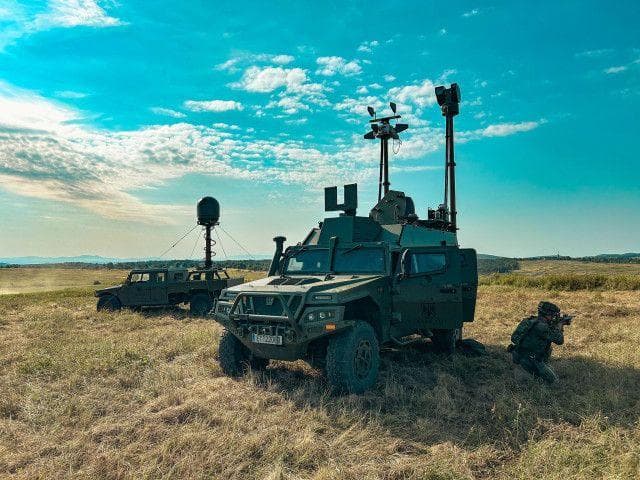
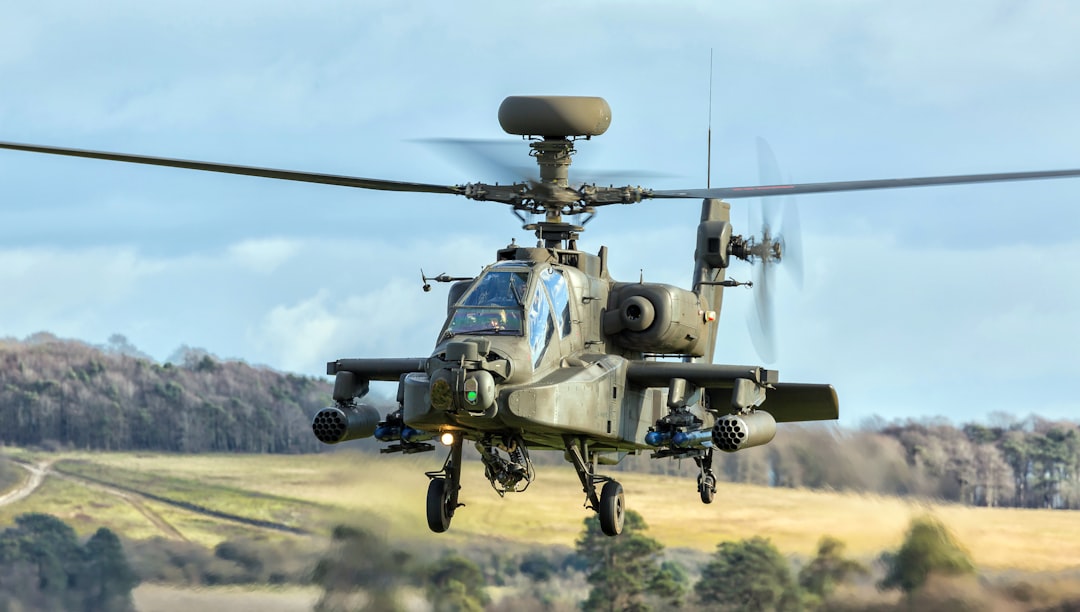
The questions now shifting into focus are industrial rather than financial. SAFE loans must be spent on equipment with at least 65 percent European content by value, a threshold designed to channel orders toward producers established inside the Union, Norway, Iceland, Liechtenstein and Ukraine. That clause has already drawn quiet objections from capitals reliant on American or South Korean platforms for short-term capability gaps, particularly in air defence and long-range fires. The Commission’s compromise — allowing limited derogations for items unavailable from European suppliers — buys political space without resolving the underlying tension between speed of delivery and the goal of rebuilding indigenous European production lines.

For all the speed, SAFE remains an instrument operating in the shadow of larger unresolved choices. The post-2027 Multiannual Financial Framework negotiations will determine whether defence becomes a permanent line in the EU budget or remains an emergency-financed exception. The answer, by all indications in the corridors of the Berlaymont this week, will shape European strategic autonomy for a generation.