Headline external border data have rarely landed as cleanly aligned with Brussels’ political messaging as they did on 18 May 2026, when the Commission released its fourth State of Schengen Report alongside fresh detection figures from Frontex. Irregular crossings into the European Union dropped 26 per cent in 2025 and are running 40 per cent below comparable 2025 levels through the first four months of 2026, results the Commission attributes to a combination of operational cooperation with North and West African partners, expanded surveillance on the Eastern flank, and a Schengen cycle that now binds Member States to common quality standards.
The headline number that mattered most inside the Berlaymont, however, was not the crossings figure but the return rate. The 28 per cent return rate recorded in 2025 is the highest the bloc has achieved in a decade and the first measurable validation of the legal toolkit assembled under Commissioner Magnus Brunner since the Return Regulation began moving through the Council in late 2025. Whether that rate can be sustained once the Pact on Migration and Asylum enters application on 12 June 2026 is the open question every Permanent Representation is now modelling internally.
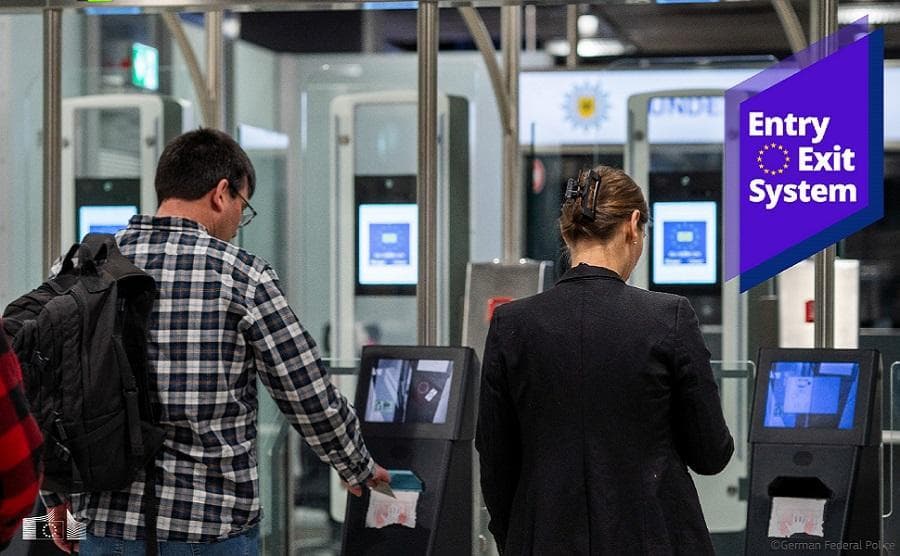
The 18 May report sets four priorities for the fifth Schengen cycle, which runs across 2026 and 2027. The first is digital consolidation, anchored on the Entry/Exit System that became fully operational in April after a six-month phased deployment. EES has already processed 66 million third-country national entries and exits and recorded 32,000 refusal-of-entry decisions in its first half-year, a volume that has effectively rebuilt the bloc’s primary line of inspection data from scratch. The European Travel Information and Authorisation System is due to switch on later in 2026, completing the digital perimeter.
The second priority is closing the gap between Schengen evaluations and corrective action. Evaluation reports have for years catalogued deficiencies, particularly around external border infrastructure, returns enforcement and asylum processing capacity, without producing the legally binding remediation pathways that ministers had originally envisaged. The Commission’s text now signals that the new Schengen Council, which has met four times since its 2023 creation, will assume a more directive role in setting Member State milestones.
The third priority concerns internal border controls, where the picture is more politically delicate. France has now extended its internal Schengen checks for more than a decade, and Austria, Germany and the Nordic states have all reintroduced controls in successive cycles invoking secondary movements, public-security concerns or both. The Commission carefully avoids naming the offending capitals in its operative paragraphs, but the report’s statistical annex makes the duration of these regimes uncomfortably visible. Brunner has begun describing prolonged internal checks as incompatible with the Schengen acquis, language that signals a procedural escalation in 2026 unless those Member States produce graduated phase-out plans.
The fourth priority bundles preparedness and crisis management, including a more explicit role for Frontex under its strengthened mandate and faster activation pathways for the Schengen Border Code’s emergency provisions. Parliament’s draft briefing on Frontex, published in May, underlines that the agency’s operational footprint has grown faster than its accountability architecture, a tension that the Commission’s report acknowledges only obliquely.
The report’s broader achievement is to fix a coherent baseline ahead of the Pact’s entry into application. Whether the 28 per cent return rate, the 40 per cent crossings drop and the EES rollout add up to a stable equilibrium or a high-water mark before the Pact’s structural pressures bite is the next test, and the State of Schengen 2027 will be the document that answers it.