August 22, 2026
LATEST
What the EU Taiwan Framework Would Actually Have to DoKorea Signed a Digital Trade Deal That Nobody Has RatifiedCritical Minerals in Mongolia Still Have to Cross Two BordersCan an Indonesia Trade Deal Survive Two Years of RatifyingCross-Border Data Orders Went Live Before the Plumbing DidPlatform Work Rules Take Effect in December and Few Are ReadyCan Europe’s Firefighting Fleet Keep Pace With EU WildfiresThe AI Act Deadline Passed on 2 August and Nothing BitWhy Construction Keeps Shrinking While Confidence ImprovesAccession Talks Stall Again and September 1 Is the TestBrussels Applied a Trade Deal It Cannot Yet RatifyAfrica’s Power Market Now Needs Money More Than BlueprintsLong-Term Budget Talks Enter Autumn Without a Council LineForeign Subsidies Enforcement Now Turns on a Dublin RaidWho Writes Europe’s Telecom Rules Once Copper DisappearsDisability Cards Exist on Paper and Nowhere Else Until 2028Losing Visa-Free Travel Now Takes a Thirty Percent SwingTwenty Flagship Actions Will Test Whether the Culture Compass WorksEurope’s Quality Jobs Act Now Rests on What Unions Do by SeptemberDoes a Three Euro Parcel Duty Change Anything About Cheap ImportsWhat the EU Taiwan Framework Would Actually Have to DoKorea Signed a Digital Trade Deal That Nobody Has RatifiedCritical Minerals in Mongolia Still Have to Cross Two BordersCan an Indonesia Trade Deal Survive Two Years of RatifyingCross-Border Data Orders Went Live Before the Plumbing DidPlatform Work Rules Take Effect in December and Few Are ReadyCan Europe’s Firefighting Fleet Keep Pace With EU WildfiresThe AI Act Deadline Passed on 2 August and Nothing BitWhy Construction Keeps Shrinking While Confidence ImprovesAccession Talks Stall Again and September 1 Is the TestBrussels Applied a Trade Deal It Cannot Yet RatifyAfrica’s Power Market Now Needs Money More Than BlueprintsLong-Term Budget Talks Enter Autumn Without a Council LineForeign Subsidies Enforcement Now Turns on a Dublin RaidWho Writes Europe’s Telecom Rules Once Copper DisappearsDisability Cards Exist on Paper and Nowhere Else Until 2028Losing Visa-Free Travel Now Takes a Thirty Percent SwingTwenty Flagship Actions Will Test Whether the Culture Compass WorksEurope’s Quality Jobs Act Now Rests on What Unions Do by SeptemberDoes a Three Euro Parcel Duty Change Anything About Cheap Imports
August 22, 2026
LATEST
What the EU Taiwan Framework Would Actually Have to DoKorea Signed a Digital Trade Deal That Nobody Has RatifiedCritical Minerals in Mongolia Still Have to Cross Two BordersCan an Indonesia Trade Deal Survive Two Years of RatifyingCross-Border Data Orders Went Live Before the Plumbing DidPlatform Work Rules Take Effect in December and Few Are ReadyCan Europe’s Firefighting Fleet Keep Pace With EU WildfiresThe AI Act Deadline Passed on 2 August and Nothing BitWhy Construction Keeps Shrinking While Confidence ImprovesAccession Talks Stall Again and September 1 Is the TestBrussels Applied a Trade Deal It Cannot Yet RatifyAfrica’s Power Market Now Needs Money More Than BlueprintsLong-Term Budget Talks Enter Autumn Without a Council LineForeign Subsidies Enforcement Now Turns on a Dublin RaidWho Writes Europe’s Telecom Rules Once Copper DisappearsDisability Cards Exist on Paper and Nowhere Else Until 2028Losing Visa-Free Travel Now Takes a Thirty Percent SwingTwenty Flagship Actions Will Test Whether the Culture Compass WorksEurope’s Quality Jobs Act Now Rests on What Unions Do by SeptemberDoes a Three Euro Parcel Duty Change Anything About Cheap ImportsWhat the EU Taiwan Framework Would Actually Have to DoKorea Signed a Digital Trade Deal That Nobody Has RatifiedCritical Minerals in Mongolia Still Have to Cross Two BordersCan an Indonesia Trade Deal Survive Two Years of RatifyingCross-Border Data Orders Went Live Before the Plumbing DidPlatform Work Rules Take Effect in December and Few Are ReadyCan Europe’s Firefighting Fleet Keep Pace With EU WildfiresThe AI Act Deadline Passed on 2 August and Nothing BitWhy Construction Keeps Shrinking While Confidence ImprovesAccession Talks Stall Again and September 1 Is the TestBrussels Applied a Trade Deal It Cannot Yet RatifyAfrica’s Power Market Now Needs Money More Than BlueprintsLong-Term Budget Talks Enter Autumn Without a Council LineForeign Subsidies Enforcement Now Turns on a Dublin RaidWho Writes Europe’s Telecom Rules Once Copper DisappearsDisability Cards Exist on Paper and Nowhere Else Until 2028Losing Visa-Free Travel Now Takes a Thirty Percent SwingTwenty Flagship Actions Will Test Whether the Culture Compass WorksEurope’s Quality Jobs Act Now Rests on What Unions Do by SeptemberDoes a Three Euro Parcel Duty Change Anything About Cheap Imports

Shrinking Rhine Chokes the Freight Backbone of German Trade

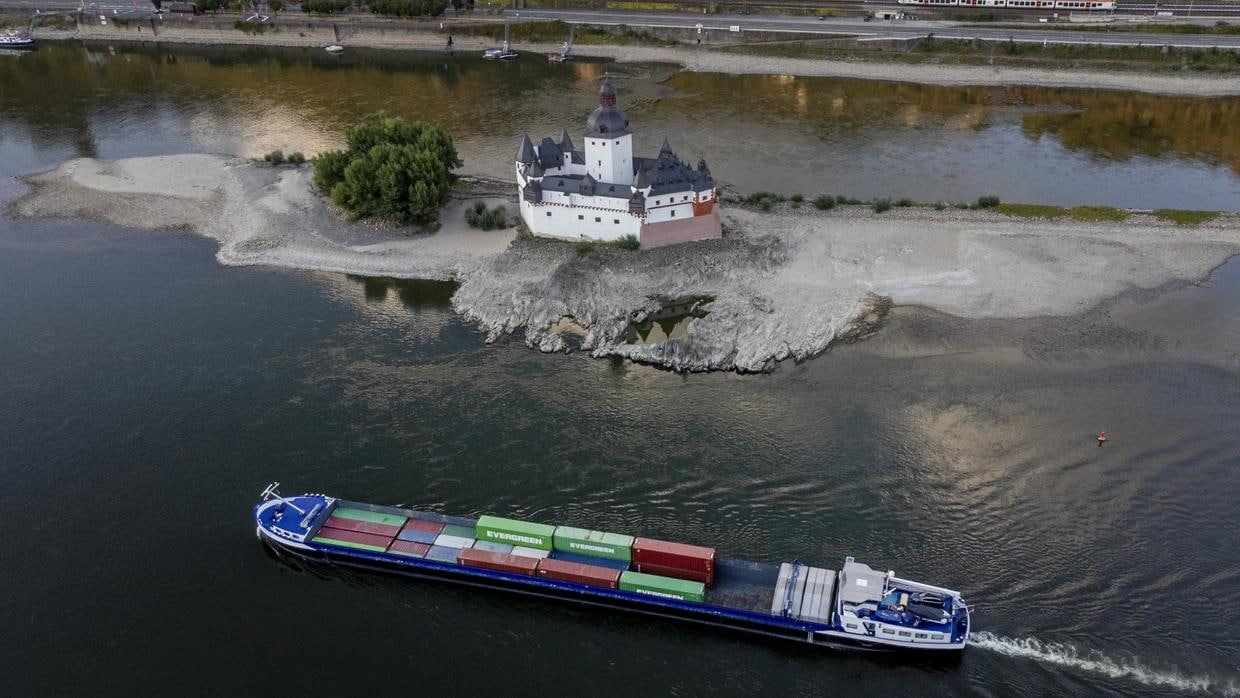
Dwindling water on Germany’s largest rivers has thrown one of Europe’s busiest freight arteries into crisis, and the disruption is spreading well beyond the barge operators who feel it first. Weeks of heat and drought have pulled the Rhine down toward record lows, leaving vessels unable to load anything close to a full cargo and raising fresh fears for an economy that can ill afford another shock.

The gauge that traders watch most closely sits at Kaub, west of Frankfurt, where the reference reading fell to roughly 16 centimetres in the second week of August with forecasts pointing to single digits by midweek. At those depths a barge cannot ride low in the water without scraping the riverbed, so operators load light to stay afloat. Many are sailing at a fifth or less of their normal capacity, and the inland port of Duisburg reports that loading levels have dropped to about a third of usual volumes.

The stakes are large because the Rhine is no ordinary waterway. In a normal year it carries close to 80% of Germany’s inland shipping traffic, moving some 285 million tonnes of coal, chemicals, grain, fuel and industrial parts along its course. When the river runs dry, factories that depend on just-in-time deliveries scramble for trucks and trains that cost more and cannot match the volume a single barge hauls. The head of Germany’s domestic shipping association has warned that the dry spell arrived early and that 2026 could prove a once-in-a-century event.

The trouble does not stop at the German border. Low levels on the Danube have squeezed traffic across central and eastern Europe, and Romania went so far as to shut down the sole working reactor at its Cernavoda nuclear plant, which draws cooling water from the river, while deploying naval crews to clear silted channels. Each of these episodes chips away at the reliability of a transport network that Brussels has spent years trying to shift from road to water in the name of lower emissions.

That climate ambition now collides with a climate reality. The European Union has long promoted inland waterways as a cleaner alternative to congested motorways, yet a barge is only green if it can sail. Repeated low-water summers threaten to undo the case for the very mode of transport the bloc wants to expand, and they expose how thinly the continent has planned for rivers that no longer behave as they once did.

Shippers can do little but wait for rain, adjust schedules and pass higher costs down the chain to the manufacturers and households at the end of it. Economists caution that a prolonged squeeze could shave a measurable slice off German growth, echoing the damage seen in earlier drought years. The Commission’s transport department has pressed member states to invest in more resilient waterways, but dredging plans and new fleets take years to deliver. For this summer at least, the Rhine sets the pace, and it is running slow.