August 9, 2026
LATEST
Pension Savings Rules Get a Reset as the EU Scraps the 1% CapMedicine Shortages Move to the Heart of Europe’s Pharma ResetJapan Becomes Europe’s Closest Security Partner in AsiaCan Europe’s New Zealand Deal Anchor It in the Pacific?Chip Research Binds Europe and South Korea CloserMinimum Prices Replace Tariffs in Europe’s China Car DealBrussels and Beijing Keep Talking While the Trade Gap WidensKorean Weapons and EU Loans Now Bankroll Europe’s RearmamentNew EU Gas Market Rules Take Effect With Consumer SafeguardsDeforestation Regulation Holds Its December Deadline Despite CutsDigital Omnibus Delays Europe’s High-Risk AI Deadline to 2027Europe’s Schools Confront a Widening Basic Skills GapRule of Law Report Finds Progress but Trust Still LagsIRIS2 Gains 66 Satellites as Brussels Signs the Rollout DealNature Restoration Plans Come Due as Member States Race a DeadlineECB Rates Hold at 2.25 Percent as Frankfurt Waits on the DataEU Budget Talks Turn to Cohesion as Ireland Takes OverWildfire Response Stretches Europe’s Emergency Fleet ThinCan Europe’s Quantum Plan Match Its Big Ambitions?Armenia Edges West as Moscow’s Grip Slips AwayPension Savings Rules Get a Reset as the EU Scraps the 1% CapMedicine Shortages Move to the Heart of Europe’s Pharma ResetJapan Becomes Europe’s Closest Security Partner in AsiaCan Europe’s New Zealand Deal Anchor It in the Pacific?Chip Research Binds Europe and South Korea CloserMinimum Prices Replace Tariffs in Europe’s China Car DealBrussels and Beijing Keep Talking While the Trade Gap WidensKorean Weapons and EU Loans Now Bankroll Europe’s RearmamentNew EU Gas Market Rules Take Effect With Consumer SafeguardsDeforestation Regulation Holds Its December Deadline Despite CutsDigital Omnibus Delays Europe’s High-Risk AI Deadline to 2027Europe’s Schools Confront a Widening Basic Skills GapRule of Law Report Finds Progress but Trust Still LagsIRIS2 Gains 66 Satellites as Brussels Signs the Rollout DealNature Restoration Plans Come Due as Member States Race a DeadlineECB Rates Hold at 2.25 Percent as Frankfurt Waits on the DataEU Budget Talks Turn to Cohesion as Ireland Takes OverWildfire Response Stretches Europe’s Emergency Fleet ThinCan Europe’s Quantum Plan Match Its Big Ambitions?Armenia Edges West as Moscow’s Grip Slips Away
August 9, 2026
LATEST
Pension Savings Rules Get a Reset as the EU Scraps the 1% CapMedicine Shortages Move to the Heart of Europe’s Pharma ResetJapan Becomes Europe’s Closest Security Partner in AsiaCan Europe’s New Zealand Deal Anchor It in the Pacific?Chip Research Binds Europe and South Korea CloserMinimum Prices Replace Tariffs in Europe’s China Car DealBrussels and Beijing Keep Talking While the Trade Gap WidensKorean Weapons and EU Loans Now Bankroll Europe’s RearmamentNew EU Gas Market Rules Take Effect With Consumer SafeguardsDeforestation Regulation Holds Its December Deadline Despite CutsDigital Omnibus Delays Europe’s High-Risk AI Deadline to 2027Europe’s Schools Confront a Widening Basic Skills GapRule of Law Report Finds Progress but Trust Still LagsIRIS2 Gains 66 Satellites as Brussels Signs the Rollout DealNature Restoration Plans Come Due as Member States Race a DeadlineECB Rates Hold at 2.25 Percent as Frankfurt Waits on the DataEU Budget Talks Turn to Cohesion as Ireland Takes OverWildfire Response Stretches Europe’s Emergency Fleet ThinCan Europe’s Quantum Plan Match Its Big Ambitions?Armenia Edges West as Moscow’s Grip Slips AwayPension Savings Rules Get a Reset as the EU Scraps the 1% CapMedicine Shortages Move to the Heart of Europe’s Pharma ResetJapan Becomes Europe’s Closest Security Partner in AsiaCan Europe’s New Zealand Deal Anchor It in the Pacific?Chip Research Binds Europe and South Korea CloserMinimum Prices Replace Tariffs in Europe’s China Car DealBrussels and Beijing Keep Talking While the Trade Gap WidensKorean Weapons and EU Loans Now Bankroll Europe’s RearmamentNew EU Gas Market Rules Take Effect With Consumer SafeguardsDeforestation Regulation Holds Its December Deadline Despite CutsDigital Omnibus Delays Europe’s High-Risk AI Deadline to 2027Europe’s Schools Confront a Widening Basic Skills GapRule of Law Report Finds Progress but Trust Still LagsIRIS2 Gains 66 Satellites as Brussels Signs the Rollout DealNature Restoration Plans Come Due as Member States Race a DeadlineECB Rates Hold at 2.25 Percent as Frankfurt Waits on the DataEU Budget Talks Turn to Cohesion as Ireland Takes OverWildfire Response Stretches Europe’s Emergency Fleet ThinCan Europe’s Quantum Plan Match Its Big Ambitions?Armenia Edges West as Moscow’s Grip Slips Away

Universities Confront AI As Educators Converge On Leuven

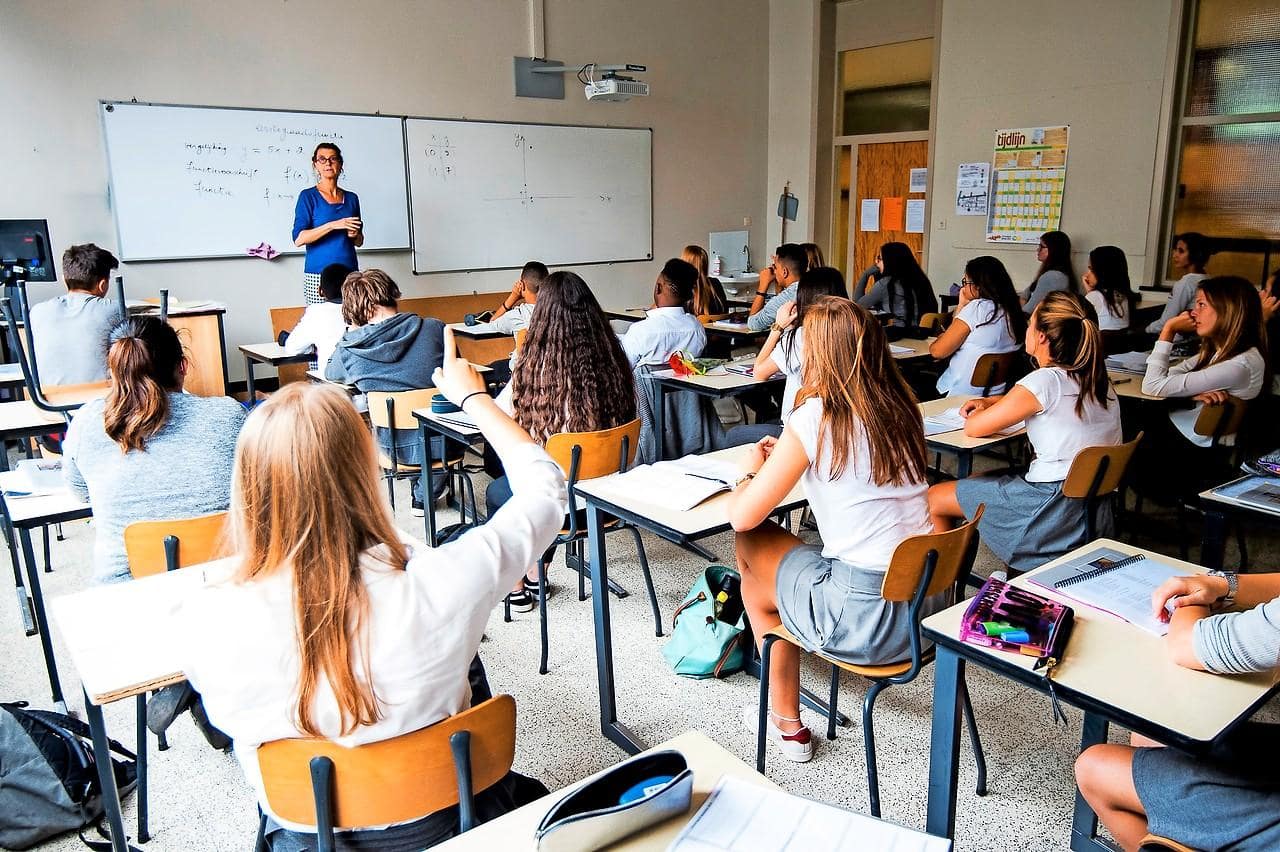
When educators from across the continent gather in the Belgian university town of Leuven on 17 and 18 June, the conversation will circle around a question that has unsettled classrooms everywhere: what does teaching look like once artificial intelligence can write the essay, generate the lecture and grade the test? The Media and Learning 2026 conference, hosted with KU Leuven’s Learning Lab under the banner of co-creating the future of learning, has become an unlikely barometer for how Europe’s higher education sector is metabolising a technology that arrived faster than any curriculum could absorb it.

The programme reads like a map of institutional anxiety and ambition in equal measure. Sessions on AI-supported co-creation sit beside panels on new forms of assessment, immersive learning and flexible pathways for students who no longer move through university in a straight line. A pre-conference workshop devoted to AI practices and policies asks how institutions can prepare graduates for jobs that may not yet exist while embedding the technology into staff training and planning. The framing is telling. The debate has moved past whether AI belongs in education and toward how to govern it without surrendering the things that make learning worthwhile.

That shift matters for the European Union, which has spent years positioning itself as the world’s rule-setter for digital technology. Its AI Act draws hard lines around high-risk uses, and education is explicitly among the sensitive domains where automated systems that score or sort students face strict scrutiny. A gathering of the people who actually deploy these tools in lecture halls is, in effect, where abstract regulation meets daily practice. The lessons that emerge from rooms full of teachers tend to be more honest than any policy paper.

Running underneath the AI excitement is a quieter, older concern: media literacy. The same continent racing to integrate generative tools is also confronting an information environment polluted by synthetic content, manipulated video and industrial-scale disinformation. The Union has poured funding into media literacy through its Creative Europe programme precisely because the skills required to spot a fabricated clip are now civic survival tools, not academic niceties. The two agendas are inseparable. A generation taught to use AI fluently but never taught to doubt what it produces would be poorly served indeed.

There is a risk in all this enthusiasm that Europe mistakes activity for strategy. Conferences, workshops and funding calls multiply, yet the underlying tension remains unresolved. Universities are being asked simultaneously to embrace AI to stay competitive and to police it to protect academic integrity. Assessment systems built for an era of handwritten exams are creaking under tools that can produce plausible work in seconds. No keynote or pilot project dissolves that contradiction; it can only be managed, slowly and unevenly, institution by institution.

What events like this gathering offer is less a solution than a shared vocabulary. When teaching staff from dozens of countries compare what works and what fails, they build the informal consensus that eventually hardens into best practice and, later, into policy. Europe’s edge in education has never been the speed of its technology but the durability of its institutions and the seriousness with which it treats learning as a public good. Whether that advantage survives the AI transition depends on conversations like the ones about to unfold in Leuven, far from the regulatory spotlight but closer to where the future is actually decided.