August 9, 2026
LATEST
New EU Gas Market Rules Take Effect With Consumer SafeguardsDeforestation Regulation Holds Its December Deadline Despite CutsDigital Omnibus Delays Europe’s High-Risk AI Deadline to 2027Europe’s Schools Confront a Widening Basic Skills GapRule of Law Report Finds Progress but Trust Still LagsIRIS2 Gains 66 Satellites as Brussels Signs the Rollout DealNature Restoration Plans Come Due as Member States Race a DeadlineECB Rates Hold at 2.25 Percent as Frankfurt Waits on the DataEU Budget Talks Turn to Cohesion as Ireland Takes OverWildfire Response Stretches Europe’s Emergency Fleet ThinCan Europe’s Quantum Plan Match Its Big Ambitions?Armenia Edges West as Moscow’s Grip Slips AwayEurope Inherits the World’s Aid Bill It Cannot Fully PayAir Passenger Rights Get Their First Overhaul in Two DecadesErasmus Opens a 5 Billion Euro Round for Skills and MobilityCeuta Crisis Pushes the EU Toward Faster Migrant ReturnsBulky Parcels Face a Packaging Crackdown From August 12Can Europe Build Its Drone Wall Before 2030 Arrives?Indonesia’s Trade Deal With Europe Nears Its Final SignatureEurope Leans on Beijing to Keep Climate Talks Alive Before AntalyaNew EU Gas Market Rules Take Effect With Consumer SafeguardsDeforestation Regulation Holds Its December Deadline Despite CutsDigital Omnibus Delays Europe’s High-Risk AI Deadline to 2027Europe’s Schools Confront a Widening Basic Skills GapRule of Law Report Finds Progress but Trust Still LagsIRIS2 Gains 66 Satellites as Brussels Signs the Rollout DealNature Restoration Plans Come Due as Member States Race a DeadlineECB Rates Hold at 2.25 Percent as Frankfurt Waits on the DataEU Budget Talks Turn to Cohesion as Ireland Takes OverWildfire Response Stretches Europe’s Emergency Fleet ThinCan Europe’s Quantum Plan Match Its Big Ambitions?Armenia Edges West as Moscow’s Grip Slips AwayEurope Inherits the World’s Aid Bill It Cannot Fully PayAir Passenger Rights Get Their First Overhaul in Two DecadesErasmus Opens a 5 Billion Euro Round for Skills and MobilityCeuta Crisis Pushes the EU Toward Faster Migrant ReturnsBulky Parcels Face a Packaging Crackdown From August 12Can Europe Build Its Drone Wall Before 2030 Arrives?Indonesia’s Trade Deal With Europe Nears Its Final SignatureEurope Leans on Beijing to Keep Climate Talks Alive Before Antalya
August 9, 2026
LATEST
New EU Gas Market Rules Take Effect With Consumer SafeguardsDeforestation Regulation Holds Its December Deadline Despite CutsDigital Omnibus Delays Europe’s High-Risk AI Deadline to 2027Europe’s Schools Confront a Widening Basic Skills GapRule of Law Report Finds Progress but Trust Still LagsIRIS2 Gains 66 Satellites as Brussels Signs the Rollout DealNature Restoration Plans Come Due as Member States Race a DeadlineECB Rates Hold at 2.25 Percent as Frankfurt Waits on the DataEU Budget Talks Turn to Cohesion as Ireland Takes OverWildfire Response Stretches Europe’s Emergency Fleet ThinCan Europe’s Quantum Plan Match Its Big Ambitions?Armenia Edges West as Moscow’s Grip Slips AwayEurope Inherits the World’s Aid Bill It Cannot Fully PayAir Passenger Rights Get Their First Overhaul in Two DecadesErasmus Opens a 5 Billion Euro Round for Skills and MobilityCeuta Crisis Pushes the EU Toward Faster Migrant ReturnsBulky Parcels Face a Packaging Crackdown From August 12Can Europe Build Its Drone Wall Before 2030 Arrives?Indonesia’s Trade Deal With Europe Nears Its Final SignatureEurope Leans on Beijing to Keep Climate Talks Alive Before AntalyaNew EU Gas Market Rules Take Effect With Consumer SafeguardsDeforestation Regulation Holds Its December Deadline Despite CutsDigital Omnibus Delays Europe’s High-Risk AI Deadline to 2027Europe’s Schools Confront a Widening Basic Skills GapRule of Law Report Finds Progress but Trust Still LagsIRIS2 Gains 66 Satellites as Brussels Signs the Rollout DealNature Restoration Plans Come Due as Member States Race a DeadlineECB Rates Hold at 2.25 Percent as Frankfurt Waits on the DataEU Budget Talks Turn to Cohesion as Ireland Takes OverWildfire Response Stretches Europe’s Emergency Fleet ThinCan Europe’s Quantum Plan Match Its Big Ambitions?Armenia Edges West as Moscow’s Grip Slips AwayEurope Inherits the World’s Aid Bill It Cannot Fully PayAir Passenger Rights Get Their First Overhaul in Two DecadesErasmus Opens a 5 Billion Euro Round for Skills and MobilityCeuta Crisis Pushes the EU Toward Faster Migrant ReturnsBulky Parcels Face a Packaging Crackdown From August 12Can Europe Build Its Drone Wall Before 2030 Arrives?Indonesia’s Trade Deal With Europe Nears Its Final SignatureEurope Leans on Beijing to Keep Climate Talks Alive Before Antalya

Why Every EU Fishing Vessel Must Now Account For Its Position

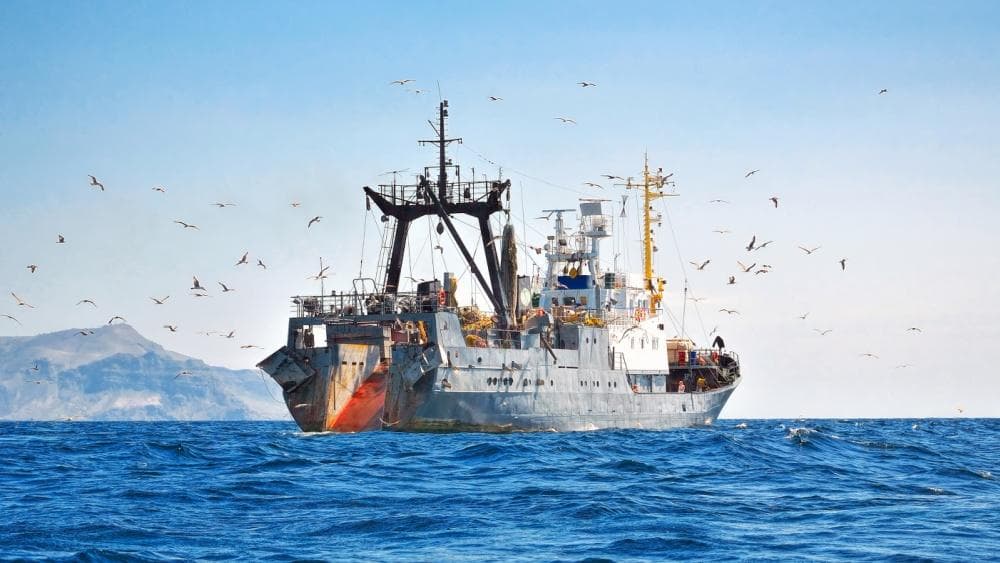
A fishing boat leaving harbour this year carries something its predecessors did not: an obligation to be locatable. Since 10 January, the overhauled EU Fisheries Control Regulation has been in force, and 2026 is the year its most consequential demands begin to settle on the fleet. The reform, formally Regulation 2023/2842, is the biggest rewrite of the bloc’s fisheries enforcement rules in more than a decade, and its premise is blunt: what cannot be tracked cannot be controlled.

The headline change is monitoring. Vessels must now transmit position data through the Vessel Monitoring System at least every two hours, and every thirty minutes when operating inside a restricted area. All EU vessels, without exception, must register and declare their catches digitally, through electronic logbooks, transhipment declarations and landing declarations. The paper logbook, long a soft spot in the chain of evidence, is being retired. On the import side, since 9 January the IT tool known as CATCH has become mandatory for traders submitting catch certificates for fishery products entering the single market, closing a gap that allowed illegally caught fish to slip in behind unverifiable paperwork.

The point of all this is traceability from net to plate, paired with harmonised sanctions so that the same infringement no longer draws a shrug in one member state and a heavy fine in another. For years, campaigners argued that the EU’s control system was only as strong as its weakest national authority. By standardising both the data and the penalties, Brussels is betting it can lift the floor.

The reform is deliberately phased, which is both pragmatic and a concession to a fleet that is far from uniform. Small-scale vessels, the backbone of many coastal communities, can be exempted from the tracking obligation until 2030 and have up to four years to adapt. From 2028, mandatory remote electronic monitoring, in practice cameras and sensors, will apply to vessels over eighteen metres deemed to pose a high risk of breaching the landing obligation. The sequencing acknowledges that a small inshore boat and an industrial trawler cannot reasonably be held to the same timetable.

There is a real counterargument worth airing. Coastal fishers warn that even phased compliance carries cost and complexity for operators already squeezed by fuel prices and shrinking quotas, and that the burden falls hardest on those least responsible for overfishing. There is also a credibility gap the regulation does not close. Recent analysis from the Pew Charitable Trusts and others found that scores of large-scale vessels owned by EU citizens or companies are registered under flags in countries with weak governance and permissive oversight, letting European operators sidestep the very rules now tightening at home. Better tracking of the EU-flagged fleet does little about boats that have quietly changed their nationality on paper.

So the measure of success will not be the elegance of the new IT tools but whether enforcement actually bites and whether the transparency push extends to beneficial ownership. The facts to watch through 2026 are the rollout of digital logbooks across the smallest segments, the first harmonised sanctions handed down, and whether the Commission moves to shut the flag-of-convenience loophole. The architecture for cleaner, more accountable fishing is now in place. The harder question is whether it reaches the vessels that most want to stay out of sight.