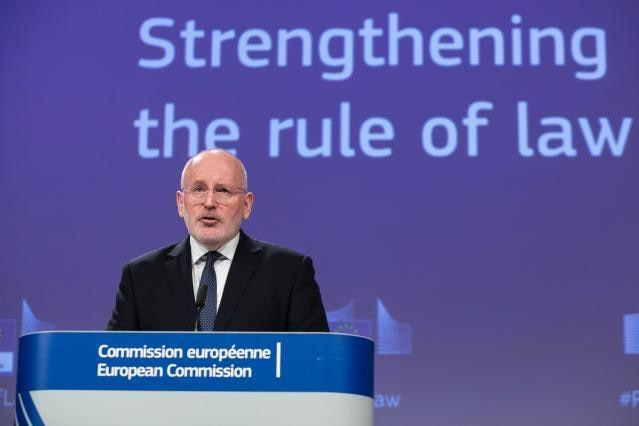
For years the annual Justice Scoreboard read like a technocratic curiosity, a thick file of charts on how long courts take and how many judges sit per capita that few outside the legal profession bothered to open. The fourteenth edition, published on 4 June, arrives with a sharper political message. The Commission is no longer treating the efficiency and independence of national courts as a narrow matter of justice policy. It is framing them as load-bearing pillars of the single market and of the bloc’s wider push for competitiveness.
The logic is blunt. Investors will not commit capital where contracts cannot be enforced quickly and predictably, and businesses operating across borders need confidence that a dispute in one member state will be handled by an impartial judge rather than a politically captured one. By tying the scoreboard explicitly to economic performance, the Commission is arguing that a sluggish or compromised judiciary is not only a democratic failing but a drag on growth that the whole union ultimately pays for.
The headline numbers are cautiously encouraging. Citizens in seventeen member states and companies in eighteen now perceive judicial independence as having improved or held steady compared with a year earlier, drawing on the latest Eurobarometer surveys. Digital justice is spreading: all twenty-seven members now publish information about their court systems online, and twenty-three allow electronic access to civil, commercial and administrative cases. Proceedings are getting shorter in several countries, and every member state has introduced arrangements to make courtrooms more navigable for children.
This year’s edition also digs into structural safeguards that rarely make headlines but quietly determine whether a justice system can resist pressure. New indicators examine probationary periods for newly appointed judges, the powers vested in Prosecutors General, and the way cases are allocated within prosecution services. Those details matter because the manipulation of judicial independence seldom announces itself through dramatic decrees. It works through who decides which judge hears which case, how long a young magistrate must serve before gaining security of tenure, and how much discretion a chief prosecutor enjoys over politically sensitive files.
The scoreboard deliberately measures rather than judges. It does not name the worst performers or recommend sanctions, leaving that harder work to the Rule of Law Report due later in the cycle, which this data will feed. That division of labour is both its strength and its limit. The comparative figures give campaigners and national reformers an evidence base that is difficult to dismiss as Brussels opinion, yet independent watchdogs have warned that the broader picture across the union is one of stagnation, with very limited genuine progress and persistent backsliding in a handful of capitals.
The findings will also shape the closing stages of the national recovery and resilience plans, several of which made the disbursement of post-pandemic funds conditional on judicial reforms. That link gives the exercise teeth it once lacked. A government that drags its feet on court independence now risks more than a critical paragraph in an annual report; it risks the money. As the union debates how to spend the next long-term budget and how to attach rule-of-law conditions to it, the quiet charts of the Justice Scoreboard are becoming one of the few instruments that translate democratic principle into a price.