
The Islamabad Memorandum has stopped a war, not guaranteed a recovery. Europe cannot write the settlement, but it holds the one lever the settlement cannot turn without it.
A ceasefire is a fact. A recovery is a forecast. The distinction has been lost in the fortnight since the United States and Iran signed the Islamabad Memorandum that ended four months of war across the Gulf and the Levant, and the cost of that confusion will fall first on Europe. The agreement, mediated by Pakistan and signed on the seventeenth of June, commits Washington and Tehran to a permanent end to hostilities and opens a sixty-day window to negotiate the terms that actually matter. European capitals have chosen to read the first promise as though it contained the second. It does not.
The case for relief is strong. The naval blockade of Iranian ports is to lift within thirty days, traffic through the Strait of Hormuz is to return to pre-war volume, and the United States Treasury has issued waivers authorising the export of Iranian crude through a sixty-day no-charge transit corridor. For a continent that imported the war as an energy shock, the arithmetic looks like deliverance. Brent crude has fallen below eighty dollars a barrel for the first time since March, shipping insurance has begun to soften, and the inflation path the European Central Bank tracked through the spring now points gently downward.
And yet the people who price oil for a living are warning, in plain terms, against believing their own tape. Analysts at PVM Oil Associates in London read the four-session fall in Brent as a market betting that the worst of the supply disruption had passed, while cautioning that the wager assumed no fresh setbacks. Others were blunter still, describing the slide as a movement driven by sentiment rather than barrels, with the hardest part, delivering on the pledges, still ahead. The International Energy Agency, for its part, still puts the shortfall against the war’s disruption at fourteen million barrels a day, a gap that paper waivers do not close and that returns the moment confidence wavers.
The cheaper oil now flowing into European forecasts reflects the liquidation of stored crude, not the restoration of supply, which means the relief is borrowed against a recovery that has not happened.
Europe is spending a peace it has been handed on paper, against a settlement that has yet to be written.
The structure of the Islamabad Memorandum explains the danger. Its permanent clauses are the ones that cost nothing to keep: the declaration that the war is over, the mutual pledge against future force. Its economic provisions, the sanctions relief, the released assets, the reopened strait, are conditional, sequenced, and reversible, contingent on a final deal that the parties have given themselves sixty days to reach and may extend indefinitely.
The behaviour since signing confirms how thin the floor is. On the twenty-fifth of June, eight days after the ceasefire, an Iranian drone struck a merchant vessel off the coast of Oman, and United States Central Command answered with strikes on Iranian missile and drone storage sites and coastal radar the following day. The pattern then repeated at a higher pitch. On the twenty-seventh, by the account of United States Central Command, Iranian forces hit the tanker Kiku, carrying more than two million barrels of crude, as it transited the Strait of Hormuz by the Omani route that has emerged as an alternative to Iranian-controlled waters. American aircraft struck five Iranian coastal positions in response, and the president wrote that the United States could be forced to militarily complete the job, adding that the Islamic Republic would then cease to exist. Within hours Tehran widened the war beyond the sea lane: the Revolutionary Guard launched drones and missiles at United States installations in Bahrain, home to the Fifth Fleet, and in Kuwait, whose air defences intercepted the incoming fire. Bahrain’s foreign ministry called the assault a threat to the safety of its residents. By Monday the pattern had reasserted itself in the other direction: the two sides agreed to pause the strikes and let shipping resume, and the technical talks, which Iran had boycotted a day earlier over the same unmet terms, were moved to Qatar for later in the week.
The threat that accompanied those strikes is the part Brussels should read most closely. The Guard declared that any breach of the Islamabad Memorandum would bring every diplomatic track to a halt, and tied that warning to the first article of the understanding. The economic provisions Europe is pricing into its forecasts depend on a negotiation that one party has now promised to abandon at the next incident. A peace whose guarantor threatens its collapse in a social media post, and whose other party fires on the Gulf states it sits beside, is not a foundation on which to retire a risk premium.
The instinct, faced with a fragile thing, is to ask how Europe might help steady it. Across European foreign ministries the question has been whether the Union should press toward the negotiating table and lend its weight to both parties. It is a generous instinct and the wrong one. Europe will not mediate between Washington and Tehran. Pakistan and Qatar already do that, the signing took place in the orbit of a G7 summit at which the Union was a host rather than a principal, and Iran has spent a decade regarding the European three as an extension of American pressure rather than an honest broker. The seat Europe imagines pulling up to the table is not vacant. It was never set.
Yet the conclusion that follows is not irrelevance. It is the opposite, and Europe has obscured it from itself. The mechanism explains why. When the 2015 nuclear accord was struck, it carried a provision known as snapback, which allowed any European party to reimpose, automatically and without a vote that Russia or China could block, the United Nations sanctions the deal had lifted. France, Germany, and the United Kingdom triggered that provision in August of 2025, and on the twenty-seventh of September the United Nations measures returned, transposed automatically into European law alongside the Union’s own restrictions on Iranian trade, finance, and transport. Two layers of sanctions therefore sit on Iran today, the United Nations tier and the European one, and Brussels is bound up in both.
This is what gives the point its force. Two tiers of sanctions stand on Iran today, the United Nations measures reimposed through snapback and the European Union’s own restrictions on Iranian trade, finance, and transport, and both were tightened rather than loosened across the spring as freedom-of-navigation penalties came into effect.
The Islamabad Memorandum commits the parties to a final deal endorsed by a binding United Nations Security Council resolution. No such resolution can deliver Iran the trade, banking, and crude exports the agreement promises while those sanctions stand, and the sanctions cannot be cleared without the consent of the states that reimposed them.
The track the Revolutionary Guard threatened this week to abandon is the same one that must terminate in that resolution, and the resolution is the one instrument no bypass between Washington and Tehran can supply for itself.
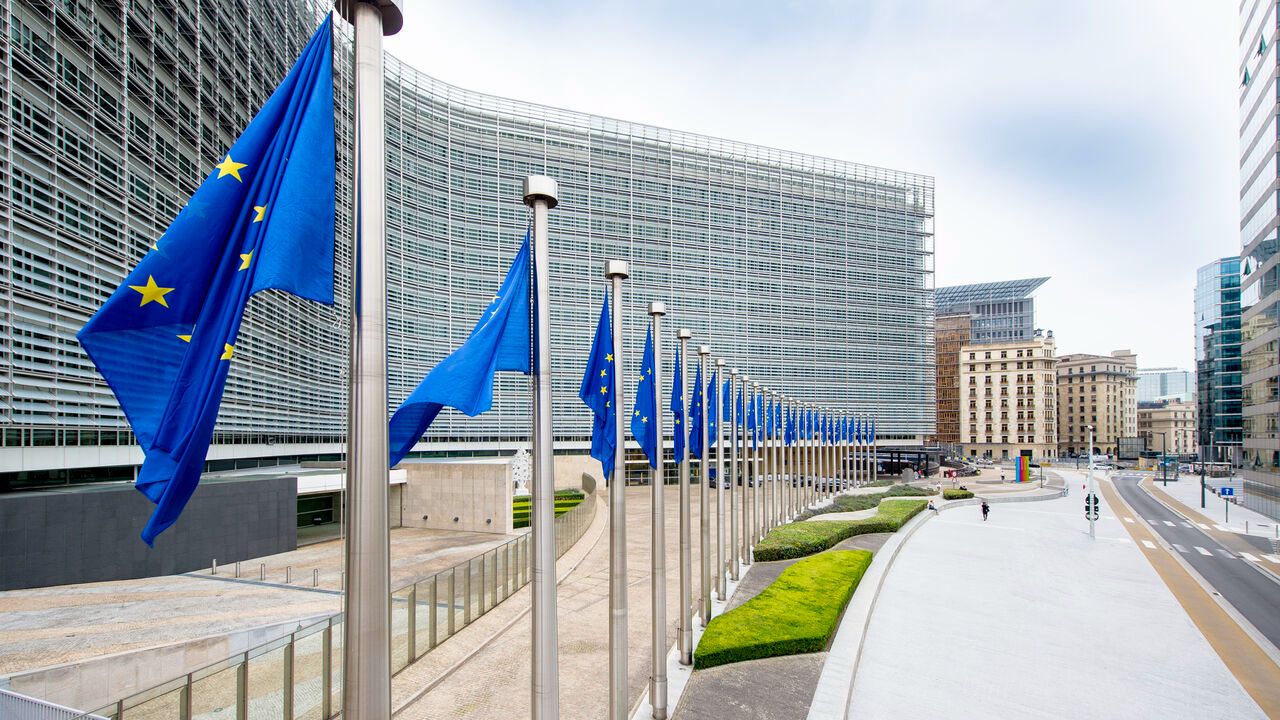
Europe therefore holds a piece of the lock that any final deal must open. The instrument sits with the European Council, which adopts the Union’s restrictive measures and alone can lift them. The High Representative has said as much in the negative, calling freedom of navigation through the strait non-negotiable and the European Union’s sanctions the lever it would adjust. Her office spent the weekend on the telephone to the mediators as the ceasefire frayed. That is not a place in the negotiation. It is something the negotiation cannot do without.
The distinction changes what European policy should be. The task is not diplomacy in the Gulf, where Europe has little standing and less invitation. It is the deliberate management of relief at home, where it has both. Snapback was designed as an instrument of pressure, and pressure has produced its result: a framework, however brittle, in which Iran has agreed to negotiate. The question for Brussels is whether the same instrument can be run in reverse, converted from a wall into a sequence, with each tranche of European and transposed United Nations relief tied to a verifiable step Iran takes on enrichment, inspection, and the neutralisation of its enriched stockpile.
The objections are real and deserve to be met rather than brushed aside. The first is that Washington and Tehran might bypass Europe entirely, settling the strait and the oil between themselves and leaving the formal United Nations resolution as an afterthought. They may try. But a deal the memorandum itself promises to anchor in a Security Council resolution cannot be fully delivered while United Nations sanctions remain, and those cannot be lifted without the consent of the states that reimposed them. A bypass buys a ceasefire, not the normalisation Iran is negotiating for.
The second objection is that Russia and China, having rejected the snapback as illegitimate and shielded Tehran at the Council, will obstruct whatever framework Europe proposes. This is the harder constraint, and it cuts both ways. Their position weakens the legal tidiness of any new resolution, yet both have an interest in Iranian oil returning to market and in a settlement that ends the disruption, which gives Europe something to bargain with rather than around.
The third objection is the one closest to home, and the most damaging to the argument. Lifting the Union’s own sanctions requires unanimity among twenty-seven member states, and a single capital, for reasons of domestic politics or alignment with Israel, could keep them in place long after a deal is signed. A lever that one government can freeze is a weaker lever than the thesis assumes. The honest reply is not that the obstacle disappears, but that it makes the case for acting early stronger, not weaker: a sequence agreed in advance, while the incentives for peace are fresh, is far likelier to survive twenty-seven vetoes than a relief package presented cold once the window has closed.
None of this argues for pessimism, which would be its own error. The war has stopped, and a stopped war saves lives and supply lines that a resumed one would spend.
Pakistan’s emergence as the broker of a Gulf crisis is a development European diplomacy should study rather than dismiss, for the state that carried the Islamabad Memorandum to signature did so by asking nothing at the table and bringing patience to it. The lesson for Brussels is not to envy that role but to find its own version of usefulness: to contribute the instrument it possesses, quietly and conditionally, rather than the influence it wishes it had.
The coming sixty days will decide what the final deal contains. Europe cannot write those terms and should not pretend otherwise. But it can decide, deliberately and in advance, whether the sanctions it reimposed will be lifted as a managed sequence that holds the settlement together or left standing as an obstacle that quietly pulls it apart. The table was never set for Brussels. The instrument that decides whether the settlement holds is already in European hands, and that is the more consequential place to be. What Europe does with it will answer a larger question than Iran. A union that can convert a sanctions architecture into a sequenced settlement shows it can shape outcomes in its own neighbourhood rather than wait on the powers that do. One that lets the instrument sit, out of caution or division, confirms the older suspicion that Europe drafts communiqués while others draft the terms.
The Weekly Editorial
This is the editorial position of The European Post, published weekly on matters of European and international strategic significance. It represents the view of the Editorial Board.