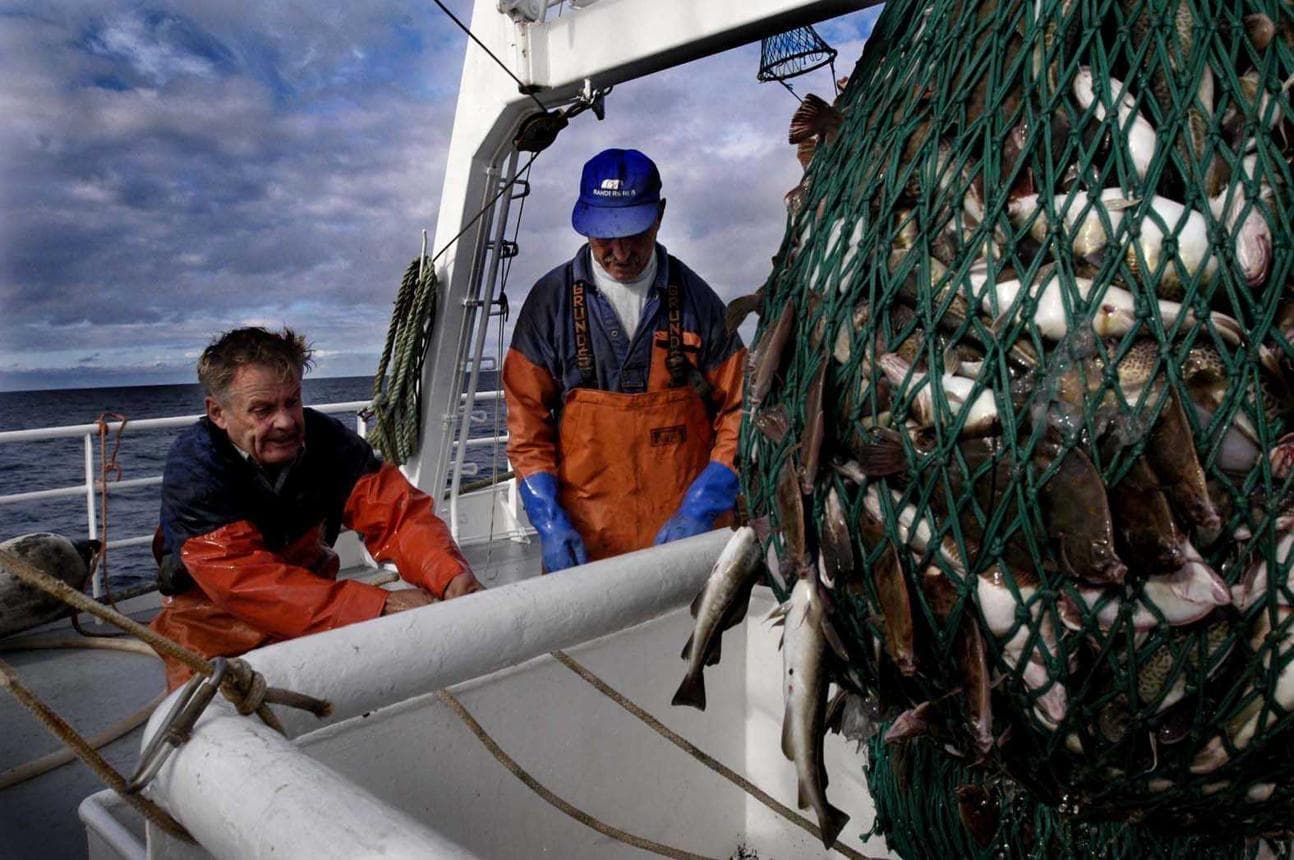
Copenhagen: New fishing quotas for the Baltic Sea took hold this year after EU ministers agreed catch limits that leave several fishing communities squeezed and the region’s cod still effectively off-limits. Scientists at the International Council for the Exploration of the Sea, based in the Danish capital, had warned that a number of Baltic fisheries face what the Commission bluntly called a dire situation.
The 2026 fishing quotas, set by the Council last autumn, tell a story of a sea under strain. Ministers held the line on both eastern and western Baltic cod, allowing only unavoidable by-catch and banning any directed fishing. Both stocks remain in poor condition despite years of restrictions, and the ban signals that recovery is still nowhere in sight.
Herring paints a mixed picture. The Council lifted the catch limit for central Baltic herring by 15 percent, yet it cut the Gulf of Riga herring quota by 17 percent and slashed the Bothnian herring allowance by 40 percent to keep that stock from collapsing below sustainable levels. Sprat offered the rare piece of good news, with fishing opportunities rising 45 percent in line with scientific advice.
Brussels was not satisfied. The Commission said openly that it feared the final limits were not strict enough to let some stocks rebuild, a striking admission that member states pushed the numbers higher than its scientists recommended. That tension between short-term livelihoods and long-term stocks sits at the heart of every quota round.
For coastal fleets from Sweden to Poland, the arithmetic is unforgiving. Many small operators depend on herring and cod, and the collapse of directed cod fishing has already hollowed out harbours that once thrived on it. Fishers argue that seals, warming water and nutrient pollution have battered the stocks as much as their nets, and they resent shouldering the cost alone.
Environmental groups counter that the Baltic has been overfished for decades and that repeated failures to follow scientific advice have pushed the ecosystem to the brink. They want ministers to treat the Commission’s warning as a red line rather than an opening bid, and to pair quotas with tougher action on the fertiliser run-off that starves the sea of oxygen.
The Common Fisheries Policy is supposed to keep every stock fished at sustainable levels, a legal promise that the Baltic keeps testing. Each year the gap between what scientists advise and what ministers grant becomes the measure of whether that promise means anything.
The full breakdown of this year’s limits sits in the Commission’s catch limits for 2026, and the Council set out its reasoning in its Baltic agreement. Whether the fishing quotas prove generous or reckless will only become clear when the next stock assessments arrive.