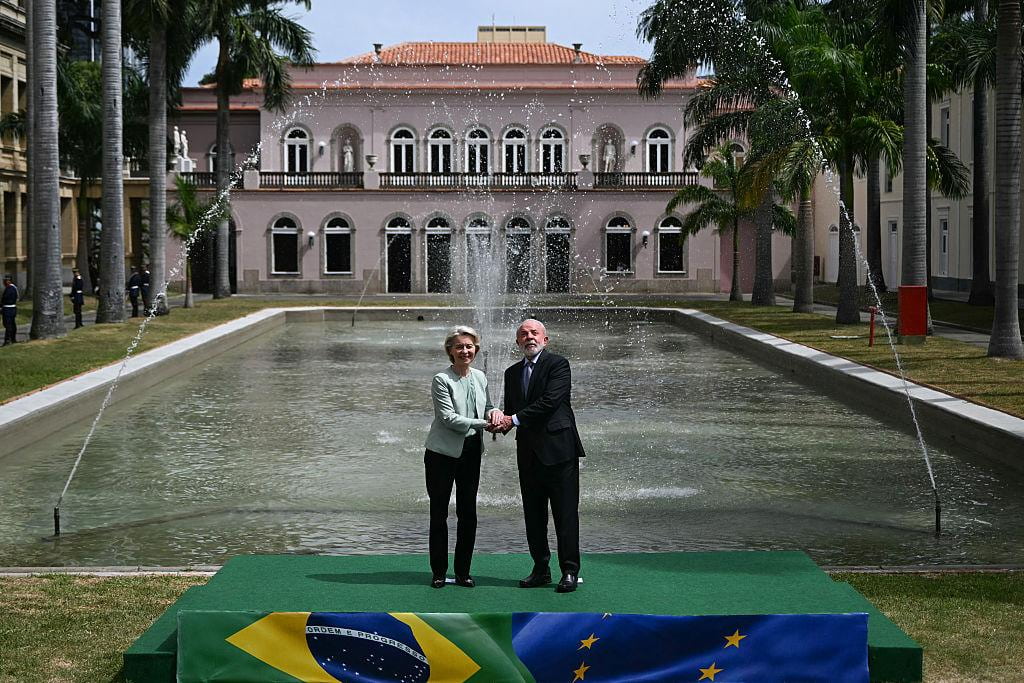
Brasília: The legal scrubbing phase that follows political endorsement of a free trade agreement is normally a low-visibility exercise, but the EU Mercosur file has refused to follow that pattern. Negotiators closed the political agreement in December 2024 after a quarter-century of intermittent talks, and the technical work since then has moved at a measured pace through the European External Action Service and the Commission’s trade directorate. The Brazilian delegation in Brussels has been pushing for Council adoption of the trade pillar before the end of this year, a timetable that Berlaymont services have called ambitious but not impossible. The political question now turning over in the Brazilian capital is whether France will block the Council decision when the file finally appears on the agenda.
The agreement’s structure matters here. Trade officials inside the Commission have indicated that the agreement is likely to be split into two instruments. The trade pillar, covering tariff elimination, services liberalisation, government procurement and rules of origin, sits within exclusive Union competence and requires only Council approval and Parliament consent. The broader political and cooperation pillar, which covers human rights commitments, regulatory dialogue and political institutional arrangements, falls within mixed competence and requires ratification by every national parliament across the Union. That split was used for the agreements with Singapore and Vietnam and has become the workhorse architecture for new generation deals.
France has signalled that it intends to oppose the trade pillar unless the safeguard mechanism for sensitive agricultural products is strengthened. Paris has focused on poultry, beef and ethanol, where Mercosur producers would gain expanded quota access. The Commission’s autonomous safeguard mechanism, finalised earlier this year, was designed in part to give France political cover, but the French agriculture ministry has not accepted the parameters as sufficient. Several other capitals have taken the opposing position, pushing hard for ratification before the Brazilian G20 presidency hands over. The Italian position has moved from sceptical to constructive over the past quarter as the country’s chemicals and automotive exports have run into Mercosur tariff walls that the deal would dismantle.
The Brazilian government has its own ratification timetable to manage. President Lula’s coalition has held the necessary majority in the Chamber of Deputies, but the agricultural caucus is split between exporters who welcome expanded EU market access and processors who fear that European environmental clauses will become non-tariff barriers. The deforestation regulation, which entered into force at the end of 2025, is already producing friction at Mercosur ports as compliance documentation moves slowly through customs. Brazilian negotiators have argued that the trade agreement should be read alongside the deforestation regulation’s strengthened due diligence cooperation provisions, and that the two instruments together create a workable framework for soy and beef trade.
The Argentine presidency has taken a more cautious line. Buenos Aires has indicated it will ratify but is uncomfortable with the climate-related provisions that the European side insisted on inserting during the final negotiating rounds. The Paraguayan parliament is the wildcard, as previous Mercosur instruments have stalled there for procedural reasons.
The Spanish presidency of the Council during the second half of next year will be the practical pivot. Officials in the Spanish capital have not committed to a tabling date but have indicated that the trade pillar will reach the General Affairs Council during their term. If that happens, the political question for Paris will become whether to vote against, abstain, or hold open the possibility of legal action before the European Court of Justice on competence grounds.