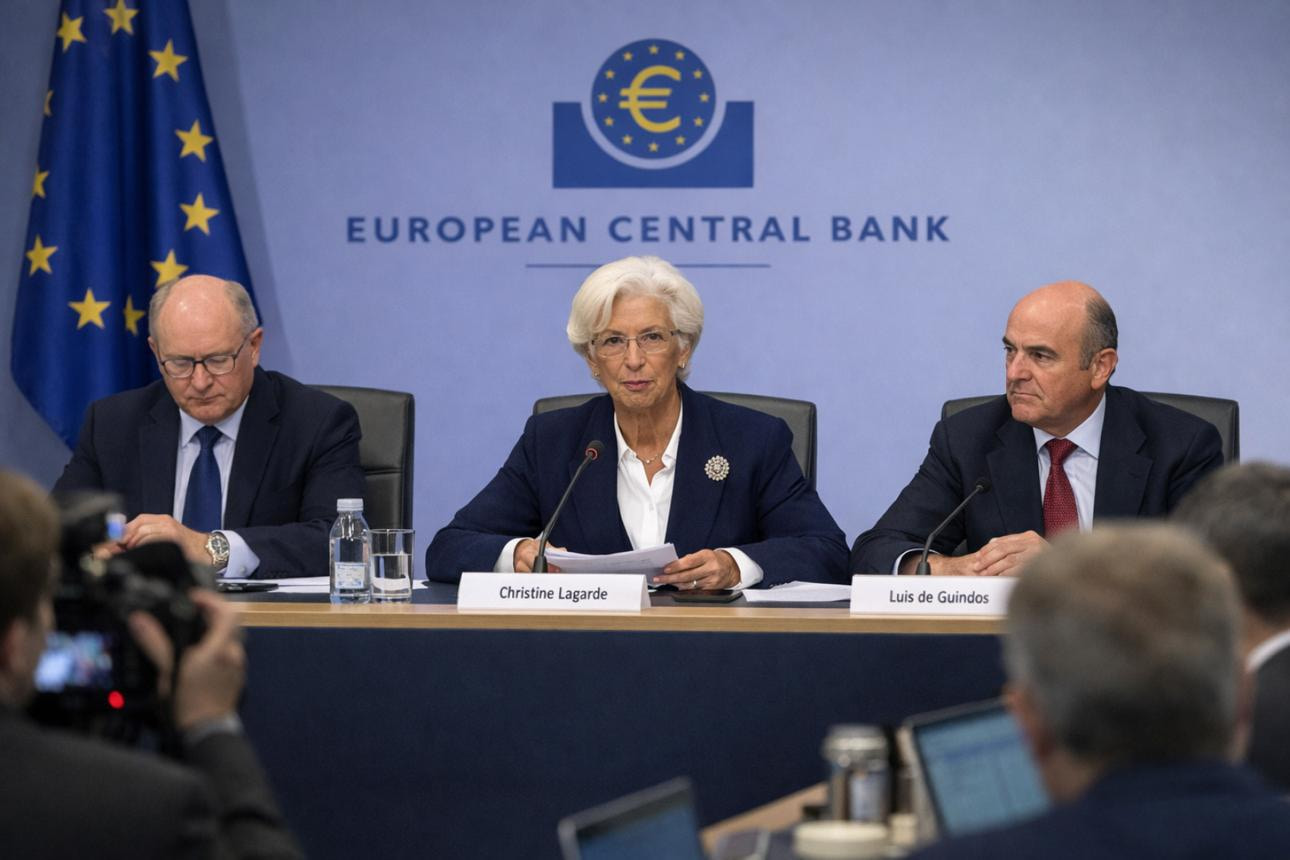
Frankfurt: The case for a central bank digital currency has always rested on a worry that is easy to state and hard to dramatise. As cash recedes and private payment rails come to dominate everyday spending, the public loses direct access to central bank money, and a handful of foreign card networks end up sitting between Europeans and their own transactions. A digital euro is meant to keep a public option alive in a privatising payments world. Whether Europeans actually want it is a separate question.
The technical design has matured to the point where the project is no longer hypothetical. The proposed model would let people hold modest balances directly, with an offline mode that mimics the anonymity of cash for small payments and an online mode subject to the usual anti-money-laundering checks. Holding limits would cap how much could sit in any one wallet, a deliberate brake meant to stop deposits draining out of commercial banks during moments of stress. That single parameter has become the most contested number in the entire file.
Banks fear disintermediation, and they are not wrong to. If households could park unlimited funds in a risk-free central bank wallet, the temptation to flee wobbly lenders in a crisis would be enormous, and the everyday deposits that fund mortgages and business loans would become less stable. The holding cap is the compromise, but set it too low and the currency is useless for real life, set it too high and it destabilises the very banks it relies on for distribution. Lawmakers are essentially being asked to price a trade-off no one can model with confidence.
Then there is privacy, the issue that animates the public far more than monetary plumbing. Supporters insist the central bank would not see individual transactions and that the offline mode preserves genuine cash-like discretion. Sceptics counter that any state-issued digital instrument creates infrastructure that a future, less scrupulous government could repurpose for surveillance or programmable restrictions on how money is spent. The reassurances on the table are real, but they are promises about institutional restraint, and promises are precisely what a constitutional design is supposed to make unnecessary.
The legislative path reflects this unease. Parliament has slowed the timetable, demanding firmer guarantees on anonymity thresholds and explicit legal language ruling out programmability of the kind that would let payments be blocked by category. The European Central Bank, eager to move, has accepted that the political groundwork is not done, and that pushing a distrusted currency into circulation would be worse than a delay. A digital euro nobody uses would be the most expensive way imaginable to prove a point.
The likeliest outcome is a cautious launch with conservative limits, designed to be expanded only if demand materialises and fears prove unfounded. That is an unsatisfying answer for both camps, but it may be the only honest one. The deeper question the file raises is not technical at all. It is how much Europeans trust their institutions to build something powerful and then decline to misuse it, and that trust, unlike the software, cannot be coded into the system.