August 9, 2026
LATEST
New EU Gas Market Rules Take Effect With Consumer SafeguardsDeforestation Regulation Holds Its December Deadline Despite CutsDigital Omnibus Delays Europe’s High-Risk AI Deadline to 2027Europe’s Schools Confront a Widening Basic Skills GapRule of Law Report Finds Progress but Trust Still LagsIRIS2 Gains 66 Satellites as Brussels Signs the Rollout DealNature Restoration Plans Come Due as Member States Race a DeadlineECB Rates Hold at 2.25 Percent as Frankfurt Waits on the DataEU Budget Talks Turn to Cohesion as Ireland Takes OverWildfire Response Stretches Europe’s Emergency Fleet ThinCan Europe’s Quantum Plan Match Its Big Ambitions?Armenia Edges West as Moscow’s Grip Slips AwayEurope Inherits the World’s Aid Bill It Cannot Fully PayAir Passenger Rights Get Their First Overhaul in Two DecadesErasmus Opens a 5 Billion Euro Round for Skills and MobilityCeuta Crisis Pushes the EU Toward Faster Migrant ReturnsBulky Parcels Face a Packaging Crackdown From August 12Can Europe Build Its Drone Wall Before 2030 Arrives?Indonesia’s Trade Deal With Europe Nears Its Final SignatureEurope Leans on Beijing to Keep Climate Talks Alive Before AntalyaNew EU Gas Market Rules Take Effect With Consumer SafeguardsDeforestation Regulation Holds Its December Deadline Despite CutsDigital Omnibus Delays Europe’s High-Risk AI Deadline to 2027Europe’s Schools Confront a Widening Basic Skills GapRule of Law Report Finds Progress but Trust Still LagsIRIS2 Gains 66 Satellites as Brussels Signs the Rollout DealNature Restoration Plans Come Due as Member States Race a DeadlineECB Rates Hold at 2.25 Percent as Frankfurt Waits on the DataEU Budget Talks Turn to Cohesion as Ireland Takes OverWildfire Response Stretches Europe’s Emergency Fleet ThinCan Europe’s Quantum Plan Match Its Big Ambitions?Armenia Edges West as Moscow’s Grip Slips AwayEurope Inherits the World’s Aid Bill It Cannot Fully PayAir Passenger Rights Get Their First Overhaul in Two DecadesErasmus Opens a 5 Billion Euro Round for Skills and MobilityCeuta Crisis Pushes the EU Toward Faster Migrant ReturnsBulky Parcels Face a Packaging Crackdown From August 12Can Europe Build Its Drone Wall Before 2030 Arrives?Indonesia’s Trade Deal With Europe Nears Its Final SignatureEurope Leans on Beijing to Keep Climate Talks Alive Before Antalya
August 9, 2026
LATEST
New EU Gas Market Rules Take Effect With Consumer SafeguardsDeforestation Regulation Holds Its December Deadline Despite CutsDigital Omnibus Delays Europe’s High-Risk AI Deadline to 2027Europe’s Schools Confront a Widening Basic Skills GapRule of Law Report Finds Progress but Trust Still LagsIRIS2 Gains 66 Satellites as Brussels Signs the Rollout DealNature Restoration Plans Come Due as Member States Race a DeadlineECB Rates Hold at 2.25 Percent as Frankfurt Waits on the DataEU Budget Talks Turn to Cohesion as Ireland Takes OverWildfire Response Stretches Europe’s Emergency Fleet ThinCan Europe’s Quantum Plan Match Its Big Ambitions?Armenia Edges West as Moscow’s Grip Slips AwayEurope Inherits the World’s Aid Bill It Cannot Fully PayAir Passenger Rights Get Their First Overhaul in Two DecadesErasmus Opens a 5 Billion Euro Round for Skills and MobilityCeuta Crisis Pushes the EU Toward Faster Migrant ReturnsBulky Parcels Face a Packaging Crackdown From August 12Can Europe Build Its Drone Wall Before 2030 Arrives?Indonesia’s Trade Deal With Europe Nears Its Final SignatureEurope Leans on Beijing to Keep Climate Talks Alive Before AntalyaNew EU Gas Market Rules Take Effect With Consumer SafeguardsDeforestation Regulation Holds Its December Deadline Despite CutsDigital Omnibus Delays Europe’s High-Risk AI Deadline to 2027Europe’s Schools Confront a Widening Basic Skills GapRule of Law Report Finds Progress but Trust Still LagsIRIS2 Gains 66 Satellites as Brussels Signs the Rollout DealNature Restoration Plans Come Due as Member States Race a DeadlineECB Rates Hold at 2.25 Percent as Frankfurt Waits on the DataEU Budget Talks Turn to Cohesion as Ireland Takes OverWildfire Response Stretches Europe’s Emergency Fleet ThinCan Europe’s Quantum Plan Match Its Big Ambitions?Armenia Edges West as Moscow’s Grip Slips AwayEurope Inherits the World’s Aid Bill It Cannot Fully PayAir Passenger Rights Get Their First Overhaul in Two DecadesErasmus Opens a 5 Billion Euro Round for Skills and MobilityCeuta Crisis Pushes the EU Toward Faster Migrant ReturnsBulky Parcels Face a Packaging Crackdown From August 12Can Europe Build Its Drone Wall Before 2030 Arrives?Indonesia’s Trade Deal With Europe Nears Its Final SignatureEurope Leans on Beijing to Keep Climate Talks Alive Before Antalya

E-Invoicing Becomes The New Normal As Europe’s VAT Goes Digital

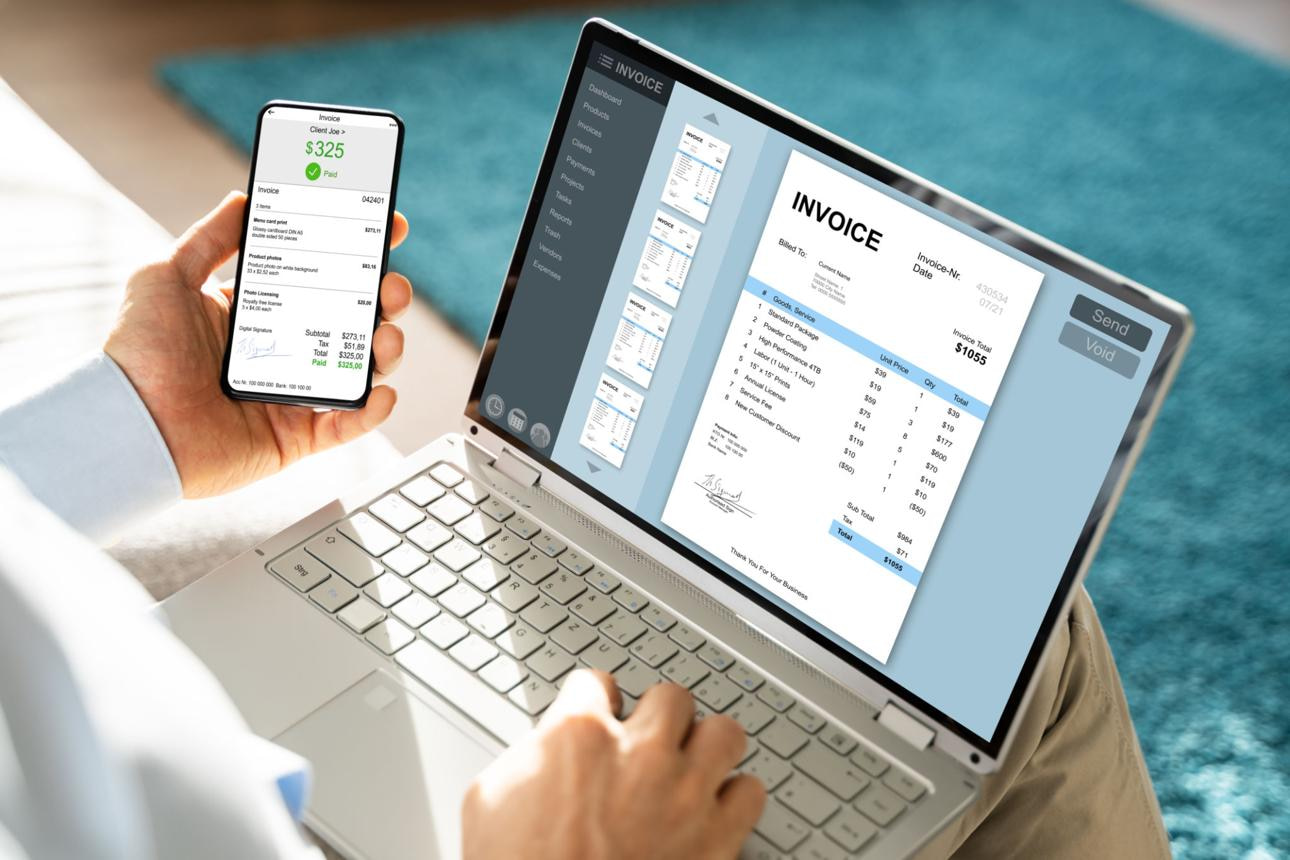
Brussels: The humble invoice, for centuries a slip of paper and lately a PDF, is being rewritten into a machine-readable record that tax authorities can read almost as it is issued. That is the quiet revolution inside the bloc’s plan to drag value-added tax into the digital age, and businesses across the continent are beginning to grasp how much work it will demand.

At its heart the reform replaces paper and email invoices between businesses with structured electronic ones in a common format, paired with near-real-time digital reporting of cross-border transactions to the authorities. The aim is to close the bloc’s stubborn VAT gap, the tens of billions in tax that goes uncollected each year through fraud, error and insolvency, and in particular to choke off the carousel schemes that exploit the lag between a sale in one country and its reporting in another. When the tax office sees the transaction as it happens, the window for that kind of fraud narrows sharply.

Why does it matter? VAT is one of the largest sources of public revenue in Europe, and the money lost to fraud is money not spent on the services governments are straining to fund. For honest companies, the prize is less obvious but real: a single digital standard could eventually retire the thicket of divergent national reporting systems that multinationals currently juggle, replacing a dozen formats with one. The same rules also tighten the treatment of the platform economy, making digital marketplaces responsible for collecting VAT on short-term accommodation and passenger transport booked through them, a recognition that the tax code never quite caught up with the apps.

The transition will not be painless. Small and medium-sized firms, many still invoicing with spreadsheets and goodwill, face the cost of new software and the discipline of getting their data clean enough for a system that reports continuously rather than quarterly. Tax advisers warn that the early years will expose how ragged some companies’ records really are, and that the burden lands first on exactly the smaller businesses least able to spend on compliance. There is also the awkward reality that several member states already run their own mandatory e-invoicing regimes, built before the common standard was agreed, and converging them will be its own grind.

Defenders of the timetable argue that the direction is set regardless. Real-time reporting is already the norm in parts of Latin America and is spreading fast; Europe is following a global current, not fighting one. Phasing the obligations in over several years, they note, gives the smallest firms time to adapt and software vendors time to build affordable tools, while the fraud savings begin accruing to public budgets that badly need them.

What comes next is a long runway of national transposition and system-building before the cross-border reporting obligations bite later this decade. The strategic bet is that a tax designed in the age of the paper ledger can be re-engineered for the age of instant data without crushing the small firms that make up the bulk of the economy. Whether that bet pays off will be measured not in announcements but in how much of the lost VAT actually comes back.