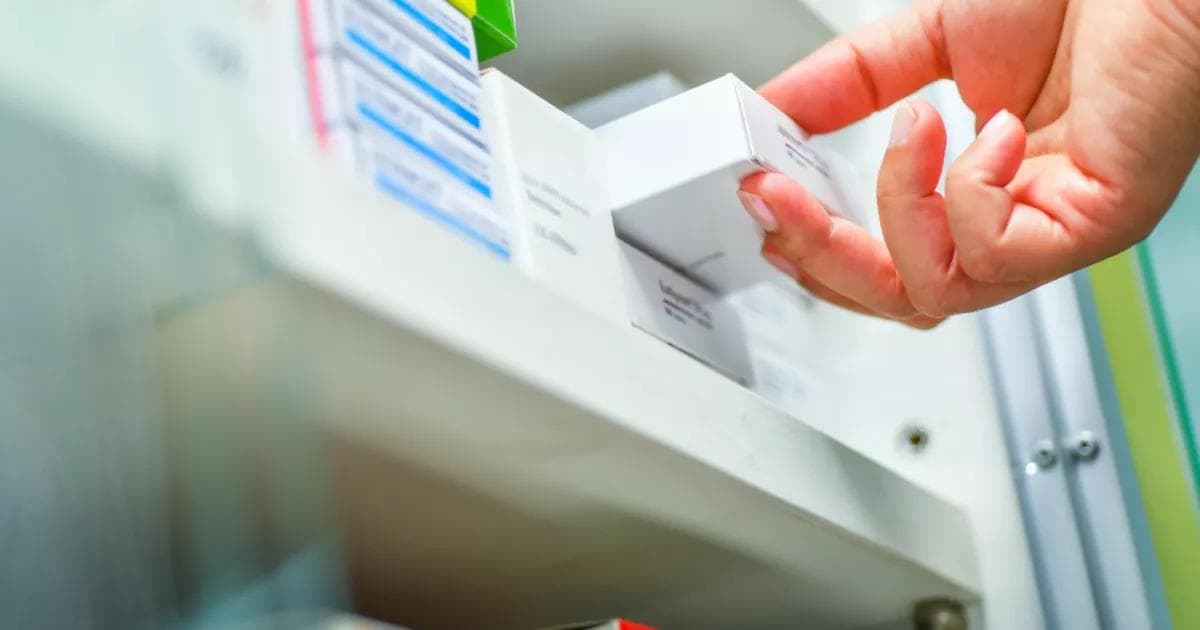
Budapest: In the back rooms of Hungarian pharmacies, where staff increasingly spend their mornings phoning wholesalers in search of stock that does not exist, the abstraction of European supply chains becomes uncomfortably concrete. A child needs an antibiotic suspension; a diabetic needs a particular insulin pen; a cancer patient needs a chemotherapy agent that has quietly vanished from the national register. These are not hypothetical scenarios. Across the bloc, shortages of essential medicines have become a recurring feature of winter, and increasingly of summer too, and the political mood in Brussels has finally caught up with the queues forming at the counter.
The Critical Medicines Act, now moving through the legislative machinery, represents the European Union’s most ambitious attempt yet to treat dependency on a handful of foreign suppliers as a strategic vulnerability rather than a procurement footnote. For decades the logic of the single market pushed the manufacture of cheap generics and their active ingredients toward a small number of plants, many of them in Asia, where production costs were lowest. The result was an efficient system with almost no slack. A single contaminated batch, a factory fire, or an export restriction thousands of kilometres away can empty European shelves within weeks.
The proposed remedy is unapologetically interventionist by the standards of recent EU industrial policy. It would allow public procurement to reward suppliers that diversify their sourcing or manufacture within Europe, rather than simply awarding contracts to the lowest bidder. It envisages joint purchasing for the most fragile products, so that smaller member states are no longer outbid by wealthier neighbours during a crunch. And it sketches the beginnings of coordinated stockpiling, a concept that sits awkwardly with a market built on just-in-time delivery but which the pandemic made impossible to ignore.
None of this is cost-free, and the debate now turns on who pays. Reshoring production of low-margin generics is expensive precisely because those products earn so little. Manufacturers warn that without subsidies or guaranteed volumes, no rational company will reopen a European antibiotics line that closed because it could not compete. Health ministers, watching their budgets strain under ageing populations, are wary of signing open-ended commitments. The Commission insists the answer lies in smarter contracts rather than blank cheques, but the gap between ambition and financing remains the file’s central weakness.
There is also a quieter tension between solidarity and sovereignty. Pooled procurement and shared stockpiles only work if governments resist the temptation to hoard when the next shortage hits. The early weeks of the pandemic, when borders slammed shut on shipments of protective equipment, offered a sobering preview of how quickly cooperation can fray under pressure. Building trust into the system, through binding commitments rather than goodwill, may prove harder than building the factories.
For patients, the politics matter less than the outcome. A pharmacist in Budapest or Naples or Lisbon does not care whether a missing drug is the fault of a distant factory or a flawed tender. What the Critical Medicines Act promises is a Europe that treats the steady supply of ordinary medicines as something worth protecting deliberately, rather than assuming the market will always provide. Whether that promise survives contact with national budgets will determine if the next shortage season looks any different from the last.