August 9, 2026
LATEST
New EU Gas Market Rules Take Effect With Consumer SafeguardsDeforestation Regulation Holds Its December Deadline Despite CutsDigital Omnibus Delays Europe’s High-Risk AI Deadline to 2027Europe’s Schools Confront a Widening Basic Skills GapRule of Law Report Finds Progress but Trust Still LagsIRIS2 Gains 66 Satellites as Brussels Signs the Rollout DealNature Restoration Plans Come Due as Member States Race a DeadlineECB Rates Hold at 2.25 Percent as Frankfurt Waits on the DataEU Budget Talks Turn to Cohesion as Ireland Takes OverWildfire Response Stretches Europe’s Emergency Fleet ThinCan Europe’s Quantum Plan Match Its Big Ambitions?Armenia Edges West as Moscow’s Grip Slips AwayEurope Inherits the World’s Aid Bill It Cannot Fully PayAir Passenger Rights Get Their First Overhaul in Two DecadesErasmus Opens a 5 Billion Euro Round for Skills and MobilityCeuta Crisis Pushes the EU Toward Faster Migrant ReturnsBulky Parcels Face a Packaging Crackdown From August 12Can Europe Build Its Drone Wall Before 2030 Arrives?Indonesia’s Trade Deal With Europe Nears Its Final SignatureEurope Leans on Beijing to Keep Climate Talks Alive Before AntalyaNew EU Gas Market Rules Take Effect With Consumer SafeguardsDeforestation Regulation Holds Its December Deadline Despite CutsDigital Omnibus Delays Europe’s High-Risk AI Deadline to 2027Europe’s Schools Confront a Widening Basic Skills GapRule of Law Report Finds Progress but Trust Still LagsIRIS2 Gains 66 Satellites as Brussels Signs the Rollout DealNature Restoration Plans Come Due as Member States Race a DeadlineECB Rates Hold at 2.25 Percent as Frankfurt Waits on the DataEU Budget Talks Turn to Cohesion as Ireland Takes OverWildfire Response Stretches Europe’s Emergency Fleet ThinCan Europe’s Quantum Plan Match Its Big Ambitions?Armenia Edges West as Moscow’s Grip Slips AwayEurope Inherits the World’s Aid Bill It Cannot Fully PayAir Passenger Rights Get Their First Overhaul in Two DecadesErasmus Opens a 5 Billion Euro Round for Skills and MobilityCeuta Crisis Pushes the EU Toward Faster Migrant ReturnsBulky Parcels Face a Packaging Crackdown From August 12Can Europe Build Its Drone Wall Before 2030 Arrives?Indonesia’s Trade Deal With Europe Nears Its Final SignatureEurope Leans on Beijing to Keep Climate Talks Alive Before Antalya
August 9, 2026
LATEST
New EU Gas Market Rules Take Effect With Consumer SafeguardsDeforestation Regulation Holds Its December Deadline Despite CutsDigital Omnibus Delays Europe’s High-Risk AI Deadline to 2027Europe’s Schools Confront a Widening Basic Skills GapRule of Law Report Finds Progress but Trust Still LagsIRIS2 Gains 66 Satellites as Brussels Signs the Rollout DealNature Restoration Plans Come Due as Member States Race a DeadlineECB Rates Hold at 2.25 Percent as Frankfurt Waits on the DataEU Budget Talks Turn to Cohesion as Ireland Takes OverWildfire Response Stretches Europe’s Emergency Fleet ThinCan Europe’s Quantum Plan Match Its Big Ambitions?Armenia Edges West as Moscow’s Grip Slips AwayEurope Inherits the World’s Aid Bill It Cannot Fully PayAir Passenger Rights Get Their First Overhaul in Two DecadesErasmus Opens a 5 Billion Euro Round for Skills and MobilityCeuta Crisis Pushes the EU Toward Faster Migrant ReturnsBulky Parcels Face a Packaging Crackdown From August 12Can Europe Build Its Drone Wall Before 2030 Arrives?Indonesia’s Trade Deal With Europe Nears Its Final SignatureEurope Leans on Beijing to Keep Climate Talks Alive Before AntalyaNew EU Gas Market Rules Take Effect With Consumer SafeguardsDeforestation Regulation Holds Its December Deadline Despite CutsDigital Omnibus Delays Europe’s High-Risk AI Deadline to 2027Europe’s Schools Confront a Widening Basic Skills GapRule of Law Report Finds Progress but Trust Still LagsIRIS2 Gains 66 Satellites as Brussels Signs the Rollout DealNature Restoration Plans Come Due as Member States Race a DeadlineECB Rates Hold at 2.25 Percent as Frankfurt Waits on the DataEU Budget Talks Turn to Cohesion as Ireland Takes OverWildfire Response Stretches Europe’s Emergency Fleet ThinCan Europe’s Quantum Plan Match Its Big Ambitions?Armenia Edges West as Moscow’s Grip Slips AwayEurope Inherits the World’s Aid Bill It Cannot Fully PayAir Passenger Rights Get Their First Overhaul in Two DecadesErasmus Opens a 5 Billion Euro Round for Skills and MobilityCeuta Crisis Pushes the EU Toward Faster Migrant ReturnsBulky Parcels Face a Packaging Crackdown From August 12Can Europe Build Its Drone Wall Before 2030 Arrives?Indonesia’s Trade Deal With Europe Nears Its Final SignatureEurope Leans on Beijing to Keep Climate Talks Alive Before Antalya

Europe’s Answer to Starlink Finally Wins Its Political Green Light

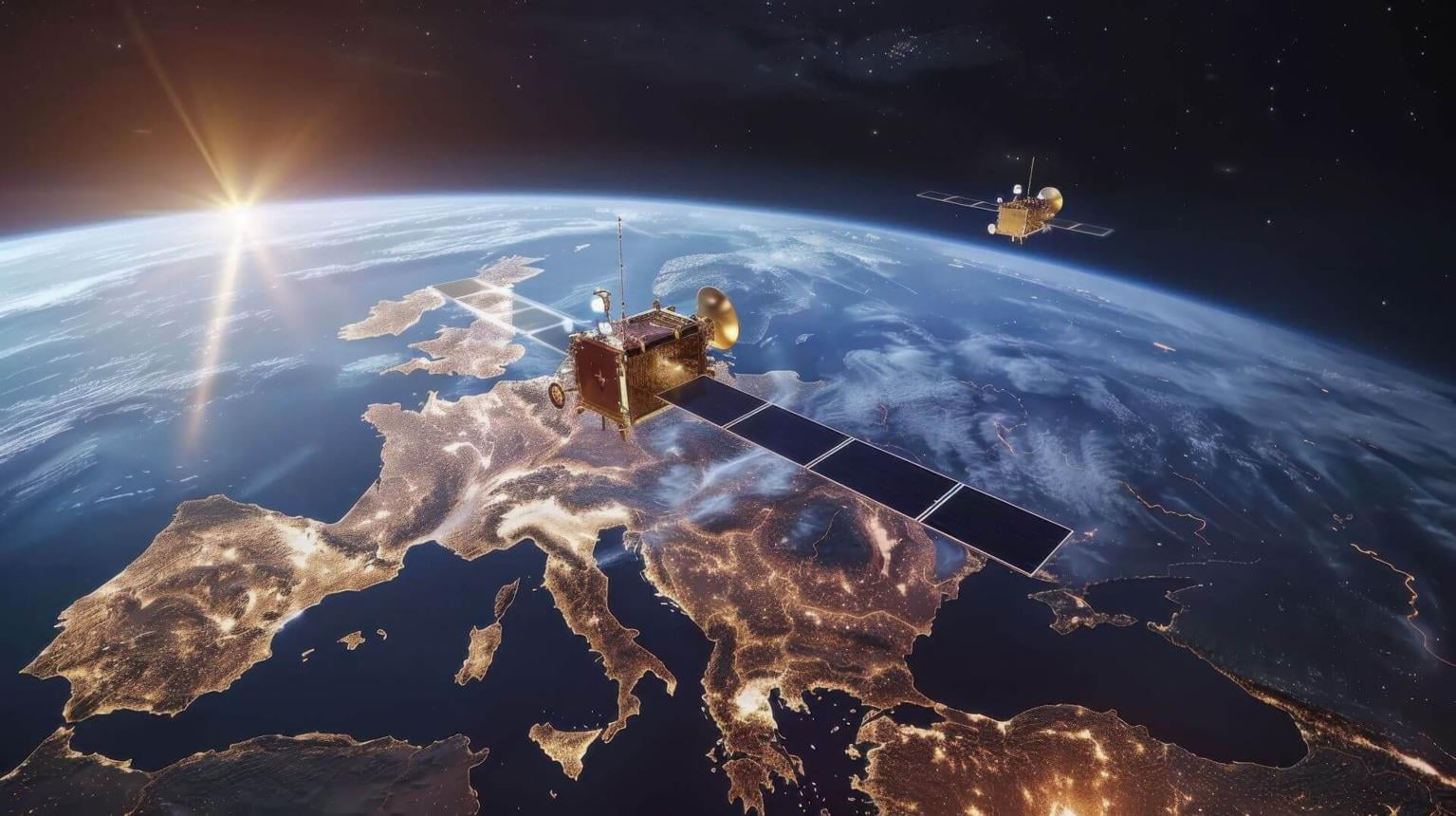
Brussels: For most of the past eighteen months, Europe’s flagship satellite project looked more like a cautionary tale than a strategic asset. IRIS2, the bloc’s planned constellation of nearly 300 satellites and its intended answer to SpaceX’s Starlink, was beset by ballooning costs, industrial infighting and doubts about whether the companies behind it could ever agree on how to share the work. That gloom is now lifting.

The SpaceRISE consortium, led by the satellite operators SES, Eutelsat and Hispasat, has finally settled the compromises that had stalled the venture, clearing the way for the multi-billion-euro network to move from contract to construction. The breakthrough matters because IRIS2 is not a conventional commercial constellation. It is a public programme, underpinned by a twelve-year concession worth around 10.6 billion euros, of which some six billion comes from the EU budget, half a billion from the European Space Agency and the rest from industry. When governments put that much public money on the table, deadlock is not just embarrassing; it is a strategic liability.

The strategic case has only sharpened. IRIS2 is designed to give European governments, militaries and critical infrastructure operators secure, sovereign communications that do not depend on an American billionaire’s goodwill, a dependency that looked abstract a few years ago and looks acute now. The constellation will mix satellites in low and medium Earth orbit to deliver encrypted government services alongside commercial broadband, filling coverage gaps from the Arctic to remote rural regions and offering a continental fallback if terrestrial networks are attacked or cut.

Momentum is building beyond the core members. In March, Norway and Iceland signed agreements to take part in IRIS2 and the related GOVSATCOM programme, extending the project’s reach across the wider European neighbourhood and signalling that non-EU partners see value in a communications backbone Brussels controls. That widening coalition strengthens the political logic even as the engineering timeline stretches, since initial government services are not expected before the end of the decade, with fuller commercial offerings following.

The delay is the obvious vulnerability. By the time IRIS2 is fully operational toward 2030, Starlink will have spent years entrenching itself with thousands of satellites already in orbit and a head start in cost and capacity that Europe cannot easily close. Critics ask, reasonably, whether a slower, costlier, committee-built constellation can compete at all. The honest answer is that it is not really meant to win on price. Its value is insurance, guaranteed access to space-based connectivity that no foreign government or chief executive can switch off, and that is a proposition only states tend to fund.

This is also a test for the emerging European space rulebook, the framework meant to bring coherence to a sector long fragmented across national agencies and commercial players. Getting IRIS2 unstuck is the proof of concept. If the EU can shepherd a constellation this complex from squabbling consortium to working network, it lends credibility to its larger ambition of treating space as critical infrastructure rather than a series of one-off launches. The green light was the easy part. Now Europe has to build the thing, and build it before the gap with its rivals becomes unbridgeable.