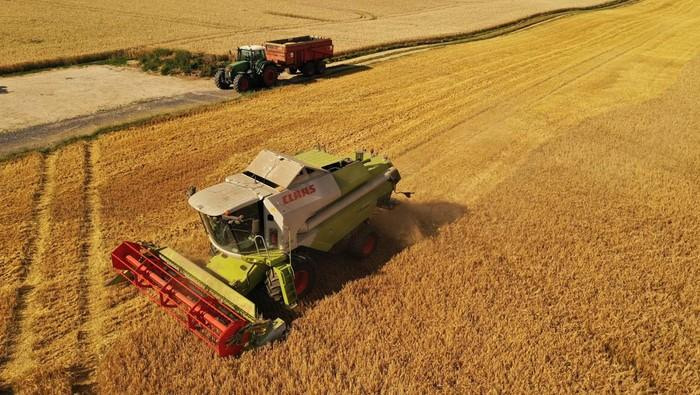
Brussels: Food security now anchors the European Union’s plan for farming after 2027, with the European Commission ring-fencing at least €300 billion to protect farmers’ incomes across the bloc’s next seven-year budget.
Agriculture Commissioner Christophe Hansen has framed the package as a promise of predictability. The reserved envelope covers not only area-based direct payments but also on-farm investment, agri-environmental measures and a new €6.3 billion Unity Safety Net that pays out when markets crash or disaster strikes. The Commission argues that a guaranteed floor keeps food security out of the annual budget scramble and gives farmers the confidence to keep planting.
The money would flow through new National and Regional Partnership Plans, a single funding pot that folds the Common Agricultural Policy together with cohesion and social spending. Member states would draw on roughly €453 billion for national priorities, including agriculture and rural development, and tailor payments to country-specific recommendations. Farm groups worry the merger dilutes the CAP and lets governments raid rural budgets for other causes; the Commission insists it simply gives capitals more room to target genuine need.
The pledge lands after two years of tractor protests that rattled capitals from Paris to Warsaw. Farmers marched against thin margins, cheap imports and a blizzard of environmental paperwork, and the Commission has clearly listened. Officials now talk less about green conditions and more about income, competitiveness and keeping European fields in production as global supplies wobble.
Brussels has paired the budget promise with faster relief on costs. Officials plan to suspend remaining tariffs on ammonia, urea and other fertilisers where supply tightens, and a Fertiliser Action Plan promises more market transparency and a push toward recycled nutrients. The Commission has also tightened import controls, raising external sanitary checks by half and training hundreds of national inspectors to guard the food chain against disease and fraud.
Not everyone believes the numbers add up. Critics point out that once inflation is stripped away, the ring-fenced sum barely holds steady against today’s spending, and organic groups fear green safeguards have been loosened to buy farmer goodwill. Environmental campaigners warn that weaker conditions could undercut the very soil and water that long-term food security depends on. Parliament and the Council will spend much of 2026 fighting over the detail before anything takes effect.
Whatever shape the final deal takes, the Commission wants food security treated as strategic infrastructure rather than a subsidy line. Readers can weigh its case in the overview of the CAP post-2027 budget and the questions and answers on the proposal. The argument over how Europe feeds itself, and who pays to keep its farmers afloat, is only beginning.