August 9, 2026
LATEST
New EU Gas Market Rules Take Effect With Consumer SafeguardsDeforestation Regulation Holds Its December Deadline Despite CutsDigital Omnibus Delays Europe’s High-Risk AI Deadline to 2027Europe’s Schools Confront a Widening Basic Skills GapRule of Law Report Finds Progress but Trust Still LagsIRIS2 Gains 66 Satellites as Brussels Signs the Rollout DealNature Restoration Plans Come Due as Member States Race a DeadlineECB Rates Hold at 2.25 Percent as Frankfurt Waits on the DataEU Budget Talks Turn to Cohesion as Ireland Takes OverWildfire Response Stretches Europe’s Emergency Fleet ThinCan Europe’s Quantum Plan Match Its Big Ambitions?Armenia Edges West as Moscow’s Grip Slips AwayEurope Inherits the World’s Aid Bill It Cannot Fully PayAir Passenger Rights Get Their First Overhaul in Two DecadesErasmus Opens a 5 Billion Euro Round for Skills and MobilityCeuta Crisis Pushes the EU Toward Faster Migrant ReturnsBulky Parcels Face a Packaging Crackdown From August 12Can Europe Build Its Drone Wall Before 2030 Arrives?Indonesia’s Trade Deal With Europe Nears Its Final SignatureEurope Leans on Beijing to Keep Climate Talks Alive Before AntalyaNew EU Gas Market Rules Take Effect With Consumer SafeguardsDeforestation Regulation Holds Its December Deadline Despite CutsDigital Omnibus Delays Europe’s High-Risk AI Deadline to 2027Europe’s Schools Confront a Widening Basic Skills GapRule of Law Report Finds Progress but Trust Still LagsIRIS2 Gains 66 Satellites as Brussels Signs the Rollout DealNature Restoration Plans Come Due as Member States Race a DeadlineECB Rates Hold at 2.25 Percent as Frankfurt Waits on the DataEU Budget Talks Turn to Cohesion as Ireland Takes OverWildfire Response Stretches Europe’s Emergency Fleet ThinCan Europe’s Quantum Plan Match Its Big Ambitions?Armenia Edges West as Moscow’s Grip Slips AwayEurope Inherits the World’s Aid Bill It Cannot Fully PayAir Passenger Rights Get Their First Overhaul in Two DecadesErasmus Opens a 5 Billion Euro Round for Skills and MobilityCeuta Crisis Pushes the EU Toward Faster Migrant ReturnsBulky Parcels Face a Packaging Crackdown From August 12Can Europe Build Its Drone Wall Before 2030 Arrives?Indonesia’s Trade Deal With Europe Nears Its Final SignatureEurope Leans on Beijing to Keep Climate Talks Alive Before Antalya
August 9, 2026
LATEST
New EU Gas Market Rules Take Effect With Consumer SafeguardsDeforestation Regulation Holds Its December Deadline Despite CutsDigital Omnibus Delays Europe’s High-Risk AI Deadline to 2027Europe’s Schools Confront a Widening Basic Skills GapRule of Law Report Finds Progress but Trust Still LagsIRIS2 Gains 66 Satellites as Brussels Signs the Rollout DealNature Restoration Plans Come Due as Member States Race a DeadlineECB Rates Hold at 2.25 Percent as Frankfurt Waits on the DataEU Budget Talks Turn to Cohesion as Ireland Takes OverWildfire Response Stretches Europe’s Emergency Fleet ThinCan Europe’s Quantum Plan Match Its Big Ambitions?Armenia Edges West as Moscow’s Grip Slips AwayEurope Inherits the World’s Aid Bill It Cannot Fully PayAir Passenger Rights Get Their First Overhaul in Two DecadesErasmus Opens a 5 Billion Euro Round for Skills and MobilityCeuta Crisis Pushes the EU Toward Faster Migrant ReturnsBulky Parcels Face a Packaging Crackdown From August 12Can Europe Build Its Drone Wall Before 2030 Arrives?Indonesia’s Trade Deal With Europe Nears Its Final SignatureEurope Leans on Beijing to Keep Climate Talks Alive Before AntalyaNew EU Gas Market Rules Take Effect With Consumer SafeguardsDeforestation Regulation Holds Its December Deadline Despite CutsDigital Omnibus Delays Europe’s High-Risk AI Deadline to 2027Europe’s Schools Confront a Widening Basic Skills GapRule of Law Report Finds Progress but Trust Still LagsIRIS2 Gains 66 Satellites as Brussels Signs the Rollout DealNature Restoration Plans Come Due as Member States Race a DeadlineECB Rates Hold at 2.25 Percent as Frankfurt Waits on the DataEU Budget Talks Turn to Cohesion as Ireland Takes OverWildfire Response Stretches Europe’s Emergency Fleet ThinCan Europe’s Quantum Plan Match Its Big Ambitions?Armenia Edges West as Moscow’s Grip Slips AwayEurope Inherits the World’s Aid Bill It Cannot Fully PayAir Passenger Rights Get Their First Overhaul in Two DecadesErasmus Opens a 5 Billion Euro Round for Skills and MobilityCeuta Crisis Pushes the EU Toward Faster Migrant ReturnsBulky Parcels Face a Packaging Crackdown From August 12Can Europe Build Its Drone Wall Before 2030 Arrives?Indonesia’s Trade Deal With Europe Nears Its Final SignatureEurope Leans on Beijing to Keep Climate Talks Alive Before Antalya

Frankfurt Weighs Another Rate Rise as War Inflation Persists

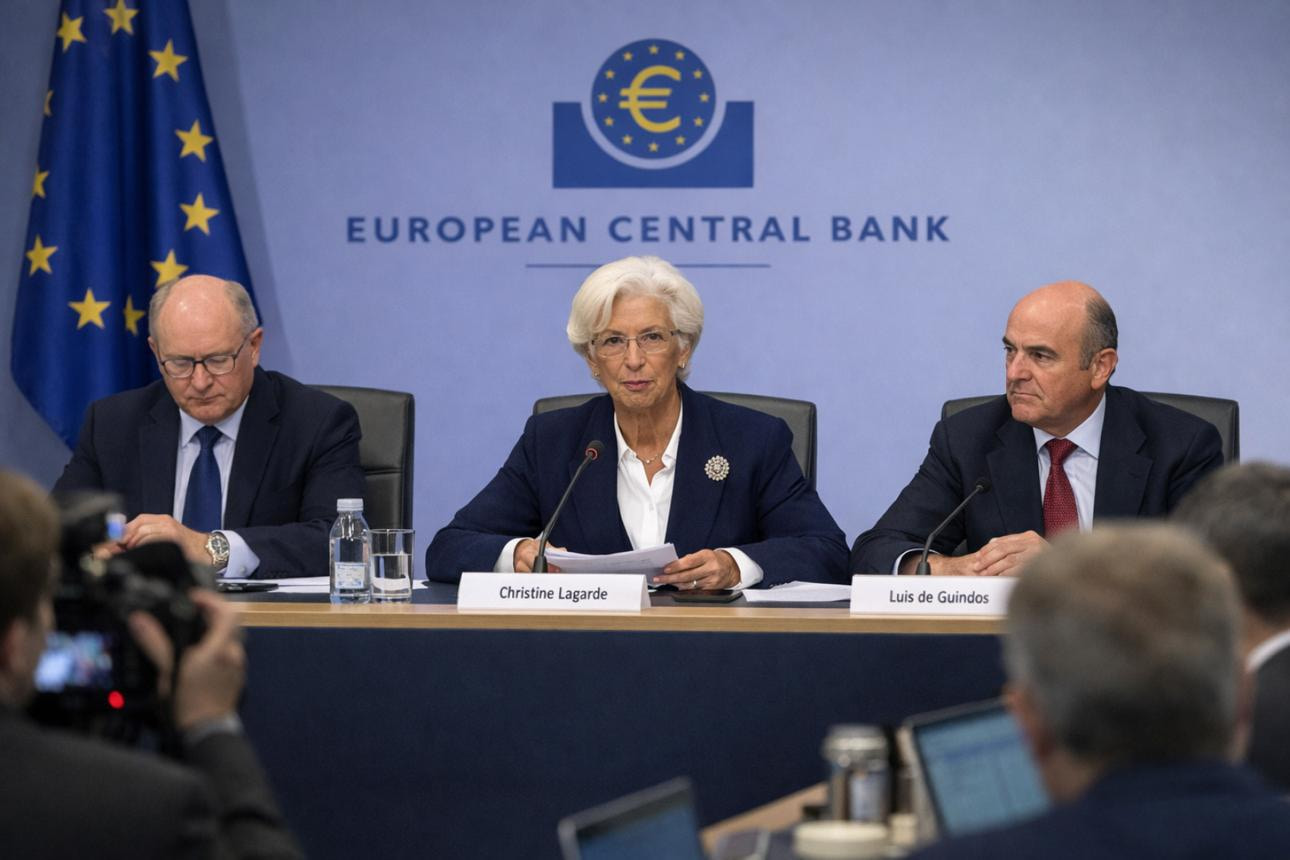
Frankfurt: The European Central Bank returns to the table on 23 July with an awkward decision and little cover to make it. In June the Governing Council raised its three key rates by a quarter point, lifting the deposit rate to 2.25 percent in the bank’s first increase in three years. The move reversed a long easing cycle and was driven less by a strengthening economy than by an external shock: the war in the Middle East has pushed energy and commodity prices up and threatens to feed those costs through the wider price system. July, by contrast, is a non-projection meeting, so policymakers must judge whether one hike was enough without the comfort of fresh staff forecasts.

The numbers behind the June decision explain the discomfort. The bank’s baseline now sees headline inflation averaging 3.0 percent this year before drifting back toward the 2 percent target by 2028. Growth, meanwhile, was marked down to 0.8 percent for 2026, reflecting the drag of higher commodity prices on real incomes and confidence. That is the uncomfortable shape of a supply shock: prices up, activity down, and a central bank forced to choose which problem to lean against. Raising rates to tame inflation risks deepening the slowdown; holding steady risks letting expectations drift higher.

The case for pausing in July is that monetary policy works with a lag and the June move needs time to land. Energy-driven inflation, the argument runs, is a tax on the economy that will fade as prices stabilise, and tightening into a war-induced squeeze could turn a slowdown into something worse. The case for going further rests on second-round effects. If workers seek to recover lost purchasing power through higher wages, and firms pass those costs on, a one-off energy shock can harden into persistent inflation. Guarding against that scenario is exactly the kind of insurance hawks on the Council will want to buy while the outlook is still uncertain.

Markets are reading the signals nervously. Pricing across money markets has swung between expecting a hold and bracing for another increase, a sign that the Council has not yet convinced investors it knows its own next move. Part of the difficulty is communication. Without new projections, President Christine Lagarde will have to lean heavily on language to steer expectations, and any hint that June was the start of a cycle rather than a one-off could tighten financial conditions faster than the bank intends.

The political backdrop sharpens the stakes. Higher borrowing costs land unevenly across a currency union whose members carry very different debt loads, and governments already stretched by defence and energy spending will not welcome a rising cost of servicing their debt. The ECB’s mandate is price stability, not fiscal comfort, but the two are harder to separate when a supply shock squeezes households and states at the same time. Whatever the Council decides on 23 July, the meeting will be less about the size of any move than about the message: whether the bank believes the inflation threat from the war is temporary, or whether it is now the defining risk of the year ahead.