August 9, 2026
LATEST
New EU Gas Market Rules Take Effect With Consumer SafeguardsDeforestation Regulation Holds Its December Deadline Despite CutsDigital Omnibus Delays Europe’s High-Risk AI Deadline to 2027Europe’s Schools Confront a Widening Basic Skills GapRule of Law Report Finds Progress but Trust Still LagsIRIS2 Gains 66 Satellites as Brussels Signs the Rollout DealNature Restoration Plans Come Due as Member States Race a DeadlineECB Rates Hold at 2.25 Percent as Frankfurt Waits on the DataEU Budget Talks Turn to Cohesion as Ireland Takes OverWildfire Response Stretches Europe’s Emergency Fleet ThinCan Europe’s Quantum Plan Match Its Big Ambitions?Armenia Edges West as Moscow’s Grip Slips AwayEurope Inherits the World’s Aid Bill It Cannot Fully PayAir Passenger Rights Get Their First Overhaul in Two DecadesErasmus Opens a 5 Billion Euro Round for Skills and MobilityCeuta Crisis Pushes the EU Toward Faster Migrant ReturnsBulky Parcels Face a Packaging Crackdown From August 12Can Europe Build Its Drone Wall Before 2030 Arrives?Indonesia’s Trade Deal With Europe Nears Its Final SignatureEurope Leans on Beijing to Keep Climate Talks Alive Before AntalyaNew EU Gas Market Rules Take Effect With Consumer SafeguardsDeforestation Regulation Holds Its December Deadline Despite CutsDigital Omnibus Delays Europe’s High-Risk AI Deadline to 2027Europe’s Schools Confront a Widening Basic Skills GapRule of Law Report Finds Progress but Trust Still LagsIRIS2 Gains 66 Satellites as Brussels Signs the Rollout DealNature Restoration Plans Come Due as Member States Race a DeadlineECB Rates Hold at 2.25 Percent as Frankfurt Waits on the DataEU Budget Talks Turn to Cohesion as Ireland Takes OverWildfire Response Stretches Europe’s Emergency Fleet ThinCan Europe’s Quantum Plan Match Its Big Ambitions?Armenia Edges West as Moscow’s Grip Slips AwayEurope Inherits the World’s Aid Bill It Cannot Fully PayAir Passenger Rights Get Their First Overhaul in Two DecadesErasmus Opens a 5 Billion Euro Round for Skills and MobilityCeuta Crisis Pushes the EU Toward Faster Migrant ReturnsBulky Parcels Face a Packaging Crackdown From August 12Can Europe Build Its Drone Wall Before 2030 Arrives?Indonesia’s Trade Deal With Europe Nears Its Final SignatureEurope Leans on Beijing to Keep Climate Talks Alive Before Antalya
August 9, 2026
LATEST
New EU Gas Market Rules Take Effect With Consumer SafeguardsDeforestation Regulation Holds Its December Deadline Despite CutsDigital Omnibus Delays Europe’s High-Risk AI Deadline to 2027Europe’s Schools Confront a Widening Basic Skills GapRule of Law Report Finds Progress but Trust Still LagsIRIS2 Gains 66 Satellites as Brussels Signs the Rollout DealNature Restoration Plans Come Due as Member States Race a DeadlineECB Rates Hold at 2.25 Percent as Frankfurt Waits on the DataEU Budget Talks Turn to Cohesion as Ireland Takes OverWildfire Response Stretches Europe’s Emergency Fleet ThinCan Europe’s Quantum Plan Match Its Big Ambitions?Armenia Edges West as Moscow’s Grip Slips AwayEurope Inherits the World’s Aid Bill It Cannot Fully PayAir Passenger Rights Get Their First Overhaul in Two DecadesErasmus Opens a 5 Billion Euro Round for Skills and MobilityCeuta Crisis Pushes the EU Toward Faster Migrant ReturnsBulky Parcels Face a Packaging Crackdown From August 12Can Europe Build Its Drone Wall Before 2030 Arrives?Indonesia’s Trade Deal With Europe Nears Its Final SignatureEurope Leans on Beijing to Keep Climate Talks Alive Before AntalyaNew EU Gas Market Rules Take Effect With Consumer SafeguardsDeforestation Regulation Holds Its December Deadline Despite CutsDigital Omnibus Delays Europe’s High-Risk AI Deadline to 2027Europe’s Schools Confront a Widening Basic Skills GapRule of Law Report Finds Progress but Trust Still LagsIRIS2 Gains 66 Satellites as Brussels Signs the Rollout DealNature Restoration Plans Come Due as Member States Race a DeadlineECB Rates Hold at 2.25 Percent as Frankfurt Waits on the DataEU Budget Talks Turn to Cohesion as Ireland Takes OverWildfire Response Stretches Europe’s Emergency Fleet ThinCan Europe’s Quantum Plan Match Its Big Ambitions?Armenia Edges West as Moscow’s Grip Slips AwayEurope Inherits the World’s Aid Bill It Cannot Fully PayAir Passenger Rights Get Their First Overhaul in Two DecadesErasmus Opens a 5 Billion Euro Round for Skills and MobilityCeuta Crisis Pushes the EU Toward Faster Migrant ReturnsBulky Parcels Face a Packaging Crackdown From August 12Can Europe Build Its Drone Wall Before 2030 Arrives?Indonesia’s Trade Deal With Europe Nears Its Final SignatureEurope Leans on Beijing to Keep Climate Talks Alive Before Antalya

Germany Breaks Ground on Hub for EU Secure Satellite Network

Cologne: Germany broke ground in late June 2026 on a government satellite communications hub in Cologne, one of the physical anchors of the European Union’s IRIS2 secure satellite network, marking a concrete step in a programme meant to give governments, businesses and citizens sovereign, encrypted connectivity from space. The facility will help route services from a planned multi-orbit constellation that the EU aims to start launching in 2029.

What IRIS2 is

IRIS2, short for Infrastructure for Resilience, Interconnectivity and Security by Satellite, is the EU’s answer to a growing dependence on privately owned networks for critical communications. The secure satellite network is designed to keep European authorities connected even if terrestrial infrastructure is jammed or destroyed.

  • A multi-orbit constellation of around 290 satellites, 272 in low Earth orbit and 18 in medium Earth orbit.
  • First launches envisioned in 2029, with services building up into the following decade.
  • A 12-year concession to design, deliver and operate the system.
  • Ground hubs, including the new Cologne site, to manage secure government traffic.

The Cologne milestone

The Cologne hub is one of two planned facilities supporting Europe’s governmental satellite communications, and its groundbreaking signals that the secure satellite network is moving from contracts to construction. German officials framed the site as evidence that the EU can host critical space infrastructure on its own soil. A second hub is planned elsewhere in the Union, and together the sites will form the backbone that lets member states exchange classified traffic over the secure satellite network without routing it through commercial systems.

Who is building it

The system is being delivered by the SpaceRISE consortium, which groups operators SES, Eutelsat and Hispasat, under a concession signed with the European Commission and the European Space Agency. The consortium will operate IRIS2 for twelve years, blending public funding with private investment.

“IRIS2 will provide the EU and its member states with secure connectivity services for government authorities, businesses and citizens, and reinforce Europe’s technological sovereignty,” the European Commission said in setting out the programme’s objectives.

Background: how we got here

The EU agreed to build its own secure satellite network in 2023 to reduce reliance on non-European providers, and the Commission and ESA kick-started IRIS2 in December 2024 by signing the concession contract in Brussels. The programme complements Galileo and Copernicus, the EU’s existing navigation and Earth-observation systems, extending Europe’s space assets into secure communications.

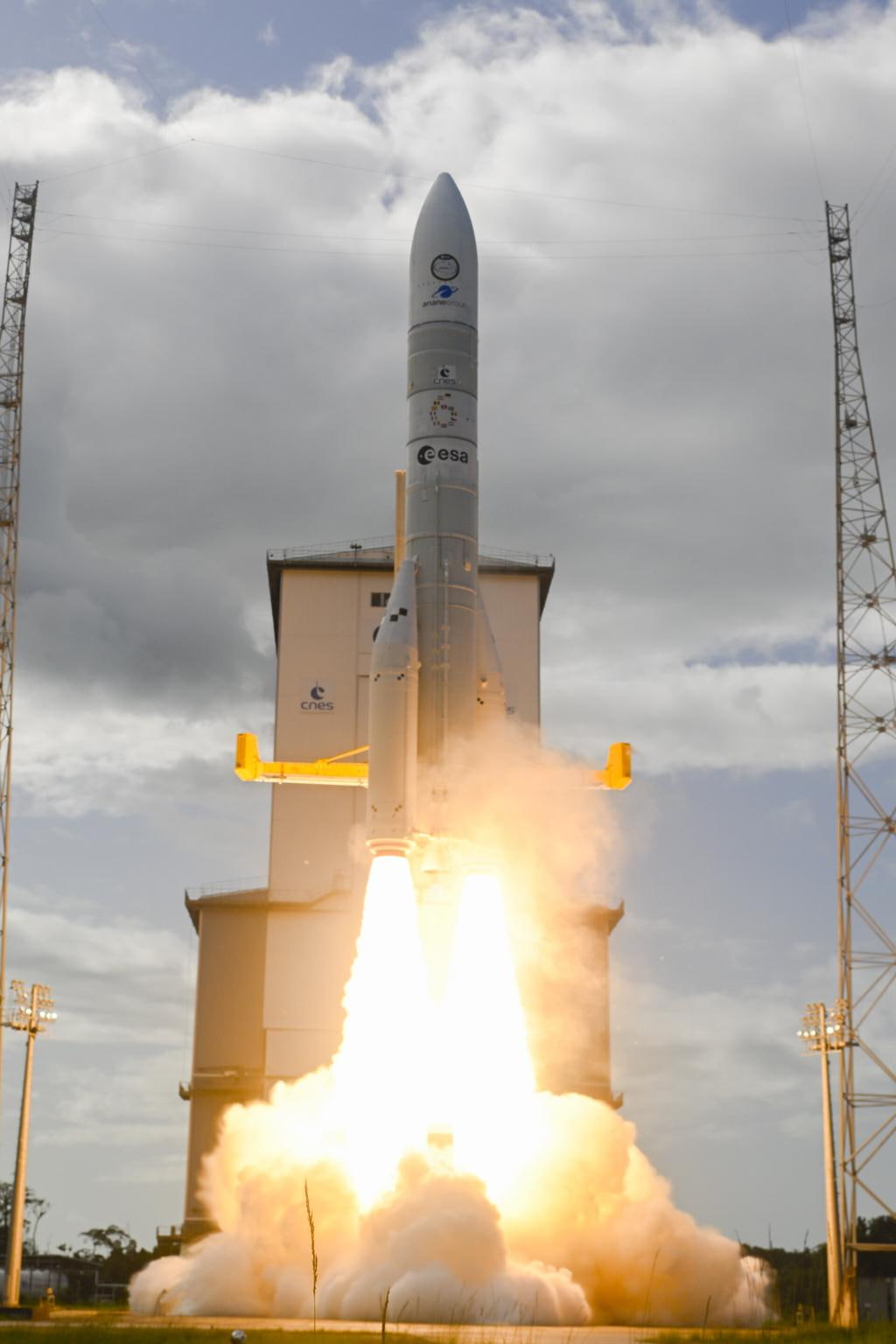
What happens next

Attention now turns to manufacturing the satellites and securing launch capacity. Most of the constellation is expected to fly on Ariane 6, while smaller satellites could ride on vehicles selected through the European Launcher Challenge, ESA’s effort to nurture new European rockets. A critical design review and the first launches will test whether the secure satellite network can meet its ambitious 2029 timeline. Officials have acknowledged that tight deadlines, rising costs and the sheer scale of the constellation leave little room for slippage.