September 22, 2026
LATEST
One Ticket Promise Meets Its First Real Test Inside the CouncilCyprus Judge Takes Over a General Court Still Absorbing CasesSkills Portability Act Sets Five Weeks as the New Recognition LimitIreland Reopens the Digital Omnibus With Cookies Back in PlayMinisters Weigh the Long-Term Budget Before a Negotiating BoxSocial Partners Have One Week Left to Shape the Quality Jobs ActPhuket Round Decides Whether Thailand Closes Its Deal This YearSyria’s Banks Reconnect While Europe’s Risk Premium Stays PutMercosur’s First Health Ban Tests a Deal Still Being RatifiedBudget Performance Regulation Slips Toward a 2027 VotePontes Digital Euro Platform Goes Live for 13 BanksEU Arctic Drilling Ban Survives Norway’s Lobbying PushPrivacy Watchdog Wants Tighter Limits on Eurojust’s New DatabasesScrutiny Board Sends Europe’s Circular Economy Act Back for ReworkLow-LEO Studies Open the Next Chapter for Europe’s IRIS2 PlanFour Indo-Pacific Partners Join Europe’s Ministers in New YorkWildfire Season Closes Above Average as the rescEU Fleet GrowsQuality Education Roadmap Lands in November With Three FrontsPartnership Plans Recast Cohesion Policy Before Anyone VotesHandling Fee on Small Parcels Must Be Ready by 1 November 2026One Ticket Promise Meets Its First Real Test Inside the CouncilCyprus Judge Takes Over a General Court Still Absorbing CasesSkills Portability Act Sets Five Weeks as the New Recognition LimitIreland Reopens the Digital Omnibus With Cookies Back in PlayMinisters Weigh the Long-Term Budget Before a Negotiating BoxSocial Partners Have One Week Left to Shape the Quality Jobs ActPhuket Round Decides Whether Thailand Closes Its Deal This YearSyria’s Banks Reconnect While Europe’s Risk Premium Stays PutMercosur’s First Health Ban Tests a Deal Still Being RatifiedBudget Performance Regulation Slips Toward a 2027 VotePontes Digital Euro Platform Goes Live for 13 BanksEU Arctic Drilling Ban Survives Norway’s Lobbying PushPrivacy Watchdog Wants Tighter Limits on Eurojust’s New DatabasesScrutiny Board Sends Europe’s Circular Economy Act Back for ReworkLow-LEO Studies Open the Next Chapter for Europe’s IRIS2 PlanFour Indo-Pacific Partners Join Europe’s Ministers in New YorkWildfire Season Closes Above Average as the rescEU Fleet GrowsQuality Education Roadmap Lands in November With Three FrontsPartnership Plans Recast Cohesion Policy Before Anyone VotesHandling Fee on Small Parcels Must Be Ready by 1 November 2026
September 22, 2026
LATEST
One Ticket Promise Meets Its First Real Test Inside the CouncilCyprus Judge Takes Over a General Court Still Absorbing CasesSkills Portability Act Sets Five Weeks as the New Recognition LimitIreland Reopens the Digital Omnibus With Cookies Back in PlayMinisters Weigh the Long-Term Budget Before a Negotiating BoxSocial Partners Have One Week Left to Shape the Quality Jobs ActPhuket Round Decides Whether Thailand Closes Its Deal This YearSyria’s Banks Reconnect While Europe’s Risk Premium Stays PutMercosur’s First Health Ban Tests a Deal Still Being RatifiedBudget Performance Regulation Slips Toward a 2027 VotePontes Digital Euro Platform Goes Live for 13 BanksEU Arctic Drilling Ban Survives Norway’s Lobbying PushPrivacy Watchdog Wants Tighter Limits on Eurojust’s New DatabasesScrutiny Board Sends Europe’s Circular Economy Act Back for ReworkLow-LEO Studies Open the Next Chapter for Europe’s IRIS2 PlanFour Indo-Pacific Partners Join Europe’s Ministers in New YorkWildfire Season Closes Above Average as the rescEU Fleet GrowsQuality Education Roadmap Lands in November With Three FrontsPartnership Plans Recast Cohesion Policy Before Anyone VotesHandling Fee on Small Parcels Must Be Ready by 1 November 2026One Ticket Promise Meets Its First Real Test Inside the CouncilCyprus Judge Takes Over a General Court Still Absorbing CasesSkills Portability Act Sets Five Weeks as the New Recognition LimitIreland Reopens the Digital Omnibus With Cookies Back in PlayMinisters Weigh the Long-Term Budget Before a Negotiating BoxSocial Partners Have One Week Left to Shape the Quality Jobs ActPhuket Round Decides Whether Thailand Closes Its Deal This YearSyria’s Banks Reconnect While Europe’s Risk Premium Stays PutMercosur’s First Health Ban Tests a Deal Still Being RatifiedBudget Performance Regulation Slips Toward a 2027 VotePontes Digital Euro Platform Goes Live for 13 BanksEU Arctic Drilling Ban Survives Norway’s Lobbying PushPrivacy Watchdog Wants Tighter Limits on Eurojust’s New DatabasesScrutiny Board Sends Europe’s Circular Economy Act Back for ReworkLow-LEO Studies Open the Next Chapter for Europe’s IRIS2 PlanFour Indo-Pacific Partners Join Europe’s Ministers in New YorkWildfire Season Closes Above Average as the rescEU Fleet GrowsQuality Education Roadmap Lands in November With Three FrontsPartnership Plans Recast Cohesion Policy Before Anyone VotesHandling Fee on Small Parcels Must Be Ready by 1 November 2026

Hungary Blocks Two Accession Clusters and Ireland Will Not Split Them

Brussels: Hungary refused again on 1 September to sign off the screening results that would unlock two accession clusters for Ukraine, leaving the Council’s enlargement working party exactly where it stood before the summer break. Budapest’s representative told colleagues that Ukraine must first deliver on a bilateral undertaking covering the rights of the Hungarian minority in Zakarpattia. Nobody in the room expects that file to close quickly.

The two accession clusters at issue cover the internal market and competitiveness. Opening them requires unanimity, and a single capital can hold the process at the technical stage indefinitely without ever casting a formal veto in public. That is the mechanism Hungary has used since July, when an earlier attempt to approve the same screening reports collapsed for the same reason.

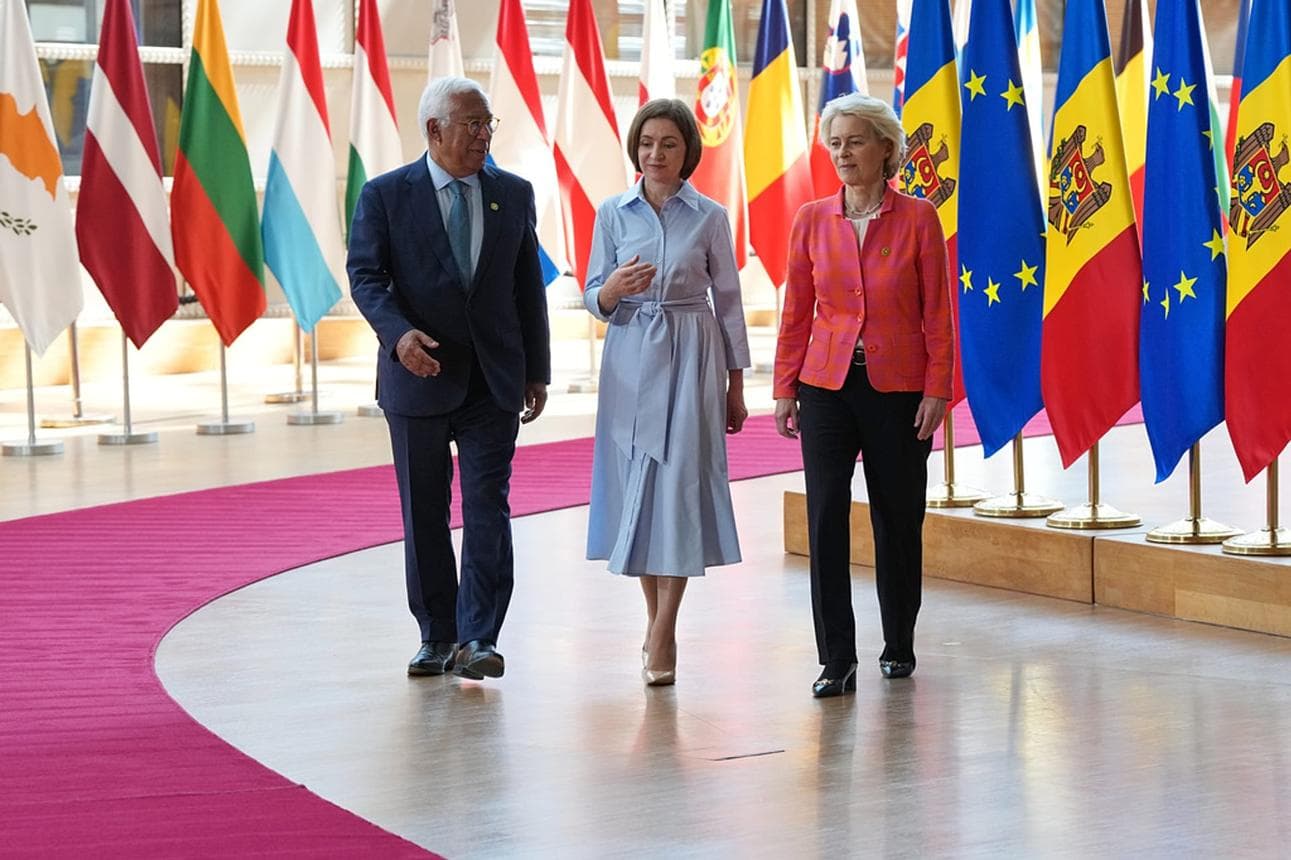
What makes this round sharper is the offer Budapest attached to its refusal. Hungary said it would approve the screening result for Moldova alone. Ireland, holding the Council presidency, declined to take it, and most member states backed that call. Splitting the two candidates would end a pairing that has held since 2022 and hand Chisinau an advantage it never asked for.

Moldova’s government has been careful in public. Its officials keep repeating that the country wants to advance with Ukraine rather than past it, partly out of solidarity and partly out of calculation. A Moldova that moves alone loses the political weight that Ukraine’s war brings to the enlargement file, and it becomes a much smaller item on the agenda of capitals with limited attention to spare.

The two governments opened their first cluster in June after member states agreed to move together, a decision announced jointly by the Council and Commission presidents. In July the Council staged four accession conferences in a single day, including the external relations cluster for both countries. That burst of activity now looks like the exception rather than the new pace.

Officials handling the file describe a familiar trade. Hungary lifted its objection to the external relations cluster earlier this year once it had extracted attention on the minority question, and several diplomats read the current standoff as the same bargaining repeated at a higher price. Others argue the calculation is domestic, tied to a Hungarian electorate that has heard about Ukraine’s accession costs for three years.

The screening reports themselves are technical documents. They compare a candidate’s law against the EU acquis and list what must change. Approving them commits nobody to a date. That gap between procedural weight and political symbolism is why the blockage frustrates negotiators so much, and why Kyiv keeps preparing legislation for clusters it cannot formally open.

There is no obvious way through. Qualified majority voting does not apply here, and treaty change to introduce it would need the same unanimity it seeks to bypass. Some capitals have floated the idea of opening clusters informally and recording the step later, though the legal service has shown little appetite for improvisation.

Ireland’s presidency runs to the end of December. It will try again at COELA in the coming weeks, and the realistic ambition is not a breakthrough but keeping Ukraine and Moldova on the same track until a capital with more leverage over Budapest decides to spend it.