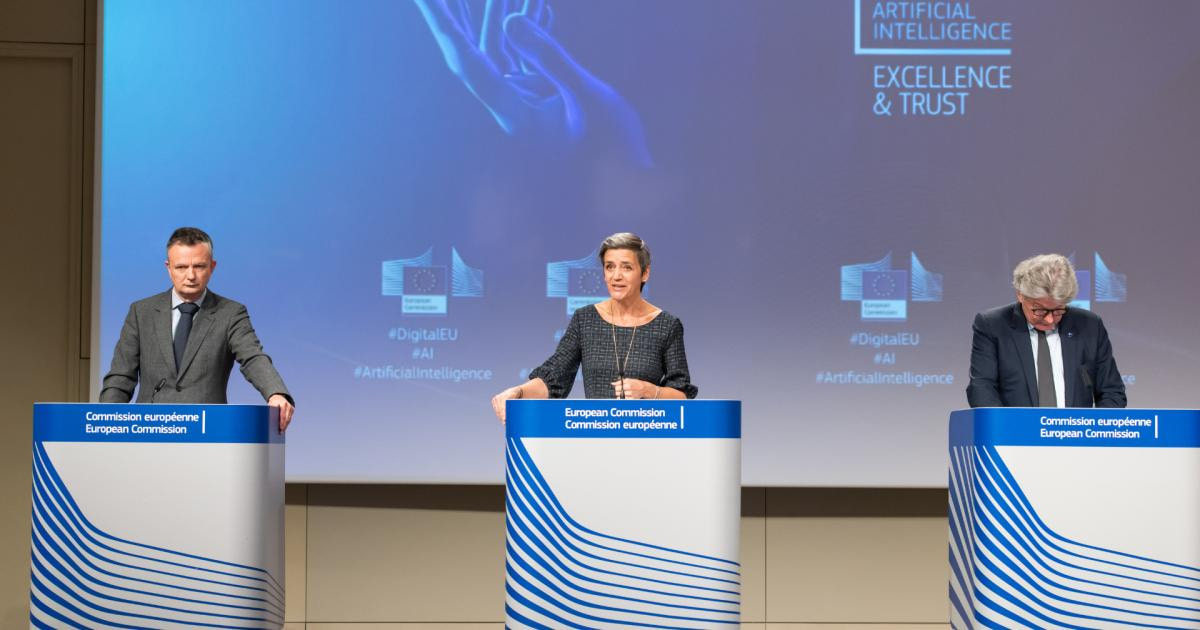
Brussels: A bluntly worded warning from EU High Representative Kaja Kallas at the 12 May Foreign Affairs Council in Defence configuration crystallised a problem European capitals have been reluctant to acknowledge in public: the historic surge in defence spending unleashed since 2022 is not translating into a proportional surge in industrial output. Money, in other words, is moving faster than missiles, ammunition or armoured vehicles, and the gap is becoming a strategic liability rather than a budgetary curiosity.
Kallas told ministers that despite the substantial sums allocated through national budgets, the European Defence Fund, the Act in Support of Ammunition Production, the ASAP follow-on instruments and the new defence-readiness envelope tied to the SAFE regulation, manufacturers across the bloc are not visibly accelerating their pace. The observation echoes complaints heard from Ukrainian counterparts for nearly two years and aligns with assessments from the European Defence Agency, which has documented persistent bottlenecks in propellants, specialty steels, machine tools, and the skilled workforce required to operate them.
The political backdrop sharpens the urgency. Ukraine is due to receive in June the first disbursement of the EUR 90 billion loan agreed by member states earlier this year, a tranche structured to be drawn against Russian sovereign assets immobilised in EU jurisdictions. NATO Deputy Secretary General Radmila Shekerinska attended the Brussels meeting in person to underline alliance expectations, while Ukrainian Defence Minister Rustem Umerov joined by secure video link to present updated requirements that, according to officials familiar with the discussion, exceed what current production schedules can supply through the end of 2027.
The Council also received a presentation on an updated comprehensive EU Threat Analysis. Officials briefed on its contents described a colder reading of the strategic environment than the version circulated in late 2024, with greater weight assigned to hybrid threats, sub-threshold maritime activity in the Baltic and Black Seas, and the cumulative effect of Russian rearmament. Set against that backdrop, the diagnosis offered by Kallas is uncomfortable: industrial capacity, not political will or financing, has become the binding constraint on European deterrence.
What is to be done remains contested. Some delegations favour a more directive approach, with the Commission empowered to coordinate framework contracts, prioritise critical inputs and override national procurement preferences where joint demand exists. Others, particularly among member states with sizeable indigenous defence sectors, prefer to leave consolidation to market mechanisms supported by predictable multi-year orders. The European Defence Industrial Strategy, adopted in 2024 and now under revision, will be the principal vehicle through which these tensions are arbitrated.
A separate strand of debate concerns regulatory and operational obstacles. Kallas pressed ministers to remove what she described as the political and operational barriers slowing the defence-readiness agenda, language that points to permitting delays, dual-use export controls, sustainability reporting requirements perceived as ill-suited to defence supply chains, and uneven national rules on the financing of military production. None of these issues lend themselves to quick fixes, but the Council’s recognition that they exist marks a shift from the rhetorical mode of 2023 and 2024.
The Middle East situation, also on the agenda, complicated the picture further. Ministers exchanged views on how regional escalation affects availability of core capabilities, particularly air-defence interceptors and certain classes of munitions for which European stocks remain thin. Officials acknowledged that competing demands from Ukraine, allied states in the Middle East, and the bloc’s own readiness goals will require more transparent prioritisation than has so far been politically palatable. Kallas’s warning was, in essence, a request for that conversation to begin.