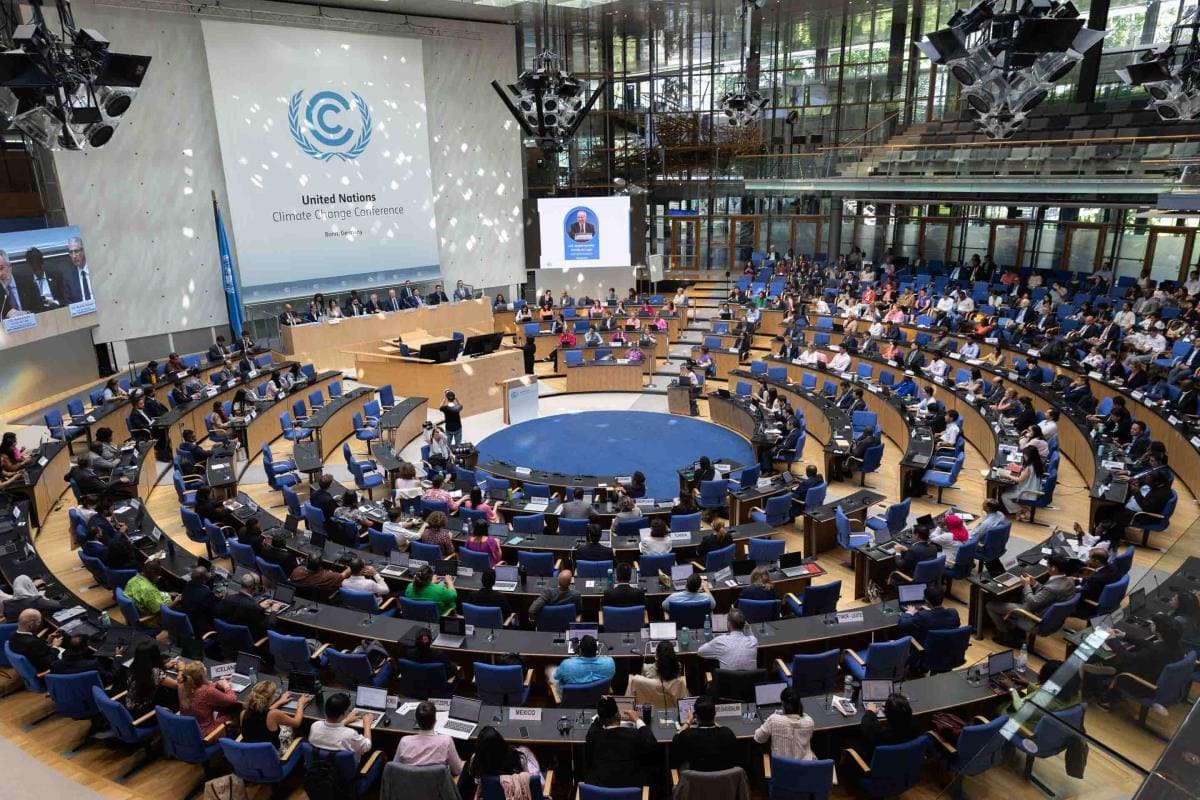
Luxembourg: Environment ministers meet in Luxembourg on 12 October for their first political debate on the EU ETS review, the Commission’s plan to rewrite the bloc’s carbon market for the years after 2030. The Council’s forward look for 5 to 18 October lists the review of the emissions trading system next to conclusions on the EU positions for the COP31 climate and COP17 biodiversity summits.
The Commission tabled the EU ETS review on 17 July 2026. The proposal covers the fifth and sixth trading phases and slows the pace at which the emissions cap falls. The annual linear reduction factor, currently 4.3%, would drop to 3.7% for 2031 to 2035 and to 1.7% for 2036 to 2040.
Free allocation sits at the heart of the EU ETS review debate. Industrial operators would keep benchmark-based free allowances beyond 2030, but only if they invest in decarbonisation. A company would receive 80% of its allocation for each five-year period once its investment plan wins approval, and the remaining 20% at the end of the period if it meets the conditions. Operators that move activity outside the EU would have to return allowances.
The proposal also adds a financing layer. It envisages an Industrial Decarbonisation Bank worth about €100 billion in total, with around €30 billion paid out in 2028 to 2030 on a first-come, first-served basis and competitive bidding afterwards. Member states would direct half of their national carbon revenues to decarbonisation investment.
Other pieces of the EU ETS review will also test the ministers. The Commission wants to halve the annual intake rate of the Market Stability Reserve from 24% to 12% and to count up to 250 million tonnes of permanent domestic carbon removals. From 2036, high-quality international credits could contribute up to 5% of the 2040 target of a 90% net cut against 1990. Aviation coverage would stretch from 2029 to certain flights within 5,000 km of the EU, and municipal waste incineration would enter the system in stages between 2031 and 2034.
Capitals began work on the text in July. Kurt Vandenberghe of the Commission’s climate directorate presented the plan to member state ambassadors on 22 July, according to a Czech News Agency report, two days after the Environment Working Party discussed the main part of the review. The Irish Presidency has made a common Council position one of its main priorities.
Monday’s exchange will show whether ministers think conditional free allocation and a slower cap strike the right balance between industrial competitiveness and climate ambition. Parliament must still adopt its own position under the ordinary legislative procedure, and the Commission’s carbon market page shows how the system works today. Whatever the ministers say in Luxembourg, the EU ETS review will shape how Europe prices carbon after 2030.