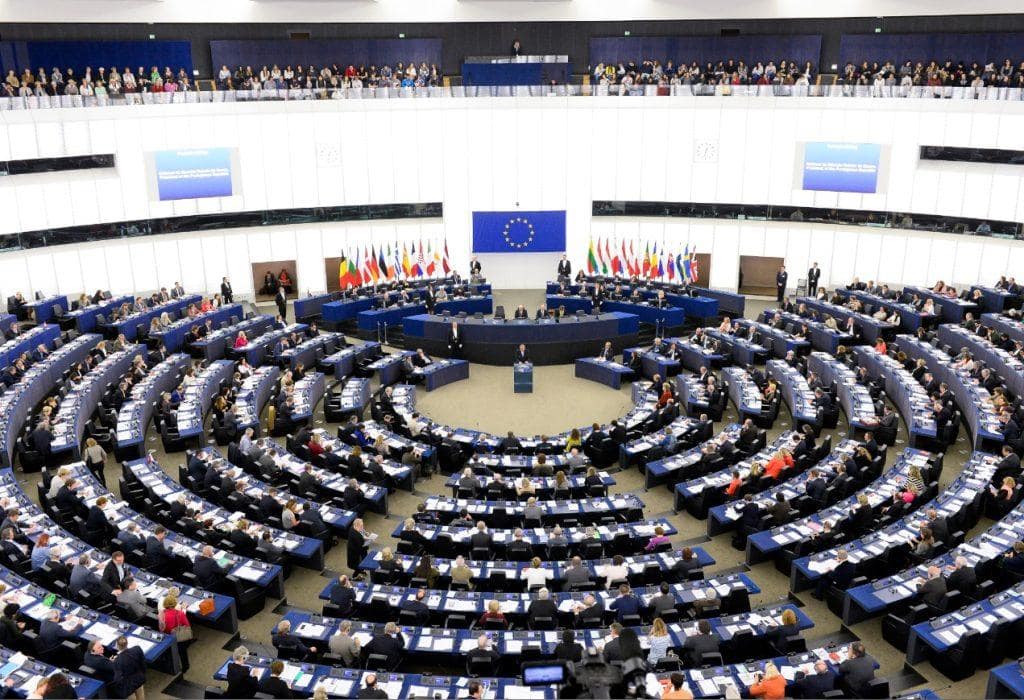
Strasbourg: The European Parliament adopted a resolution on 8 October 2026 that sets out what MEPs expect from the first EU anti-corruption strategy, and it asks the Commission to phase out golden visas and give prosecutors more resources. Members approved the text by a show of hands on Thursday, according to the Parliament’s press release.
The resolution builds on the EU anti-corruption directive, which entered into force in May 2026. Parliament argues that corruption erodes public trust, democracy and the rule of law, distorts economic activity and gives criminal groups and hostile actors room to operate. The text warns that “the perception that wrongdoing goes unpunished can itself undermine democratic legitimacy”.
On prevention, MEPs want evidence-based corruption risk assessments and targeted training for officials. They call for tighter rules on public procurement, grants and transparency, and for consistent rules on conflicts of interest, gifts, sponsored travel, asset declarations and moves between public and private jobs. The EU anti-corruption strategy should also set common standards for political financing, including disclosure by political foundations and intermediaries.
Parliament does not spare its own side in the EU anti-corruption strategy. The resolution asks for robust anti-corruption requirements for the EU institutions, with regular reviews by other EU bodies and possible changes to EU rules. It also backs full EU membership of the Council of Europe’s GRECO anti-corruption body, so that the institutions face the same scrutiny as national authorities.
Enforcement takes up the longest section of the EU anti-corruption strategy that MEPs envisage. MEPs ask for closer cooperation and information exchange among national authorities, Europol, Eurojust, the European Public Prosecutor’s Office (EPPO) and OLAF. They want independent and adequately funded national anti-corruption bodies, extra resources for the EPPO, and participation by member states that have not yet joined it.
The text also targets the money. Parliament calls for better tracing, freezing, confiscation and recovery of criminal proceeds, with attention to crypto-assets, opaque ownership structures and digital tools. It asks the Commission to phase out investor residence schemes, known as golden visas, gradually. Whistleblowers and investigative journalists should receive stronger protection, and judges and anti-corruption authorities should keep their independence.
Measurement and funding complete the EU anti-corruption strategy that Parliament wants. MEPs want common indicators to evaluate anti-corruption measures and more precise, measurable recommendations in the Commission’s annual rule of law reports. They also want stronger rule of law conditionality in the next EU long-term budget and anti-corruption objectives in EU-funded programmes where relevant.
The figures behind the vote are large. An EPRS study cited by Parliament estimates that additional EU action could bring benefits of up to €58.5 billion a year. A 2025 Special Eurobarometer found that 69% of Europeans believe corruption is widespread in their country, and Europol reports that almost 60% of criminal networks are involved in corruption in some form.
A resolution does not bind the Commission, so the real test comes when it publishes its proposal. If the Commission follows Parliament on golden visas, the EPPO and rule of law conditionality, the EU anti-corruption strategy could change how member states handle funds and investigations. If it stays cautious, MEPs will use their budget and rule of law powers to press the point.