August 9, 2026
LATEST
New EU Gas Market Rules Take Effect With Consumer SafeguardsDeforestation Regulation Holds Its December Deadline Despite CutsDigital Omnibus Delays Europe’s High-Risk AI Deadline to 2027Europe’s Schools Confront a Widening Basic Skills GapRule of Law Report Finds Progress but Trust Still LagsIRIS2 Gains 66 Satellites as Brussels Signs the Rollout DealNature Restoration Plans Come Due as Member States Race a DeadlineECB Rates Hold at 2.25 Percent as Frankfurt Waits on the DataEU Budget Talks Turn to Cohesion as Ireland Takes OverWildfire Response Stretches Europe’s Emergency Fleet ThinCan Europe’s Quantum Plan Match Its Big Ambitions?Armenia Edges West as Moscow’s Grip Slips AwayEurope Inherits the World’s Aid Bill It Cannot Fully PayAir Passenger Rights Get Their First Overhaul in Two DecadesErasmus Opens a 5 Billion Euro Round for Skills and MobilityCeuta Crisis Pushes the EU Toward Faster Migrant ReturnsBulky Parcels Face a Packaging Crackdown From August 12Can Europe Build Its Drone Wall Before 2030 Arrives?Indonesia’s Trade Deal With Europe Nears Its Final SignatureEurope Leans on Beijing to Keep Climate Talks Alive Before AntalyaNew EU Gas Market Rules Take Effect With Consumer SafeguardsDeforestation Regulation Holds Its December Deadline Despite CutsDigital Omnibus Delays Europe’s High-Risk AI Deadline to 2027Europe’s Schools Confront a Widening Basic Skills GapRule of Law Report Finds Progress but Trust Still LagsIRIS2 Gains 66 Satellites as Brussels Signs the Rollout DealNature Restoration Plans Come Due as Member States Race a DeadlineECB Rates Hold at 2.25 Percent as Frankfurt Waits on the DataEU Budget Talks Turn to Cohesion as Ireland Takes OverWildfire Response Stretches Europe’s Emergency Fleet ThinCan Europe’s Quantum Plan Match Its Big Ambitions?Armenia Edges West as Moscow’s Grip Slips AwayEurope Inherits the World’s Aid Bill It Cannot Fully PayAir Passenger Rights Get Their First Overhaul in Two DecadesErasmus Opens a 5 Billion Euro Round for Skills and MobilityCeuta Crisis Pushes the EU Toward Faster Migrant ReturnsBulky Parcels Face a Packaging Crackdown From August 12Can Europe Build Its Drone Wall Before 2030 Arrives?Indonesia’s Trade Deal With Europe Nears Its Final SignatureEurope Leans on Beijing to Keep Climate Talks Alive Before Antalya
August 9, 2026
LATEST
New EU Gas Market Rules Take Effect With Consumer SafeguardsDeforestation Regulation Holds Its December Deadline Despite CutsDigital Omnibus Delays Europe’s High-Risk AI Deadline to 2027Europe’s Schools Confront a Widening Basic Skills GapRule of Law Report Finds Progress but Trust Still LagsIRIS2 Gains 66 Satellites as Brussels Signs the Rollout DealNature Restoration Plans Come Due as Member States Race a DeadlineECB Rates Hold at 2.25 Percent as Frankfurt Waits on the DataEU Budget Talks Turn to Cohesion as Ireland Takes OverWildfire Response Stretches Europe’s Emergency Fleet ThinCan Europe’s Quantum Plan Match Its Big Ambitions?Armenia Edges West as Moscow’s Grip Slips AwayEurope Inherits the World’s Aid Bill It Cannot Fully PayAir Passenger Rights Get Their First Overhaul in Two DecadesErasmus Opens a 5 Billion Euro Round for Skills and MobilityCeuta Crisis Pushes the EU Toward Faster Migrant ReturnsBulky Parcels Face a Packaging Crackdown From August 12Can Europe Build Its Drone Wall Before 2030 Arrives?Indonesia’s Trade Deal With Europe Nears Its Final SignatureEurope Leans on Beijing to Keep Climate Talks Alive Before AntalyaNew EU Gas Market Rules Take Effect With Consumer SafeguardsDeforestation Regulation Holds Its December Deadline Despite CutsDigital Omnibus Delays Europe’s High-Risk AI Deadline to 2027Europe’s Schools Confront a Widening Basic Skills GapRule of Law Report Finds Progress but Trust Still LagsIRIS2 Gains 66 Satellites as Brussels Signs the Rollout DealNature Restoration Plans Come Due as Member States Race a DeadlineECB Rates Hold at 2.25 Percent as Frankfurt Waits on the DataEU Budget Talks Turn to Cohesion as Ireland Takes OverWildfire Response Stretches Europe’s Emergency Fleet ThinCan Europe’s Quantum Plan Match Its Big Ambitions?Armenia Edges West as Moscow’s Grip Slips AwayEurope Inherits the World’s Aid Bill It Cannot Fully PayAir Passenger Rights Get Their First Overhaul in Two DecadesErasmus Opens a 5 Billion Euro Round for Skills and MobilityCeuta Crisis Pushes the EU Toward Faster Migrant ReturnsBulky Parcels Face a Packaging Crackdown From August 12Can Europe Build Its Drone Wall Before 2030 Arrives?Indonesia’s Trade Deal With Europe Nears Its Final SignatureEurope Leans on Beijing to Keep Climate Talks Alive Before Antalya

Maastricht Pushes Single European Sky Trilogue Toward Summer Deal

Maastricht: The Dutch city that hosts EUROCONTROL’s Upper Area Control Centre is preparing for a summer crunch on the Single European Sky 2+ package, with negotiators inside the trilogue eyeing a political deal before the August recess. Capitals, Parliament and the Commission have all signalled they want a result before the next aviation peak season exposes another year of delays, missed slots and cascading airspace congestion.

The package itself has been on the institutional desk since 2013, when the original Single European Sky 2 proposal stalled in the Council over questions of national sovereignty and the role of the Performance Review Body. The recast version, which the Commission tabled at the end of 2020 and which the co-legislators have circled around for five years, removes the most contentious provisions on functional airspace block governance while keeping the core economic regulation, the strengthened performance scheme and the operational role of the Network Manager.

What sits on the trilogue table right now is a compromise text that splits the difference on the most sensitive points. The independent national supervisory authorities envisaged in the original proposal will be required, but member states keep more flexibility in how those bodies relate to existing transport ministries. The Performance Review Body, which sets cost-efficiency and capacity targets for air navigation service providers, gains stronger investigative powers and a clearer mandate to publish performance benchmarks. The Network Manager, currently EUROCONTROL acting under Commission designation, gets explicit responsibility for the European route network and for tactical flow management during disruption events.

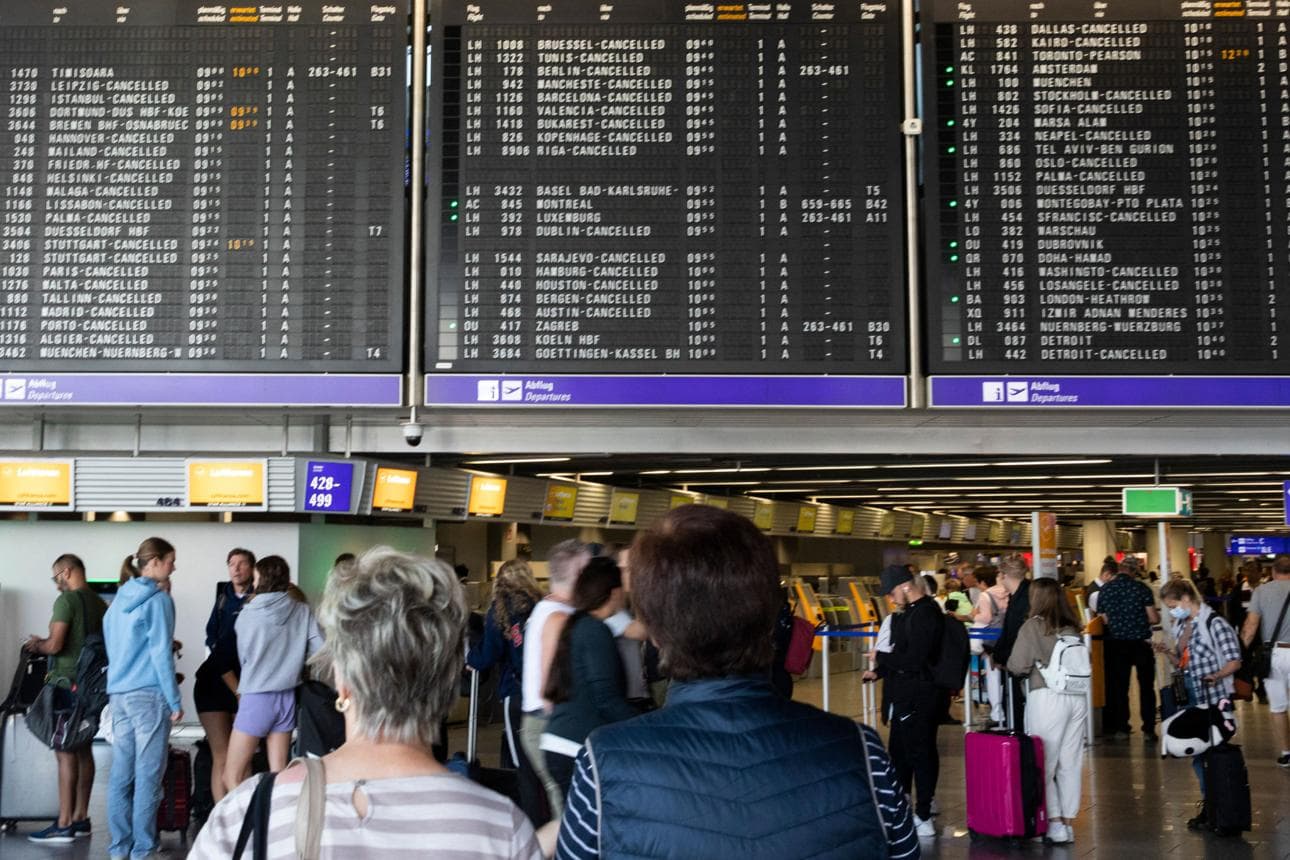
Underneath the technical content sits an uncomfortable operational picture. Eurocontrol’s most recent network monitoring report records that en-route air traffic flow management delays in 2025 hit their second-worst level since records began, with strikes in France and Germany compounding capacity shortfalls in the central core area. Airlines argue that the existing performance scheme has failed to discipline service providers that miss capacity targets without consequence, and that the new rulebook is overdue. Air navigation service providers counter that the targets are unrealistic given the post-pandemic recruitment gap among controllers and the slower-than-expected rollout of the digital tower technologies financed under SESAR.

The recovery and resilience strand is what gives the file its political force at the moment. The Commission’s draft includes provisions that would allow capacity surge procedures during major disruptions, with the Network Manager empowered to redirect traffic across borders without case-by-case national approvals. That ability would have shortened the queues during the 2025 Bastille Day weekend, when a French air traffic control walkout reduced effective capacity on the Mediterranean corridor by almost forty per cent.

The Council presidency is now pushing for a compressed schedule, with two further technical trilogues planned over the next four weeks and a final political session pencilled in for the second week of July. Parliament’s rapporteur has signalled willingness to land the file but has flagged three open issues, namely the scope of social dialogue obligations, the treatment of the Eurocontrol pension fund liability, and the timetable for full application of the new performance scheme.

If the deal lands before recess, the package would enter force at the start of 2027 with a graduated application timetable, giving the SES regulatory framework its first major refresh in more than a decade. Maastricht, sitting at the operational crossroads of European airspace, will be among the first sites to feel the impact.