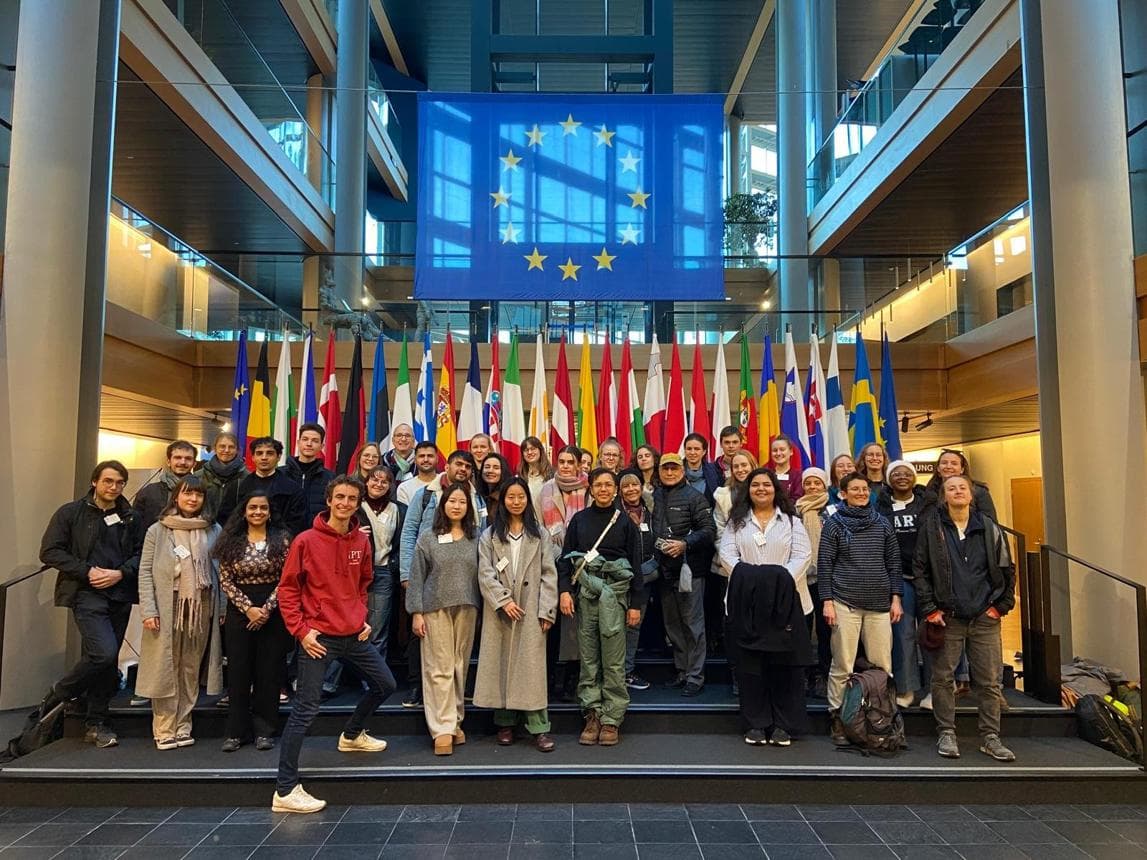
Strasbourg: The European Parliament on 17 June 2026 adopted a report urging the European Union to impose sanctions on Turkish Justice Minister Akın Gürlek over alleged “violations of human rights and fundamental freedoms,” approving the text by 381 votes in favour. The resolution, the Parliament’s response to the European Commission’s 2025 report on Turkey, frames EU sanctions on Turkey’s justice minister as a proportionate reply to what MEPs describe as a campaign to dismantle the country’s opposition.
What the European Parliament report demands
The non-binding resolution asks the EU’s high representative for foreign affairs to consider listing Gürlek under the EU Global Human Rights Sanctions Regime, the bloc’s Magnitsky-style tool. The proposed measures would include freezing any assets he holds inside the European Union.
Lawmakers described the minister as “a key actor in the state’s repressive machinery” and “a political actor who follows a political agenda,” singling out his record before his promotion to the cabinet in February 2026.
Why MEPs targeted Gürlek
As İstanbul’s chief public prosecutor between 2024 and 2026, Gürlek oversaw a nearly 4,000-page indictment against Ekrem İmamoğlu, the suspended mayor of İstanbul and a presidential hopeful for the main opposition Republican People’s Party (CHP). İmamoğlu faces up to 2,430 years in prison on charges his supporters call politically motivated.
The resolution catalogues a broader erosion of democratic safeguards in Turkey, citing:
- The detention of Mayor İmamoğlu, whose case the European Court of Human Rights has accepted under its priority procedure.
- The removal of 28 elected opposition mayors and their replacement by government-appointed trustees.
- Turkey’s record as the country with the most pending cases before the European Court of Human Rights as of January 2026.
- EU accession talks frozen since 2018 amid concerns over the rule of law.
Ankara pushes back
Gürlek rejected the Parliament’s draft when it emerged earlier in June, arguing in a written statement that the demand for EU sanctions on Turkey’s justice minister was itself a political act.
“This politically motivated approach, fuelled by certain circles within the European Parliament, undermines the credibility of the institutions these individuals represent,” Gürlek said. “European Parliament reports, however, are political texts of a recommendatory nature.”
Background: a stalled accession and a widening rift
Turkey has been an official EU candidate since 1999, but negotiations have been at a standstill since 2018 as Brussels and Strasbourg repeatedly flag democratic backsliding. The Turkey report was steered through Parliament by Nacho Sánchez Amor, its standing rapporteur on the country, and reflects mounting frustration that successive warnings have produced little change in Ankara.
Because the resolution is non-binding, it does not place Gürlek on a sanctions list; any such decision rests with member states acting by unanimity in the Council. Even so, a parliamentary call for EU sanctions on Turkey’s justice minister marks one of the sharpest rebukes of Ankara in years and adds pressure before the next review of EU-Turkey relations. The full text is published as the Parliament’s 2026 report on Turkey.