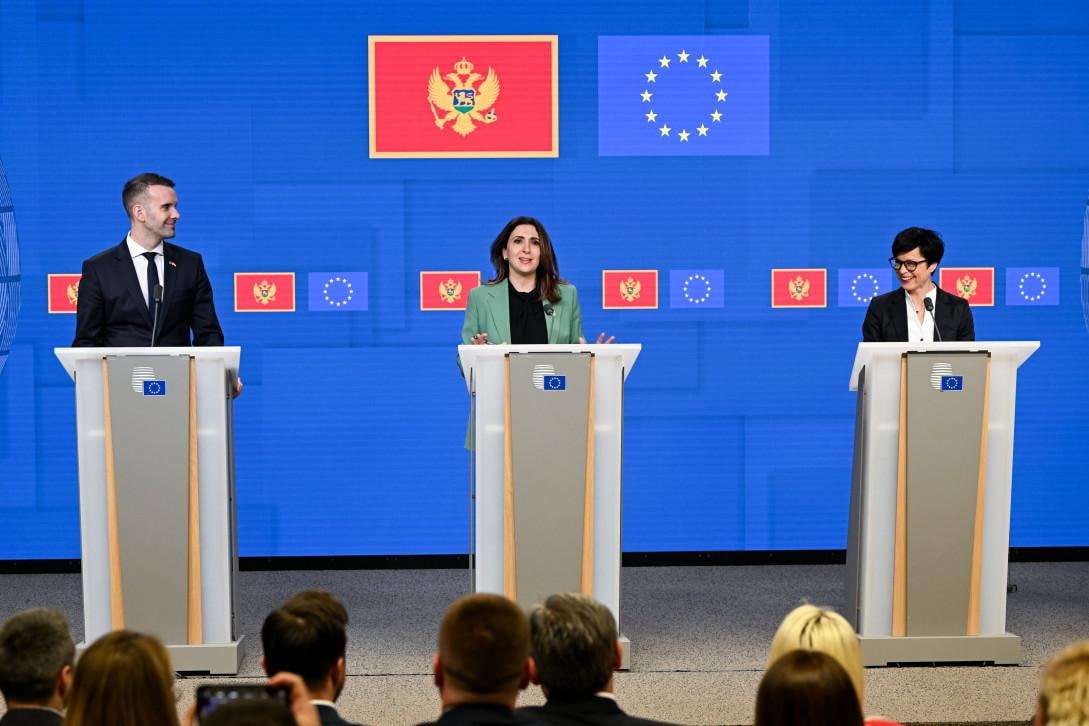
Podgorica: Montenegro moved past the halfway point of its EU accession talks on 14 July, when negotiators in Brussels provisionally closed the chapters on competition policy and the customs union and pushed the country’s tally to 18 of 33. Albania closed its first three chapters at the same round of accession conferences. Together the two results gave the Western Balkans its strongest week of EU accession progress in more than a decade.
The Council confirmed the Montenegrin closures at the 28th meeting of the Accession Conference, with Ireland chairing on behalf of the presidency. Competition policy and the customs union rank among the harder files because they force a candidate to hand real enforcement power to an independent authority and to align its external tariff with the bloc before day one of membership. Podgorica cleared both. The government now targets the remaining 15 chapters by the end of 2026, which would leave 2027 for ratification and put membership within reach around 2028.
Albania’s numbers look smaller but matter more politically. Tirana closed science and research, education and culture, and external relations. None of those files carries the weight of the judiciary or public procurement, yet they break a psychological barrier: for the first time since Albania opened negotiations, a chapter has actually shut. Prime Minister Edi Rama’s team wants every chapter closed before the end of 2027.
Brussels has reasons to accelerate. Russia’s war against Ukraine turned enlargement from a technocratic exercise into a security argument, and officials now speak openly about absorbing new members before the next multiannual budget locks in. The Commission has also learned from 2007, when Bulgaria and Romania joined with unfinished judicial reforms and spent years under a cooperation and verification mechanism. This time the rule-of-law chapters open first and close last, which keeps leverage alive for the whole process.
That sequencing creates a squeeze for Montenegro. The easier chapters are gone. What remains includes judiciary and fundamental rights, freedom of expression, and the fight against organised crime, all areas where the Commission’s own assessments still flag prosecutions that stall before they reach senior figures. Montenegrin officials argue that closing 18 chapters proves institutional capacity. Critics inside the country counter that closure reflects legislative alignment on paper rather than a functioning enforcement record.
The bloc’s internal politics add another layer. Absorbing several new members would redraw voting weights in the Council, stretch the cohesion budget, and reopen the question of whether unanimity can survive a union of 30-plus states. Member states have so far avoided committing to institutional reform in parallel with EU accession, preferring to treat the two tracks separately. That reluctance will not hold indefinitely, and candidate governments know it.
Serbia and North Macedonia meanwhile remain stuck for reasons that have little to do with technical readiness. Belgrade’s balancing act between Brussels and Moscow keeps clusters frozen. Skopje waits on a constitutional amendment tied to a bilateral dispute with Bulgaria. The contrast with Montenegro and Albania is deliberate on the Commission’s part: merit-based progress rewards those who deliver, and the gap between frontrunners and laggards is now visible enough to function as an incentive.
The Council keeps its running assessment of the process on its Montenegro accession page, and the EU delegation in Podgorica published the detail of the July closures in its statement on competition policy and the customs union.
Whether 2028 holds depends less on Podgorica’s paperwork than on whether 27 capitals still want enlargement when the bill arrives. Montenegro has done what the method asks of it. The harder test now sits on the EU side of the table.