August 9, 2026
LATEST
New EU Gas Market Rules Take Effect With Consumer SafeguardsDeforestation Regulation Holds Its December Deadline Despite CutsDigital Omnibus Delays Europe’s High-Risk AI Deadline to 2027Europe’s Schools Confront a Widening Basic Skills GapRule of Law Report Finds Progress but Trust Still LagsIRIS2 Gains 66 Satellites as Brussels Signs the Rollout DealNature Restoration Plans Come Due as Member States Race a DeadlineECB Rates Hold at 2.25 Percent as Frankfurt Waits on the DataEU Budget Talks Turn to Cohesion as Ireland Takes OverWildfire Response Stretches Europe’s Emergency Fleet ThinCan Europe’s Quantum Plan Match Its Big Ambitions?Armenia Edges West as Moscow’s Grip Slips AwayEurope Inherits the World’s Aid Bill It Cannot Fully PayAir Passenger Rights Get Their First Overhaul in Two DecadesErasmus Opens a 5 Billion Euro Round for Skills and MobilityCeuta Crisis Pushes the EU Toward Faster Migrant ReturnsBulky Parcels Face a Packaging Crackdown From August 12Can Europe Build Its Drone Wall Before 2030 Arrives?Indonesia’s Trade Deal With Europe Nears Its Final SignatureEurope Leans on Beijing to Keep Climate Talks Alive Before AntalyaNew EU Gas Market Rules Take Effect With Consumer SafeguardsDeforestation Regulation Holds Its December Deadline Despite CutsDigital Omnibus Delays Europe’s High-Risk AI Deadline to 2027Europe’s Schools Confront a Widening Basic Skills GapRule of Law Report Finds Progress but Trust Still LagsIRIS2 Gains 66 Satellites as Brussels Signs the Rollout DealNature Restoration Plans Come Due as Member States Race a DeadlineECB Rates Hold at 2.25 Percent as Frankfurt Waits on the DataEU Budget Talks Turn to Cohesion as Ireland Takes OverWildfire Response Stretches Europe’s Emergency Fleet ThinCan Europe’s Quantum Plan Match Its Big Ambitions?Armenia Edges West as Moscow’s Grip Slips AwayEurope Inherits the World’s Aid Bill It Cannot Fully PayAir Passenger Rights Get Their First Overhaul in Two DecadesErasmus Opens a 5 Billion Euro Round for Skills and MobilityCeuta Crisis Pushes the EU Toward Faster Migrant ReturnsBulky Parcels Face a Packaging Crackdown From August 12Can Europe Build Its Drone Wall Before 2030 Arrives?Indonesia’s Trade Deal With Europe Nears Its Final SignatureEurope Leans on Beijing to Keep Climate Talks Alive Before Antalya
August 9, 2026
LATEST
New EU Gas Market Rules Take Effect With Consumer SafeguardsDeforestation Regulation Holds Its December Deadline Despite CutsDigital Omnibus Delays Europe’s High-Risk AI Deadline to 2027Europe’s Schools Confront a Widening Basic Skills GapRule of Law Report Finds Progress but Trust Still LagsIRIS2 Gains 66 Satellites as Brussels Signs the Rollout DealNature Restoration Plans Come Due as Member States Race a DeadlineECB Rates Hold at 2.25 Percent as Frankfurt Waits on the DataEU Budget Talks Turn to Cohesion as Ireland Takes OverWildfire Response Stretches Europe’s Emergency Fleet ThinCan Europe’s Quantum Plan Match Its Big Ambitions?Armenia Edges West as Moscow’s Grip Slips AwayEurope Inherits the World’s Aid Bill It Cannot Fully PayAir Passenger Rights Get Their First Overhaul in Two DecadesErasmus Opens a 5 Billion Euro Round for Skills and MobilityCeuta Crisis Pushes the EU Toward Faster Migrant ReturnsBulky Parcels Face a Packaging Crackdown From August 12Can Europe Build Its Drone Wall Before 2030 Arrives?Indonesia’s Trade Deal With Europe Nears Its Final SignatureEurope Leans on Beijing to Keep Climate Talks Alive Before AntalyaNew EU Gas Market Rules Take Effect With Consumer SafeguardsDeforestation Regulation Holds Its December Deadline Despite CutsDigital Omnibus Delays Europe’s High-Risk AI Deadline to 2027Europe’s Schools Confront a Widening Basic Skills GapRule of Law Report Finds Progress but Trust Still LagsIRIS2 Gains 66 Satellites as Brussels Signs the Rollout DealNature Restoration Plans Come Due as Member States Race a DeadlineECB Rates Hold at 2.25 Percent as Frankfurt Waits on the DataEU Budget Talks Turn to Cohesion as Ireland Takes OverWildfire Response Stretches Europe’s Emergency Fleet ThinCan Europe’s Quantum Plan Match Its Big Ambitions?Armenia Edges West as Moscow’s Grip Slips AwayEurope Inherits the World’s Aid Bill It Cannot Fully PayAir Passenger Rights Get Their First Overhaul in Two DecadesErasmus Opens a 5 Billion Euro Round for Skills and MobilityCeuta Crisis Pushes the EU Toward Faster Migrant ReturnsBulky Parcels Face a Packaging Crackdown From August 12Can Europe Build Its Drone Wall Before 2030 Arrives?Indonesia’s Trade Deal With Europe Nears Its Final SignatureEurope Leans on Beijing to Keep Climate Talks Alive Before Antalya

Pre-Positioned Aircraft Signal a Tougher Wildfire Summer Ahead

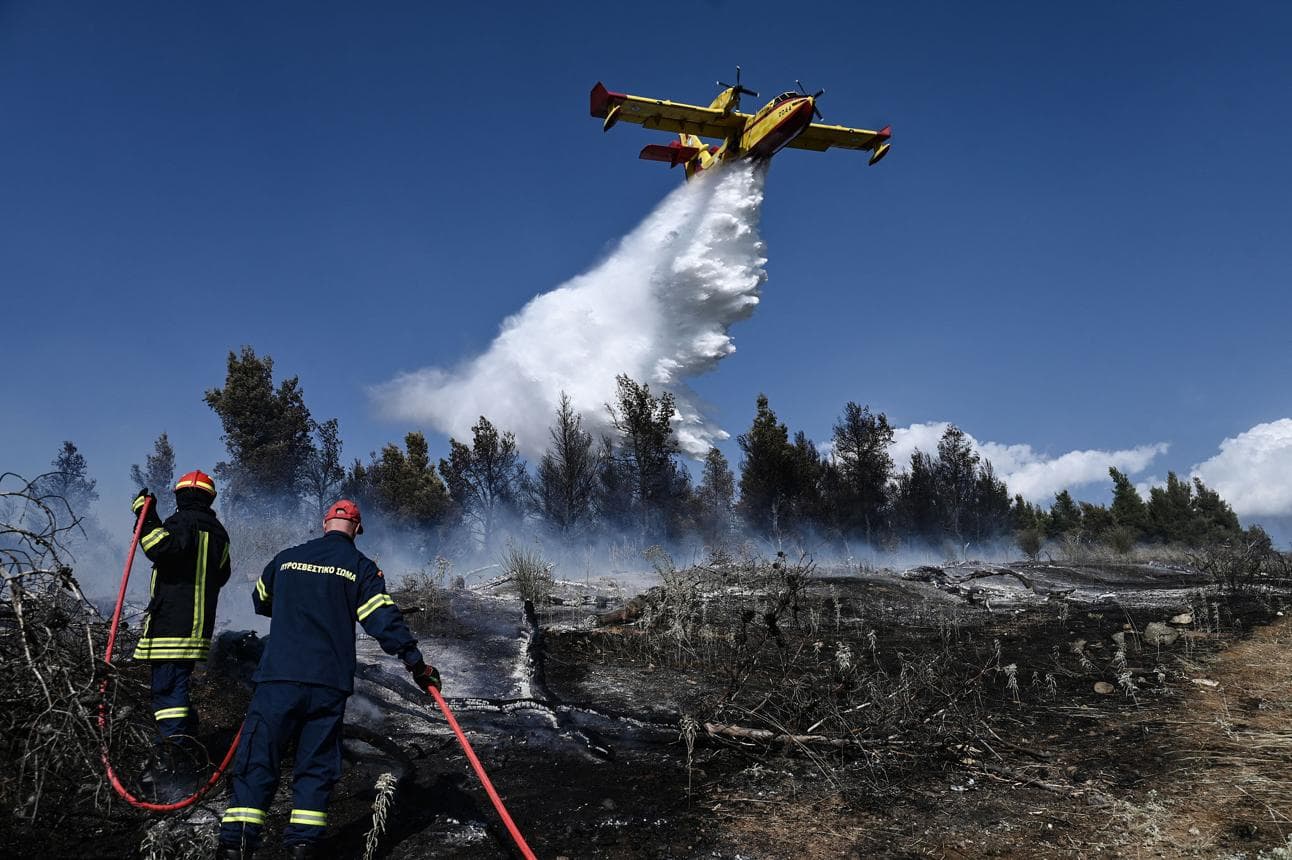
Volos: As the first serious heatwave of the season settles over southern Europe, the machinery the union built to fight wildfires from the air has quietly shifted from standby to active duty. Across the Mediterranean rim, firefighting aircraft and pre-positioned ground crews financed through the rescEU reserve are now stationed close to the landscapes most likely to burn, a deliberate move away from the old model of scrambling help only once flames were already visible.

The change reflects a hard lesson from recent summers. When several countries face major fires at the same time, the pool of aircraft any one government can call on runs dry fast, and requests for mutual assistance pile up faster than they can be answered. In response the Commission has built a standing fleet of water-bombing planes and helicopters, partly co-financed from the union budget, alongside teams of firefighters deployed in advance to hosting states before the peak weeks arrive. The Emergency Response Coordination Centre in Brussels runs around the clock, matching offers of help to requests through the Civil Protection Mechanism.

Why this matters is a question of arithmetic as much as solidarity. Climate models and the union’s own scientists have been consistent that fire seasons are lengthening and pushing north, reaching forests in central and northern Europe that were historically spared. A fleet that sits idle until a crisis is a fleet that arrives late. Pre-positioning aircraft in Greece, on the Iberian peninsula and elsewhere shortens the gap between a first report of smoke and the first drop of water, and that gap is often where a manageable fire becomes an uncontrollable one.

For a country like Greece, where the town of Volos and the wider Thessaly region have lived through both catastrophic fires and floods in recent years, the presence of shared European assets on home soil is more than symbolic. It means that when local resources are stretched, reinforcements are measured in minutes and hours rather than days. It also spreads the cost of a rare but ruinous risk across the whole union rather than leaving it to fall on whichever member happens to be burning.

The approach is not without its sceptics. Building and maintaining a permanent aerial fleet is expensive, and some argue the money would save more lives and property if it were spent on prevention, on clearing undergrowth, enforcing building rules and managing land, rather than on dramatic aerial rescues. There are also persistent shortages of the specialised aircraft themselves, with manufacturers unable to deliver new water bombers as quickly as governments would like, leaving the fleet thinner than the ambition behind it.

Prevention advocates and rapid-response planners are, in truth, describing two halves of the same defence, and the union’s civil protection strategy now tries to fund both. What happens next will be dictated by the weather. A quiet summer would let the pre-positioning model prove its worth cheaply; a brutal one would test whether the shared fleet is large enough to be everywhere it is needed at once. Either way, the days of improvising a response after the fact are meant to be over.