August 22, 2026
LATEST
What the EU Taiwan Framework Would Actually Have to DoKorea Signed a Digital Trade Deal That Nobody Has RatifiedCritical Minerals in Mongolia Still Have to Cross Two BordersCan an Indonesia Trade Deal Survive Two Years of RatifyingCross-Border Data Orders Went Live Before the Plumbing DidPlatform Work Rules Take Effect in December and Few Are ReadyCan Europe’s Firefighting Fleet Keep Pace With EU WildfiresThe AI Act Deadline Passed on 2 August and Nothing BitWhy Construction Keeps Shrinking While Confidence ImprovesAccession Talks Stall Again and September 1 Is the TestBrussels Applied a Trade Deal It Cannot Yet RatifyAfrica’s Power Market Now Needs Money More Than BlueprintsLong-Term Budget Talks Enter Autumn Without a Council LineForeign Subsidies Enforcement Now Turns on a Dublin RaidWho Writes Europe’s Telecom Rules Once Copper DisappearsDisability Cards Exist on Paper and Nowhere Else Until 2028Losing Visa-Free Travel Now Takes a Thirty Percent SwingTwenty Flagship Actions Will Test Whether the Culture Compass WorksEurope’s Quality Jobs Act Now Rests on What Unions Do by SeptemberDoes a Three Euro Parcel Duty Change Anything About Cheap ImportsWhat the EU Taiwan Framework Would Actually Have to DoKorea Signed a Digital Trade Deal That Nobody Has RatifiedCritical Minerals in Mongolia Still Have to Cross Two BordersCan an Indonesia Trade Deal Survive Two Years of RatifyingCross-Border Data Orders Went Live Before the Plumbing DidPlatform Work Rules Take Effect in December and Few Are ReadyCan Europe’s Firefighting Fleet Keep Pace With EU WildfiresThe AI Act Deadline Passed on 2 August and Nothing BitWhy Construction Keeps Shrinking While Confidence ImprovesAccession Talks Stall Again and September 1 Is the TestBrussels Applied a Trade Deal It Cannot Yet RatifyAfrica’s Power Market Now Needs Money More Than BlueprintsLong-Term Budget Talks Enter Autumn Without a Council LineForeign Subsidies Enforcement Now Turns on a Dublin RaidWho Writes Europe’s Telecom Rules Once Copper DisappearsDisability Cards Exist on Paper and Nowhere Else Until 2028Losing Visa-Free Travel Now Takes a Thirty Percent SwingTwenty Flagship Actions Will Test Whether the Culture Compass WorksEurope’s Quality Jobs Act Now Rests on What Unions Do by SeptemberDoes a Three Euro Parcel Duty Change Anything About Cheap Imports
August 22, 2026
LATEST
What the EU Taiwan Framework Would Actually Have to DoKorea Signed a Digital Trade Deal That Nobody Has RatifiedCritical Minerals in Mongolia Still Have to Cross Two BordersCan an Indonesia Trade Deal Survive Two Years of RatifyingCross-Border Data Orders Went Live Before the Plumbing DidPlatform Work Rules Take Effect in December and Few Are ReadyCan Europe’s Firefighting Fleet Keep Pace With EU WildfiresThe AI Act Deadline Passed on 2 August and Nothing BitWhy Construction Keeps Shrinking While Confidence ImprovesAccession Talks Stall Again and September 1 Is the TestBrussels Applied a Trade Deal It Cannot Yet RatifyAfrica’s Power Market Now Needs Money More Than BlueprintsLong-Term Budget Talks Enter Autumn Without a Council LineForeign Subsidies Enforcement Now Turns on a Dublin RaidWho Writes Europe’s Telecom Rules Once Copper DisappearsDisability Cards Exist on Paper and Nowhere Else Until 2028Losing Visa-Free Travel Now Takes a Thirty Percent SwingTwenty Flagship Actions Will Test Whether the Culture Compass WorksEurope’s Quality Jobs Act Now Rests on What Unions Do by SeptemberDoes a Three Euro Parcel Duty Change Anything About Cheap ImportsWhat the EU Taiwan Framework Would Actually Have to DoKorea Signed a Digital Trade Deal That Nobody Has RatifiedCritical Minerals in Mongolia Still Have to Cross Two BordersCan an Indonesia Trade Deal Survive Two Years of RatifyingCross-Border Data Orders Went Live Before the Plumbing DidPlatform Work Rules Take Effect in December and Few Are ReadyCan Europe’s Firefighting Fleet Keep Pace With EU WildfiresThe AI Act Deadline Passed on 2 August and Nothing BitWhy Construction Keeps Shrinking While Confidence ImprovesAccession Talks Stall Again and September 1 Is the TestBrussels Applied a Trade Deal It Cannot Yet RatifyAfrica’s Power Market Now Needs Money More Than BlueprintsLong-Term Budget Talks Enter Autumn Without a Council LineForeign Subsidies Enforcement Now Turns on a Dublin RaidWho Writes Europe’s Telecom Rules Once Copper DisappearsDisability Cards Exist on Paper and Nowhere Else Until 2028Losing Visa-Free Travel Now Takes a Thirty Percent SwingTwenty Flagship Actions Will Test Whether the Culture Compass WorksEurope’s Quality Jobs Act Now Rests on What Unions Do by SeptemberDoes a Three Euro Parcel Duty Change Anything About Cheap Imports

Quality Jobs Act Faces a September Deadline Europe Cannot Miss

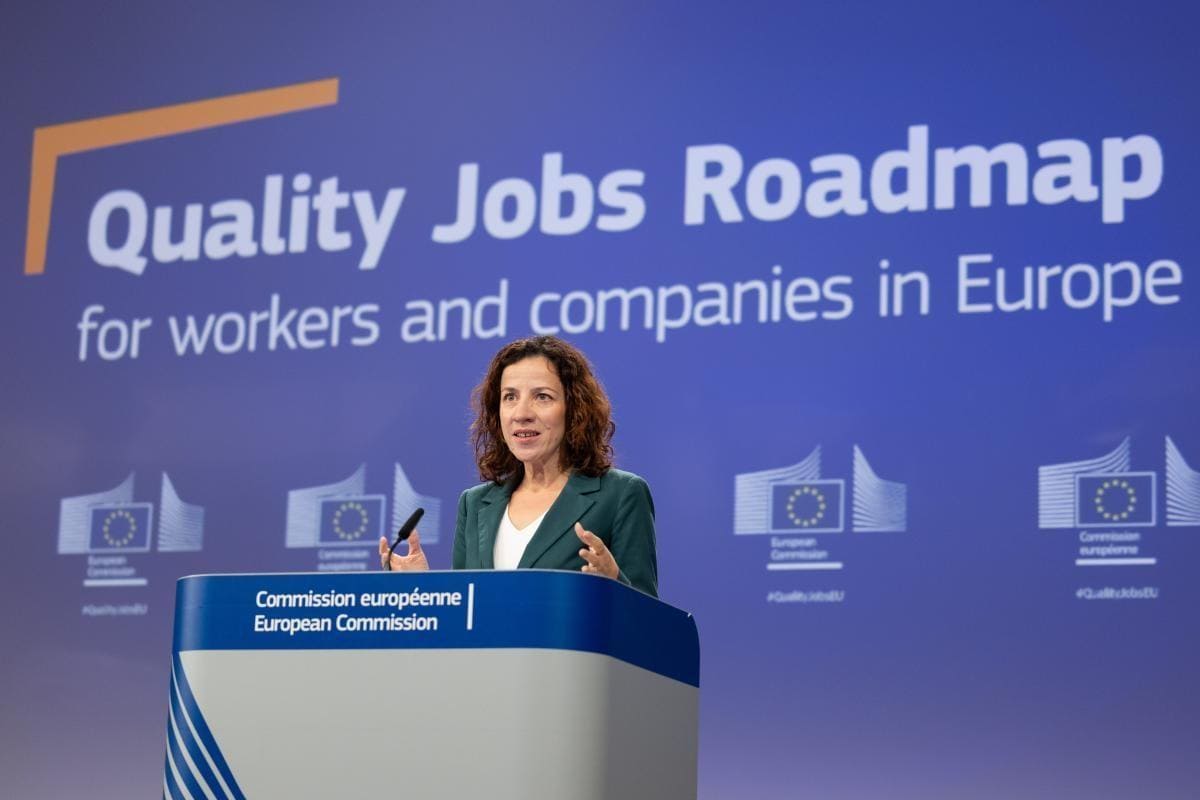
Porto: European employers and trade unions have until 28 September to tell the Commission what belongs in the coming Quality Jobs Act, after Brussels opened the second and final stage of social partner consultation on 20 July. The deadline matters because the Commission intends to table the proposal before the end of 2026, and whatever the two sides fail to agree, the executive will decide alone.

The consultation asks a pointed set of questions. Brussels wants views on algorithmic management and artificial intelligence at work, on health and safety, on workers’ rights inside subcontracting chains, on the labour effects of the green and digital transitions, and on enforcement. Each of those touches a live dispute. Subcontracting in particular has become the fault line, because construction and logistics firms across the single market run several tiers of suppliers and liability tends to evaporate somewhere below the top.

Thirty-four EU-level organisations answered the first-stage consultation between December 2025 and January 2026 — 12 trade unions and 22 employer bodies. The split in their responses was predictable and instructive. Unions want binding rules on algorithmic decisions and joint liability along subcontracting chains. Employers want the quality jobs agenda kept in guidance and funding rather than legislation, arguing that another directive would raise costs at the exact moment European firms are losing ground to American and Chinese competitors.

The Commission has framed the file as a competitiveness measure rather than a social one, which is a deliberate choice. Ursula von der Leyen announced the act in her 2025 State of the Union address and placed it alongside the anti-poverty strategy and the affordable housing plan. The argument runs that Europe cannot fill its labour shortages while offering insecure work: vacancies in healthcare, construction and skilled trades sit unfilled in the same economies where temporary contracts and involuntary part-time work remain stubbornly common.

Whether legislation fixes that is genuinely contested. Labour economists point out that job quality varies far more between sectors and firm sizes than between member states, which makes a single EU instrument a blunt tool. Others note that the EU already has directives on transparent working conditions, work-life balance and minimum wages, and that enforcement rather than new text is the binding constraint. The Commission’s own consultation document leans into that critique by devoting a section to the role of social partners in enforcement.

Algorithmic management is where the act could break new ground. The platform work directive covered digital labour platforms, but software now schedules shifts, scores performance and flags workers for discipline in warehouses, call centres and hospitals that no one would call platforms. Extending transparency and human-review rights beyond platform work would reach millions of jobs. Employer groups warn that a broad definition would sweep in ordinary workforce software and create compliance risk with little benefit.

Social partners retain a treaty right that shapes everything here. Under Article 155, they can negotiate their own agreement and ask the Council to turn it into law, sidelining the ordinary legislative procedure. That route produced the parental leave and part-time work directives. It has rarely worked in recent years, and few in Brussels expect it now, but the option gives unions leverage: an employer walkout from talks hands the pen back to the Commission.

The consultation text and the full list of questions sit on the Commission’s second-phase consultation page, alongside the December 2025 Quality Jobs Roadmap that set the direction.

September will show whether Europe’s social model still produces bargains or only positions. The quality jobs file is the first real test of that under this Commission.