August 22, 2026
LATEST
Korea Signed a Digital Trade Deal That Nobody Has RatifiedCritical Minerals in Mongolia Still Have to Cross Two BordersCan an Indonesia Trade Deal Survive Two Years of RatifyingCross-Border Data Orders Went Live Before the Plumbing DidPlatform Work Rules Take Effect in December and Few Are ReadyCan Europe’s Firefighting Fleet Keep Pace With EU WildfiresThe AI Act Deadline Passed on 2 August and Nothing BitWhy Construction Keeps Shrinking While Confidence ImprovesAccession Talks Stall Again and September 1 Is the TestBrussels Applied a Trade Deal It Cannot Yet RatifyAfrica’s Power Market Now Needs Money More Than BlueprintsLong-Term Budget Talks Enter Autumn Without a Council LineForeign Subsidies Enforcement Now Turns on a Dublin RaidWho Writes Europe’s Telecom Rules Once Copper DisappearsDisability Cards Exist on Paper and Nowhere Else Until 2028Losing Visa-Free Travel Now Takes a Thirty Percent SwingTwenty Flagship Actions Will Test Whether the Culture Compass WorksEurope’s Quality Jobs Act Now Rests on What Unions Do by SeptemberDoes a Three Euro Parcel Duty Change Anything About Cheap ImportsEurope’s Satellite Constellation Grew by 66 Before a Single LaunchKorea Signed a Digital Trade Deal That Nobody Has RatifiedCritical Minerals in Mongolia Still Have to Cross Two BordersCan an Indonesia Trade Deal Survive Two Years of RatifyingCross-Border Data Orders Went Live Before the Plumbing DidPlatform Work Rules Take Effect in December and Few Are ReadyCan Europe’s Firefighting Fleet Keep Pace With EU WildfiresThe AI Act Deadline Passed on 2 August and Nothing BitWhy Construction Keeps Shrinking While Confidence ImprovesAccession Talks Stall Again and September 1 Is the TestBrussels Applied a Trade Deal It Cannot Yet RatifyAfrica’s Power Market Now Needs Money More Than BlueprintsLong-Term Budget Talks Enter Autumn Without a Council LineForeign Subsidies Enforcement Now Turns on a Dublin RaidWho Writes Europe’s Telecom Rules Once Copper DisappearsDisability Cards Exist on Paper and Nowhere Else Until 2028Losing Visa-Free Travel Now Takes a Thirty Percent SwingTwenty Flagship Actions Will Test Whether the Culture Compass WorksEurope’s Quality Jobs Act Now Rests on What Unions Do by SeptemberDoes a Three Euro Parcel Duty Change Anything About Cheap ImportsEurope’s Satellite Constellation Grew by 66 Before a Single Launch
August 22, 2026
LATEST
Korea Signed a Digital Trade Deal That Nobody Has RatifiedCritical Minerals in Mongolia Still Have to Cross Two BordersCan an Indonesia Trade Deal Survive Two Years of RatifyingCross-Border Data Orders Went Live Before the Plumbing DidPlatform Work Rules Take Effect in December and Few Are ReadyCan Europe’s Firefighting Fleet Keep Pace With EU WildfiresThe AI Act Deadline Passed on 2 August and Nothing BitWhy Construction Keeps Shrinking While Confidence ImprovesAccession Talks Stall Again and September 1 Is the TestBrussels Applied a Trade Deal It Cannot Yet RatifyAfrica’s Power Market Now Needs Money More Than BlueprintsLong-Term Budget Talks Enter Autumn Without a Council LineForeign Subsidies Enforcement Now Turns on a Dublin RaidWho Writes Europe’s Telecom Rules Once Copper DisappearsDisability Cards Exist on Paper and Nowhere Else Until 2028Losing Visa-Free Travel Now Takes a Thirty Percent SwingTwenty Flagship Actions Will Test Whether the Culture Compass WorksEurope’s Quality Jobs Act Now Rests on What Unions Do by SeptemberDoes a Three Euro Parcel Duty Change Anything About Cheap ImportsEurope’s Satellite Constellation Grew by 66 Before a Single LaunchKorea Signed a Digital Trade Deal That Nobody Has RatifiedCritical Minerals in Mongolia Still Have to Cross Two BordersCan an Indonesia Trade Deal Survive Two Years of RatifyingCross-Border Data Orders Went Live Before the Plumbing DidPlatform Work Rules Take Effect in December and Few Are ReadyCan Europe’s Firefighting Fleet Keep Pace With EU WildfiresThe AI Act Deadline Passed on 2 August and Nothing BitWhy Construction Keeps Shrinking While Confidence ImprovesAccession Talks Stall Again and September 1 Is the TestBrussels Applied a Trade Deal It Cannot Yet RatifyAfrica’s Power Market Now Needs Money More Than BlueprintsLong-Term Budget Talks Enter Autumn Without a Council LineForeign Subsidies Enforcement Now Turns on a Dublin RaidWho Writes Europe’s Telecom Rules Once Copper DisappearsDisability Cards Exist on Paper and Nowhere Else Until 2028Losing Visa-Free Travel Now Takes a Thirty Percent SwingTwenty Flagship Actions Will Test Whether the Culture Compass WorksEurope’s Quality Jobs Act Now Rests on What Unions Do by SeptemberDoes a Three Euro Parcel Duty Change Anything About Cheap ImportsEurope’s Satellite Constellation Grew by 66 Before a Single Launch

Why 1,600 Postdoctoral Fellowships Hinge on One September Date

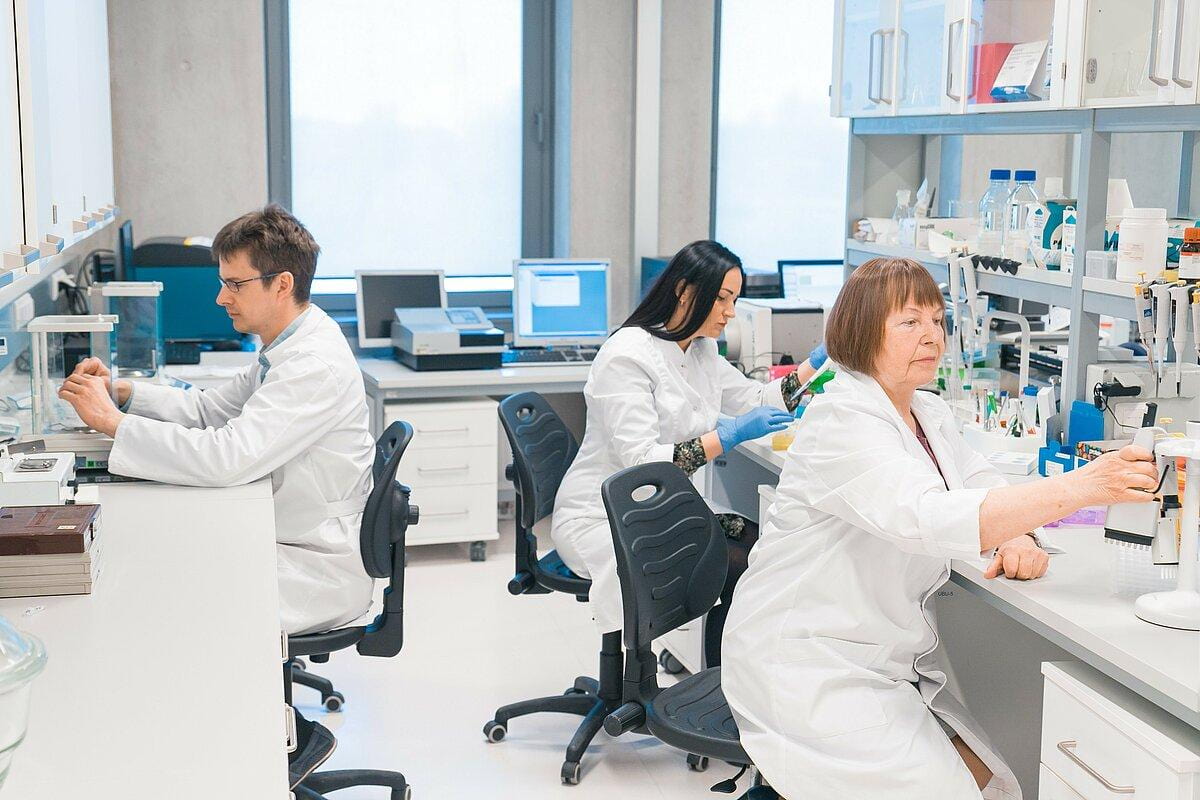
Riga: Researchers have three weeks left to file applications for the 2026 Marie Skłodowska-Curie postdoctoral fellowships, a call worth 399.05 million euros that closes on 9 September 2026 and is expected to fund close to 1,600 projects across every scientific field.

The European Commission opened the call on 9 April through the Research Executive Agency. Applicants must apply jointly with a supervisor and a host organisation, which can be a university, a research institute, a company, a hospital, a museum or an NGO based in an EU member state or a country associated to Horizon Europe.

The scheme splits in two. European Postdoctoral Fellowships run for up to 24 months inside the Union or an associated country and accept researchers of any nationality. Global Postdoctoral Fellowships send EU nationals and long-term residents to a third country for 12 to 24 months, then bring them back to Europe for a further year. Fellows may also request six extra months for a placement outside academia.

Eligibility turns on experience rather than age. Candidates need a doctorate and no more than eight years of research experience since it, with exceptions for career breaks, for researchers displaced by conflict and for those returning to Europe after time away.

Cities like Riga sit on the other side of the programme’s persistent geography problem. Applicants who choose a host in a widening country can opt into the ERA Fellowships reserve, which awards around 40 grants to strong proposals that the main budget could not cover. Forty places is a modest correction to a distribution that still concentrates in the older research powers of the west.

Commissioner for Startups, Research and Innovation Ekaterina Zaharieva put the case for the scheme when the previous round paid out.

The Marie Skłodowska-Curie Actions Postdoctoral Fellowships show once again why researchers choose Europe. These results reflect the strength of our research ecosystem and our commitment to supporting scientific excellence, openness and mobility.

The timetable after 9 September is long. The Commission plans to notify results in February 2027, sign grant agreements between February and May 2027, and see the first projects start in May 2027. A postdoc applying this month is therefore planning a job that begins nine months from now.

Key figures for the current round:

  • 399.05 million euros in the 2026 budget, published on the MSCA call announcement;
  • around 1,600 projects expected;
  • 404.3 million euros awarded under the preceding postdoctoral round;
  • roughly 40 ERA Fellowships reserved for widening countries and outermost regions.

The context is an anniversary the Commission is using hard. The actions turn 30 this year, having supported more than 150,000 researchers since 1996, among them 23 Nobel laureates. That record sits inside the wider Horizon Europe work programme for 2026 and 2027, which the Commission adopted in December 2025 with roughly 14 billion euros over two years.

Money alone does not settle the recruitment argument. European labs still lose senior postdocs to industry and to laboratories outside the Union, and a two-year fellowship followed by uncertainty remains a weak answer to that. The September deadline decides who gets to make the attempt.