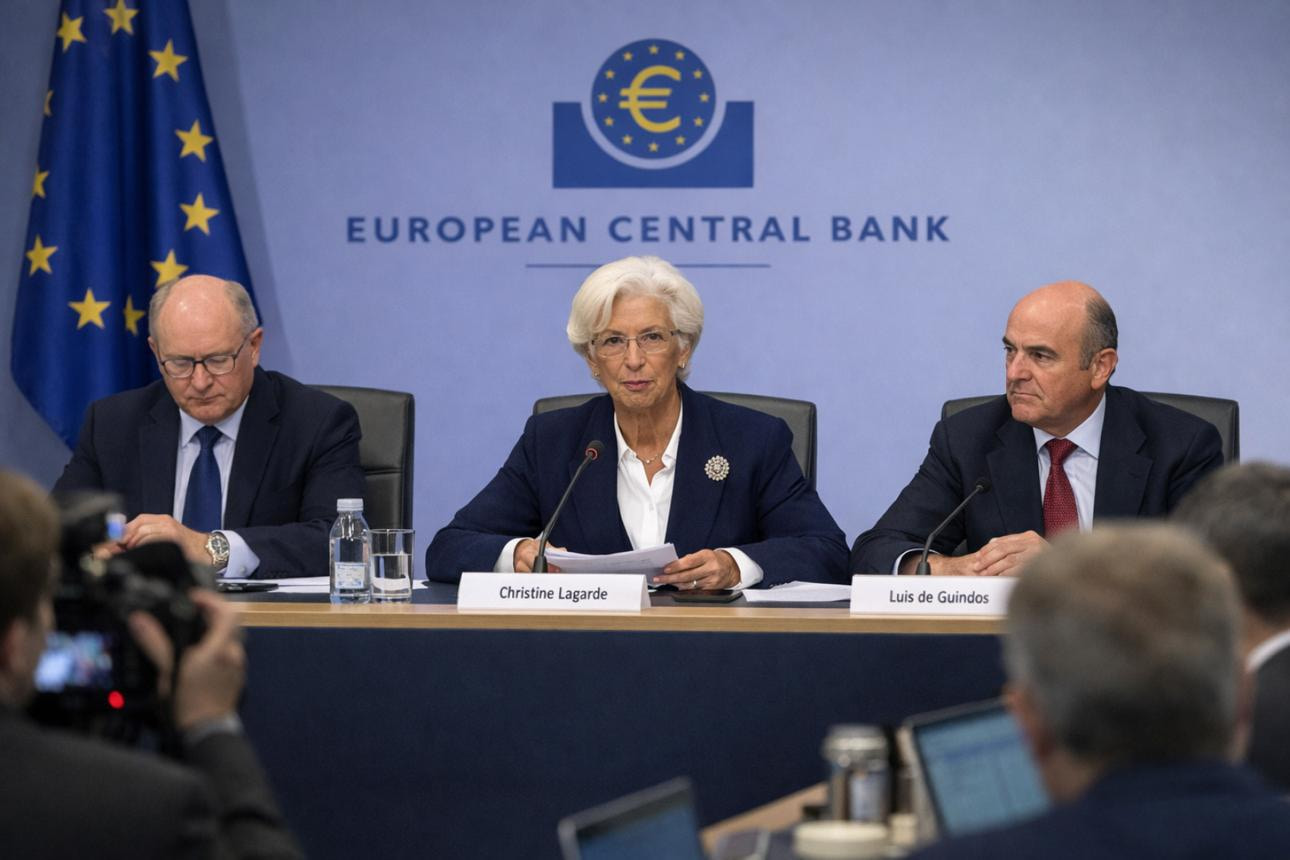
Frankfurt: Europe is, by one measure, extraordinarily rich and, by another, strangely poor. Households across the Union sit on an estimated ten trillion euros parked in low-yield bank deposits, money that earns little for its owners and finances even less of the continent’s growth. Closing the gap between that mountain of savings and the investment Europe says it urgently needs is the animating purpose of the Savings and Investments Union, the flagship financial project launched in March 2025 and now grinding through the slow machinery of implementation.
The logic is seductive in its simplicity. American households hold a far larger share of their wealth in equities and funds, and that capital flows into companies that scale, hire and innovate. European savers, by contrast, prize the safety of the deposit account, and their caution leaves domestic firms reliant on bank lending and chronically short of risk capital. If even a fraction of those idle trillions could be channelled into productive investment, the argument runs, Europe could finance its green transition, its defence build-up and its technology ambitions without reaching first for the taxpayer.
What makes this iteration different from a decade of failed capital-markets-union promises is the explicit role carved out for banks. Earlier visions were sometimes read as an attempt to sideline lenders in favour of capital markets. The current framing is more conciliatory. Supervisors now describe banks not as relics to be bypassed but as strategic enablers, the institutions that can distribute investment products, advise cautious savers and bridge the gap between deposits and markets. The Commission has paired that rhetoric with action, adopting measures to ease how insurers and banks deploy capital, including adjustments to the prudential treatment of banks’ equity holdings and a delegated act under the insurers’ rulebook.
Yet the obstacles are stubborn, and most are not technical. A saver in Lisbon and a saver in Vienna face different tax regimes, different pension structures and different cultural instincts about debt and risk. Fragmented national rules raise the cost of selling a single investment product across borders, and no delegated act dissolves the memory of households burned in past crises. Persuading a generation that learned to fear markets to trust them again is a task of confidence as much as regulation.
There is a strategic edge to the impatience. With public finances stretched and the bloc facing enormous bills for climate, security and competitiveness, mobilising private savings has shifted from a desirable reform to a near necessity. The alternative is a Europe that watches its own wealth sit dormant while rivals fund their futures.
None of this will be settled in a single year. The Savings and Investments Union is a marathon of directives, delegated acts and national transposition, and its success will be measured in deposit ratios that move slowly if at all. But the prize, a financial system where European savings finance European ambition, is large enough to keep capitals returning to the table, however idle the trillions remain for now.