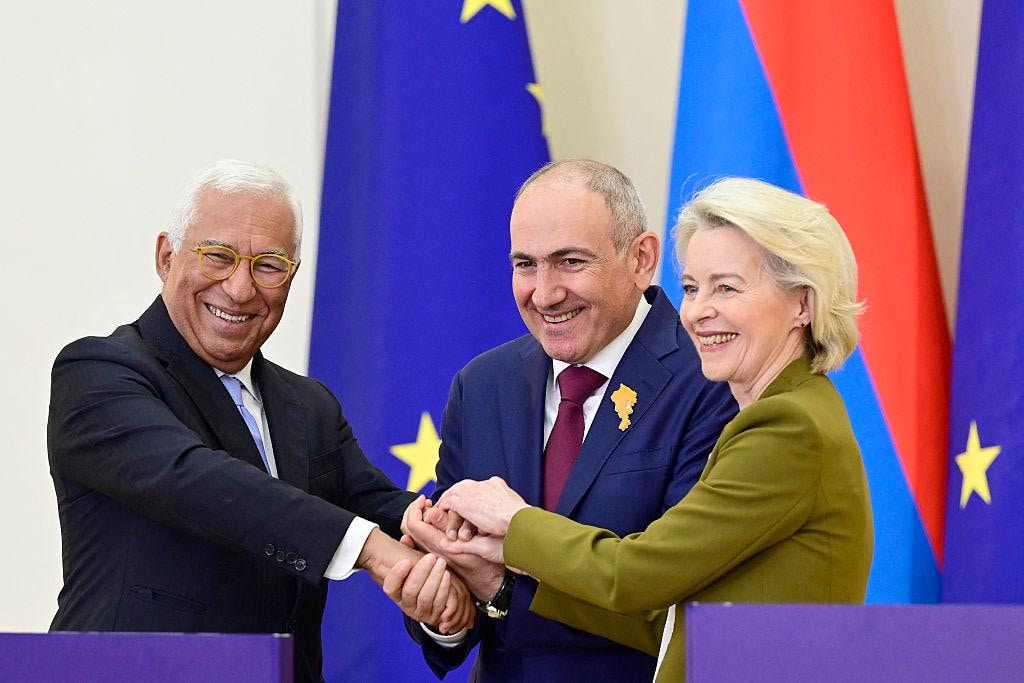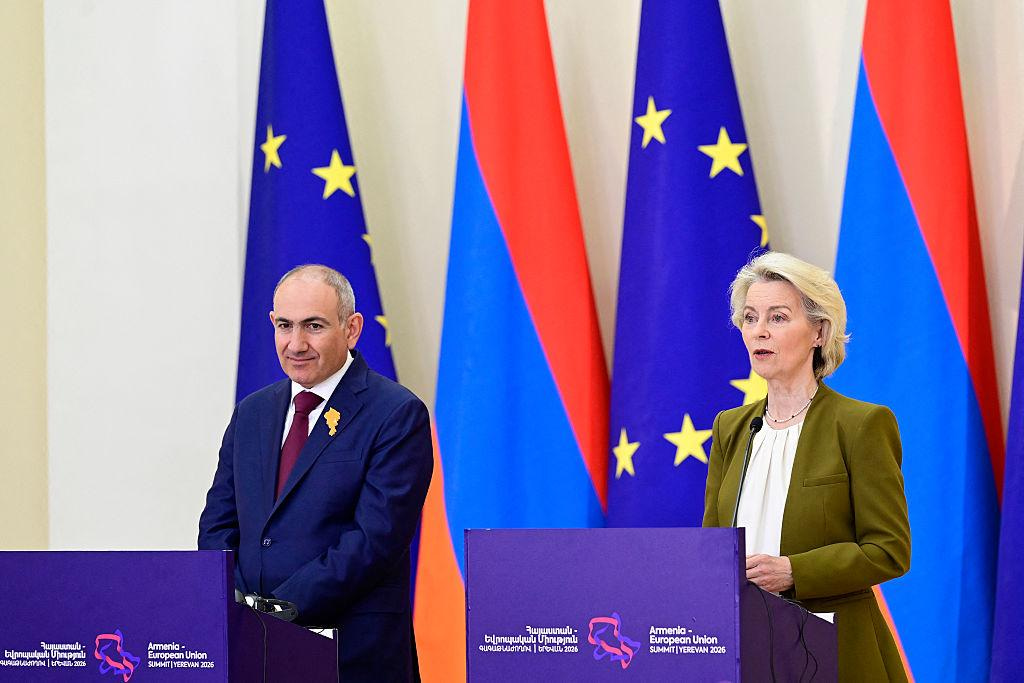
Yerevan: Armenia has spent the past year rewiring its foreign policy toward Brussels, and the Armenia partnership now runs deeper than officials on either side once expected. In May the two governments launched a Connectivity Partnership that links Armenian transport, energy and digital networks to European systems, and the pace has not slackened since.
Prime Minister Nikol Pashinyan states the ambition plainly. He wants visa-free travel for Armenian citizens within a few years, and he has instructed his negotiators to clear the European Union’s benchmarks rather than haggle over them. As 2026 passed its midpoint, he set 2029 as the target for a Schengen visa-free regime.
Brussels has answered with money and expertise. The European Union opened a formal visa liberalisation dialogue and backed it with a 2.2 million euro technical assistance project that Lithuania’s development agency now runs. The work targets travel-document security, border management, asylum procedures and public order, the practical machinery that any visa-free deal demands.
Ursula von der Leyen praised Armenia’s progress in early July, and assessment missions will travel to Yerevan in the autumn to measure the remaining benchmarks. The Commission’s tone marks a shift. It treats Armenia less as a distant neighbour and more as a candidate for genuine integration.
The connectivity agenda carries the same weight. The May summit anchored a high-level dialogue on transport corridors, energy links and digital infrastructure, and it folded security cooperation into the same framework. Each strand pulls Armenia a little further from its old dependence on Moscow.
That drift defines the story. Armenia still hosts Russian troops and still trades heavily with its former patron, yet Yerevan has frozen its participation in the Russian-led security bloc and looked west after watching Moscow stand aside during the fighting over Nagorno-Karabakh. Europe offers an alternative that does not arrive with tanks.
Azerbaijan complicates every calculation. A durable peace with Baku would let Armenia open trade routes and shed the isolation that has throttled its economy for a generation. Brussels has positioned itself as a steadying presence, and its civilian monitoring mission still patrols the tense border, though Baku resents the European footprint.
Risks remain. Pashinyan governs a divided country, elections loom, and a change of government could stall the European turn. Russia retains levers over Armenian energy that it has pulled before. The visa benchmarks are technical but numerous, and autumn’s assessment could expose gaps that slow the timeline.
Still, the direction looks clear. Armenia has chosen to bind itself to European rules and European markets, and Brussels has chosen to reward the effort with cash, expertise and political attention. Neither side calls it enlargement, but both understand where a partnership this dense tends to lead.