August 9, 2026
LATEST
New EU Gas Market Rules Take Effect With Consumer SafeguardsDeforestation Regulation Holds Its December Deadline Despite CutsDigital Omnibus Delays Europe’s High-Risk AI Deadline to 2027Europe’s Schools Confront a Widening Basic Skills GapRule of Law Report Finds Progress but Trust Still LagsIRIS2 Gains 66 Satellites as Brussels Signs the Rollout DealNature Restoration Plans Come Due as Member States Race a DeadlineECB Rates Hold at 2.25 Percent as Frankfurt Waits on the DataEU Budget Talks Turn to Cohesion as Ireland Takes OverWildfire Response Stretches Europe’s Emergency Fleet ThinCan Europe’s Quantum Plan Match Its Big Ambitions?Armenia Edges West as Moscow’s Grip Slips AwayEurope Inherits the World’s Aid Bill It Cannot Fully PayAir Passenger Rights Get Their First Overhaul in Two DecadesErasmus Opens a 5 Billion Euro Round for Skills and MobilityCeuta Crisis Pushes the EU Toward Faster Migrant ReturnsBulky Parcels Face a Packaging Crackdown From August 12Can Europe Build Its Drone Wall Before 2030 Arrives?Indonesia’s Trade Deal With Europe Nears Its Final SignatureEurope Leans on Beijing to Keep Climate Talks Alive Before AntalyaNew EU Gas Market Rules Take Effect With Consumer SafeguardsDeforestation Regulation Holds Its December Deadline Despite CutsDigital Omnibus Delays Europe’s High-Risk AI Deadline to 2027Europe’s Schools Confront a Widening Basic Skills GapRule of Law Report Finds Progress but Trust Still LagsIRIS2 Gains 66 Satellites as Brussels Signs the Rollout DealNature Restoration Plans Come Due as Member States Race a DeadlineECB Rates Hold at 2.25 Percent as Frankfurt Waits on the DataEU Budget Talks Turn to Cohesion as Ireland Takes OverWildfire Response Stretches Europe’s Emergency Fleet ThinCan Europe’s Quantum Plan Match Its Big Ambitions?Armenia Edges West as Moscow’s Grip Slips AwayEurope Inherits the World’s Aid Bill It Cannot Fully PayAir Passenger Rights Get Their First Overhaul in Two DecadesErasmus Opens a 5 Billion Euro Round for Skills and MobilityCeuta Crisis Pushes the EU Toward Faster Migrant ReturnsBulky Parcels Face a Packaging Crackdown From August 12Can Europe Build Its Drone Wall Before 2030 Arrives?Indonesia’s Trade Deal With Europe Nears Its Final SignatureEurope Leans on Beijing to Keep Climate Talks Alive Before Antalya
August 9, 2026
LATEST
New EU Gas Market Rules Take Effect With Consumer SafeguardsDeforestation Regulation Holds Its December Deadline Despite CutsDigital Omnibus Delays Europe’s High-Risk AI Deadline to 2027Europe’s Schools Confront a Widening Basic Skills GapRule of Law Report Finds Progress but Trust Still LagsIRIS2 Gains 66 Satellites as Brussels Signs the Rollout DealNature Restoration Plans Come Due as Member States Race a DeadlineECB Rates Hold at 2.25 Percent as Frankfurt Waits on the DataEU Budget Talks Turn to Cohesion as Ireland Takes OverWildfire Response Stretches Europe’s Emergency Fleet ThinCan Europe’s Quantum Plan Match Its Big Ambitions?Armenia Edges West as Moscow’s Grip Slips AwayEurope Inherits the World’s Aid Bill It Cannot Fully PayAir Passenger Rights Get Their First Overhaul in Two DecadesErasmus Opens a 5 Billion Euro Round for Skills and MobilityCeuta Crisis Pushes the EU Toward Faster Migrant ReturnsBulky Parcels Face a Packaging Crackdown From August 12Can Europe Build Its Drone Wall Before 2030 Arrives?Indonesia’s Trade Deal With Europe Nears Its Final SignatureEurope Leans on Beijing to Keep Climate Talks Alive Before AntalyaNew EU Gas Market Rules Take Effect With Consumer SafeguardsDeforestation Regulation Holds Its December Deadline Despite CutsDigital Omnibus Delays Europe’s High-Risk AI Deadline to 2027Europe’s Schools Confront a Widening Basic Skills GapRule of Law Report Finds Progress but Trust Still LagsIRIS2 Gains 66 Satellites as Brussels Signs the Rollout DealNature Restoration Plans Come Due as Member States Race a DeadlineECB Rates Hold at 2.25 Percent as Frankfurt Waits on the DataEU Budget Talks Turn to Cohesion as Ireland Takes OverWildfire Response Stretches Europe’s Emergency Fleet ThinCan Europe’s Quantum Plan Match Its Big Ambitions?Armenia Edges West as Moscow’s Grip Slips AwayEurope Inherits the World’s Aid Bill It Cannot Fully PayAir Passenger Rights Get Their First Overhaul in Two DecadesErasmus Opens a 5 Billion Euro Round for Skills and MobilityCeuta Crisis Pushes the EU Toward Faster Migrant ReturnsBulky Parcels Face a Packaging Crackdown From August 12Can Europe Build Its Drone Wall Before 2030 Arrives?Indonesia’s Trade Deal With Europe Nears Its Final SignatureEurope Leans on Beijing to Keep Climate Talks Alive Before Antalya

Australia EU Pact Ends Eight-Year Talks On Critical Minerals

Canberra: The Australia and European Union Free Trade Agreement signed at the Australian capital on 24 March 2026 after nearly eight years of intermittent negotiation has shifted the operational geometry of the European Union’s critical raw materials strategy by anchoring a developed, treaty-bound supplier into the diversification map for lithium, antimony, tungsten, cobalt and rare earth oxides. The agreement removes tariffs across the full Australian critical minerals basket, formally upgrades the Strategic Partnership on Sustainable Critical Minerals that the two parties signed in 2024, and binds investment protections that European downstream manufacturers had been pressing for since the talks were paused at the end of 2023.

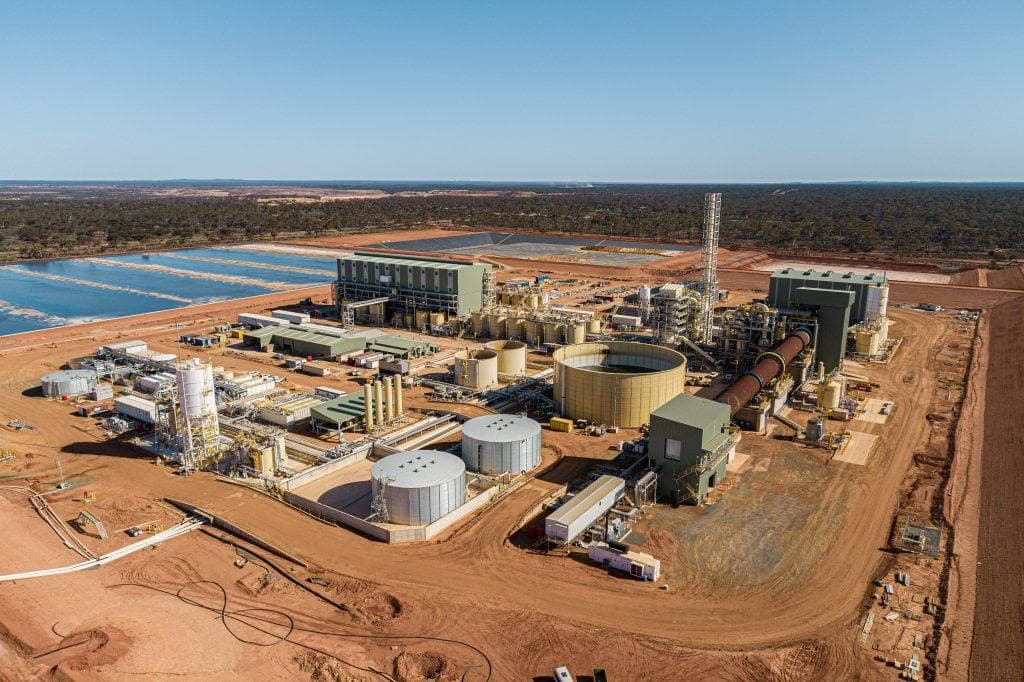
The political moment is significant in two ways. First, it answers a structural question that the Critical Raw Materials Act left open when it set 2030 benchmarks for European processing, refining and recycling capacity but did not specify which producer jurisdictions would underwrite the upstream side of the equation. Australia’s mineral endowment fills the most exposed gaps. The country produces roughly half the world’s mined lithium, has scaled output across nickel, cobalt and rare earth oxides, and hosts the Lynas refinery that anchors the only meaningful non-Chinese heavy rare earth processing chain. Tariff-free access for European buyers does not solve the processing bottleneck overnight, but it does remove the contract-pricing friction that had been pushing European offtake decisions back toward Chinese intermediaries even when European policy preferences pointed the other way.

Second, the agreement crystallises a hedging posture that western capitals have been building since the 2024 tariff cycle in Washington. The Australian government has framed the deal as protection against the volatility that the United States and China trade architecture has injected into critical mineral pricing, and the European Commission has presented it as the most consequential trade closure of the 2025 to 2026 mandate cycle behind the Mercosur ratification window. The Australian government’s estimated ten billion Australian dollar annual GDP uplift and the 1.1 billion euro tariff saving for European producers over a decade are projections that depend on implementation discipline, but the underlying redistribution of supply chain risk is the load-bearing political fact.

Implementation will run through the upgraded Strategic Partnership architecture rather than through a stand-alone critical minerals annex. The Commission’s trade directorate has confirmed that the Australian commitments fold into the broader Trade and Sustainable Development chapter and that the Joint Committee scheduled for late autumn 2026 will set the benchmarks for downstream investment co-financing through Global Gateway and the Strategic Technologies for Europe Platform. Australian state governments in Western Australia and Queensland are positioning to host European-backed refining and separation facilities that would scale through the second half of the agreement’s lifetime.

There remain three friction points worth tracking. Agricultural access for Australian beef, sheepmeat and sugar remains constrained relative to what the Australian National Farmers’ Federation lobbied for during the talks, and the geographical indications schedule that European producers secured will reshape how Australian wine, cheese and processed meat producers brand to European supermarkets. The Carbon Border Adjustment Mechanism creates a cost vector that Australian steel and aluminium exporters must absorb. And the legal-vetting and ratification calendar for both the European Parliament and the twenty-seven Member State assemblies will determine whether provisional application can begin before the end of 2026 or slip into early 2027. The Australian foreign and trade minister has been clear that her preference is for the earlier window, and the indications from the Polish presidency are that the Council will not stand in the way.