August 9, 2026
LATEST
New EU Gas Market Rules Take Effect With Consumer SafeguardsDeforestation Regulation Holds Its December Deadline Despite CutsDigital Omnibus Delays Europe’s High-Risk AI Deadline to 2027Europe’s Schools Confront a Widening Basic Skills GapRule of Law Report Finds Progress but Trust Still LagsIRIS2 Gains 66 Satellites as Brussels Signs the Rollout DealNature Restoration Plans Come Due as Member States Race a DeadlineECB Rates Hold at 2.25 Percent as Frankfurt Waits on the DataEU Budget Talks Turn to Cohesion as Ireland Takes OverWildfire Response Stretches Europe’s Emergency Fleet ThinCan Europe’s Quantum Plan Match Its Big Ambitions?Armenia Edges West as Moscow’s Grip Slips AwayEurope Inherits the World’s Aid Bill It Cannot Fully PayAir Passenger Rights Get Their First Overhaul in Two DecadesErasmus Opens a 5 Billion Euro Round for Skills and MobilityCeuta Crisis Pushes the EU Toward Faster Migrant ReturnsBulky Parcels Face a Packaging Crackdown From August 12Can Europe Build Its Drone Wall Before 2030 Arrives?Indonesia’s Trade Deal With Europe Nears Its Final SignatureEurope Leans on Beijing to Keep Climate Talks Alive Before AntalyaNew EU Gas Market Rules Take Effect With Consumer SafeguardsDeforestation Regulation Holds Its December Deadline Despite CutsDigital Omnibus Delays Europe’s High-Risk AI Deadline to 2027Europe’s Schools Confront a Widening Basic Skills GapRule of Law Report Finds Progress but Trust Still LagsIRIS2 Gains 66 Satellites as Brussels Signs the Rollout DealNature Restoration Plans Come Due as Member States Race a DeadlineECB Rates Hold at 2.25 Percent as Frankfurt Waits on the DataEU Budget Talks Turn to Cohesion as Ireland Takes OverWildfire Response Stretches Europe’s Emergency Fleet ThinCan Europe’s Quantum Plan Match Its Big Ambitions?Armenia Edges West as Moscow’s Grip Slips AwayEurope Inherits the World’s Aid Bill It Cannot Fully PayAir Passenger Rights Get Their First Overhaul in Two DecadesErasmus Opens a 5 Billion Euro Round for Skills and MobilityCeuta Crisis Pushes the EU Toward Faster Migrant ReturnsBulky Parcels Face a Packaging Crackdown From August 12Can Europe Build Its Drone Wall Before 2030 Arrives?Indonesia’s Trade Deal With Europe Nears Its Final SignatureEurope Leans on Beijing to Keep Climate Talks Alive Before Antalya
August 9, 2026
LATEST
New EU Gas Market Rules Take Effect With Consumer SafeguardsDeforestation Regulation Holds Its December Deadline Despite CutsDigital Omnibus Delays Europe’s High-Risk AI Deadline to 2027Europe’s Schools Confront a Widening Basic Skills GapRule of Law Report Finds Progress but Trust Still LagsIRIS2 Gains 66 Satellites as Brussels Signs the Rollout DealNature Restoration Plans Come Due as Member States Race a DeadlineECB Rates Hold at 2.25 Percent as Frankfurt Waits on the DataEU Budget Talks Turn to Cohesion as Ireland Takes OverWildfire Response Stretches Europe’s Emergency Fleet ThinCan Europe’s Quantum Plan Match Its Big Ambitions?Armenia Edges West as Moscow’s Grip Slips AwayEurope Inherits the World’s Aid Bill It Cannot Fully PayAir Passenger Rights Get Their First Overhaul in Two DecadesErasmus Opens a 5 Billion Euro Round for Skills and MobilityCeuta Crisis Pushes the EU Toward Faster Migrant ReturnsBulky Parcels Face a Packaging Crackdown From August 12Can Europe Build Its Drone Wall Before 2030 Arrives?Indonesia’s Trade Deal With Europe Nears Its Final SignatureEurope Leans on Beijing to Keep Climate Talks Alive Before AntalyaNew EU Gas Market Rules Take Effect With Consumer SafeguardsDeforestation Regulation Holds Its December Deadline Despite CutsDigital Omnibus Delays Europe’s High-Risk AI Deadline to 2027Europe’s Schools Confront a Widening Basic Skills GapRule of Law Report Finds Progress but Trust Still LagsIRIS2 Gains 66 Satellites as Brussels Signs the Rollout DealNature Restoration Plans Come Due as Member States Race a DeadlineECB Rates Hold at 2.25 Percent as Frankfurt Waits on the DataEU Budget Talks Turn to Cohesion as Ireland Takes OverWildfire Response Stretches Europe’s Emergency Fleet ThinCan Europe’s Quantum Plan Match Its Big Ambitions?Armenia Edges West as Moscow’s Grip Slips AwayEurope Inherits the World’s Aid Bill It Cannot Fully PayAir Passenger Rights Get Their First Overhaul in Two DecadesErasmus Opens a 5 Billion Euro Round for Skills and MobilityCeuta Crisis Pushes the EU Toward Faster Migrant ReturnsBulky Parcels Face a Packaging Crackdown From August 12Can Europe Build Its Drone Wall Before 2030 Arrives?Indonesia’s Trade Deal With Europe Nears Its Final SignatureEurope Leans on Beijing to Keep Climate Talks Alive Before Antalya

Brussels and Tokyo Deepen Defence Bond as China Leverage Grows

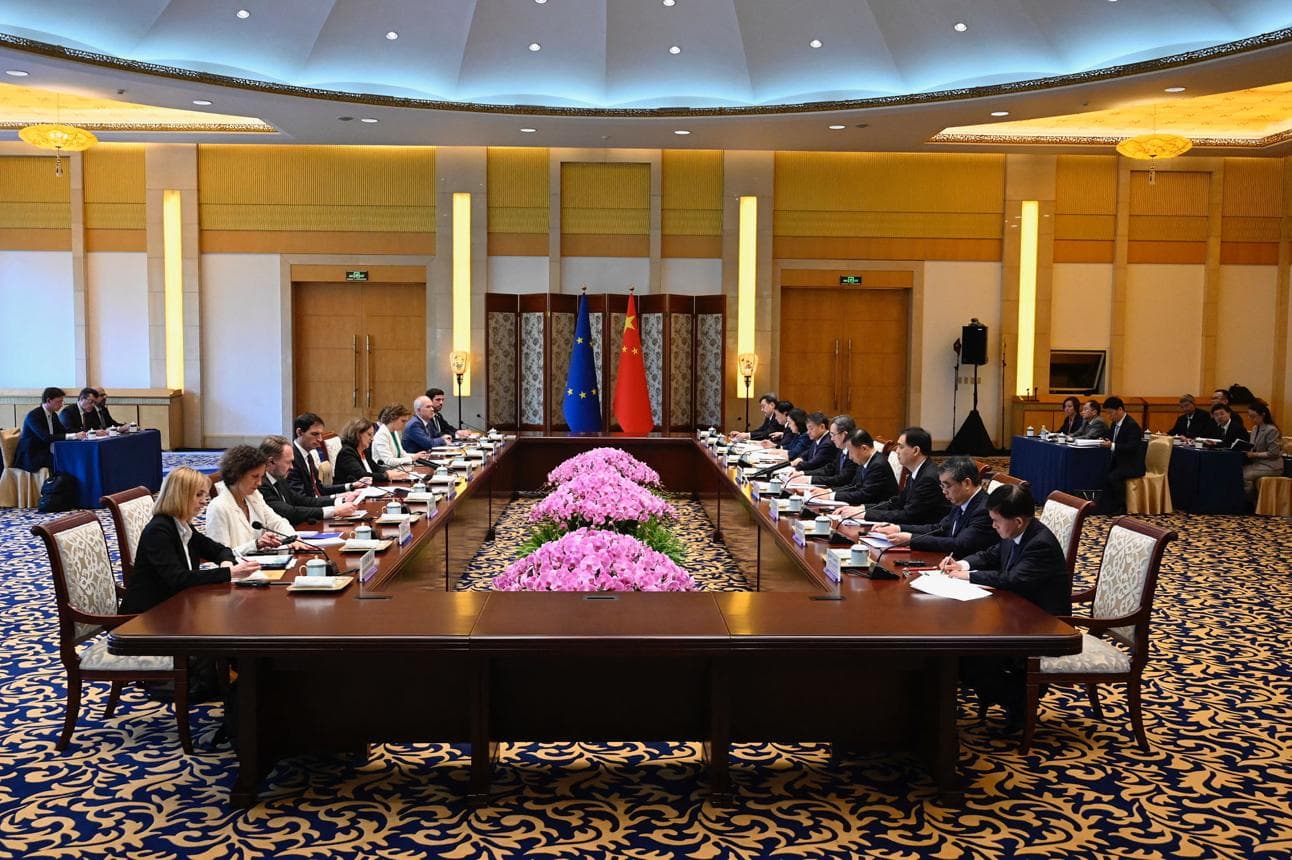
Brussels: The European Union and Japan have moved to deepen their security partnership at a high-level dialogue held in the Belgian capital this month, with both sides signalling that the strategic logic binding them is now too pressing to be left to incremental diplomacy. The talks, building on the EU-Japan Security and Defence Partnership concluded in November 2024 and the leaders’ summit held in Tokyo last July, produced concrete progress on supply chain resilience, satellite cooperation and the formal architecture for sharing classified information.

For Brussels, the partnership has become a load-bearing element of the European Union’s Indo-Pacific posture. Japan is now the bloc’s most committed non-NATO partner in Asia, a status reinforced by Tokyo’s willingness to align with EU sanctions against Russia and to coordinate on export controls toward China. For Tokyo, the EU offers something Washington increasingly cannot: a predictable interlocutor on rules, standards and the multilateral institutions that underwrite Japanese commercial strategy.

The headline output of the dialogue is acceleration on the joint satellite constellation, a project that would provide both partners with secure connectivity independent of Starlink and Chinese alternatives. The constellation, expected to integrate with the EU’s IRIS-squared programme, addresses a vulnerability both governments quietly worry about — reliance on a single American provider whose terms of service can shift with each new administration. Negotiations on a Security of Information Agreement have advanced sufficiently that officials expect signature before the end of the year.

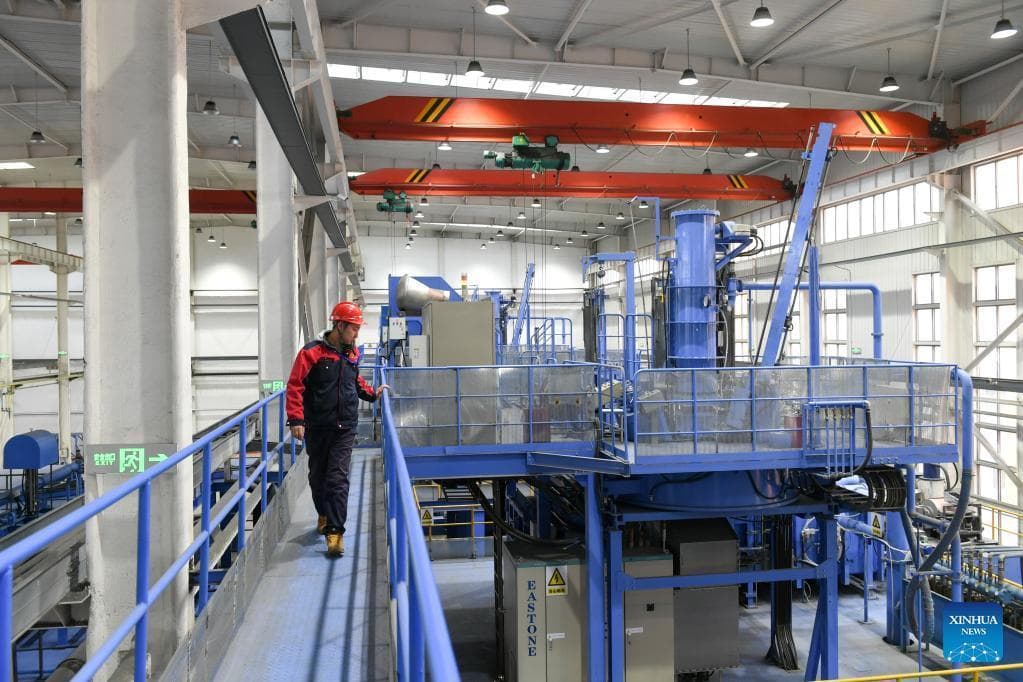
Supply chain diversification, the more politically delicate strand, has also moved forward. The two sides expressed shared concern over Beijing’s expanding use of state-backed industrial controls and discretionary export licensing, particularly for rare earths and gallium. Working groups established under the partnership’s economic security pillar are mapping critical dependencies and identifying joint procurement opportunities in semiconductor materials, battery chemistry and pharmaceutical precursors. The objective is not autarky, officials stress, but reducing the leverage that any single supplier can exert during a crisis.

Defence-industrial cooperation has proven more complex. Japan’s revised Three Principles on Defense Equipment Transfer, eased in 2023 and again in 2024, in theory permit broader collaboration with European firms, but practical hurdles remain considerable. The EU-Japan Defence Industry Dialogue, launched as a permanent forum at the Tokyo summit, is focusing initial work on dual-use technologies, with hypersonic detection, quantum sensing and unmanned maritime systems identified as early priorities. European officials acknowledge that integrating Japanese platforms into NATO-aligned procurement processes will require years rather than months.

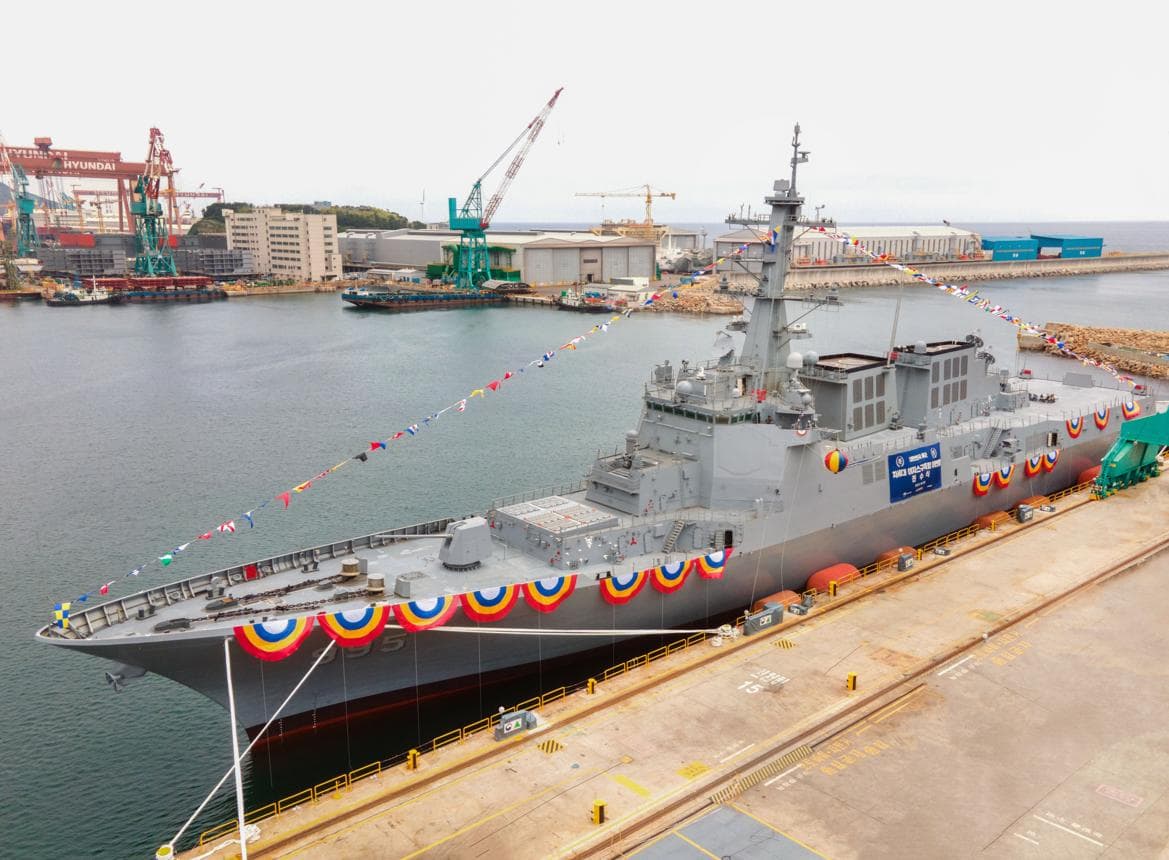
The Indo-Pacific maritime dimension is perhaps where alignment is most visible. EU naval deployments under the Coordinated Maritime Presence in the Indo-Pacific now include port calls and joint exercises with the Japan Maritime Self-Defense Force. Both sides have stepped up exchanges on grey-zone tactics observed in the South China Sea, the East China Sea and around the Taiwan Strait, even as European capitals remain careful not to be drawn into operational commitments they cannot sustain.

Underlying the entire architecture is a shared anxiety about Washington. Officials on both sides are circumspect, but the unspoken premise of the partnership is that the rules-based order they spent two decades defending may now require active maintenance by middle powers rather than by its original American architect. Japan and the EU are, in that sense, hedging in the same direction. Whether their combined weight will prove sufficient to shape outcomes in the Indo-Pacific, or merely to slow the erosion of the existing order, is a question neither government is yet willing to answer in public.