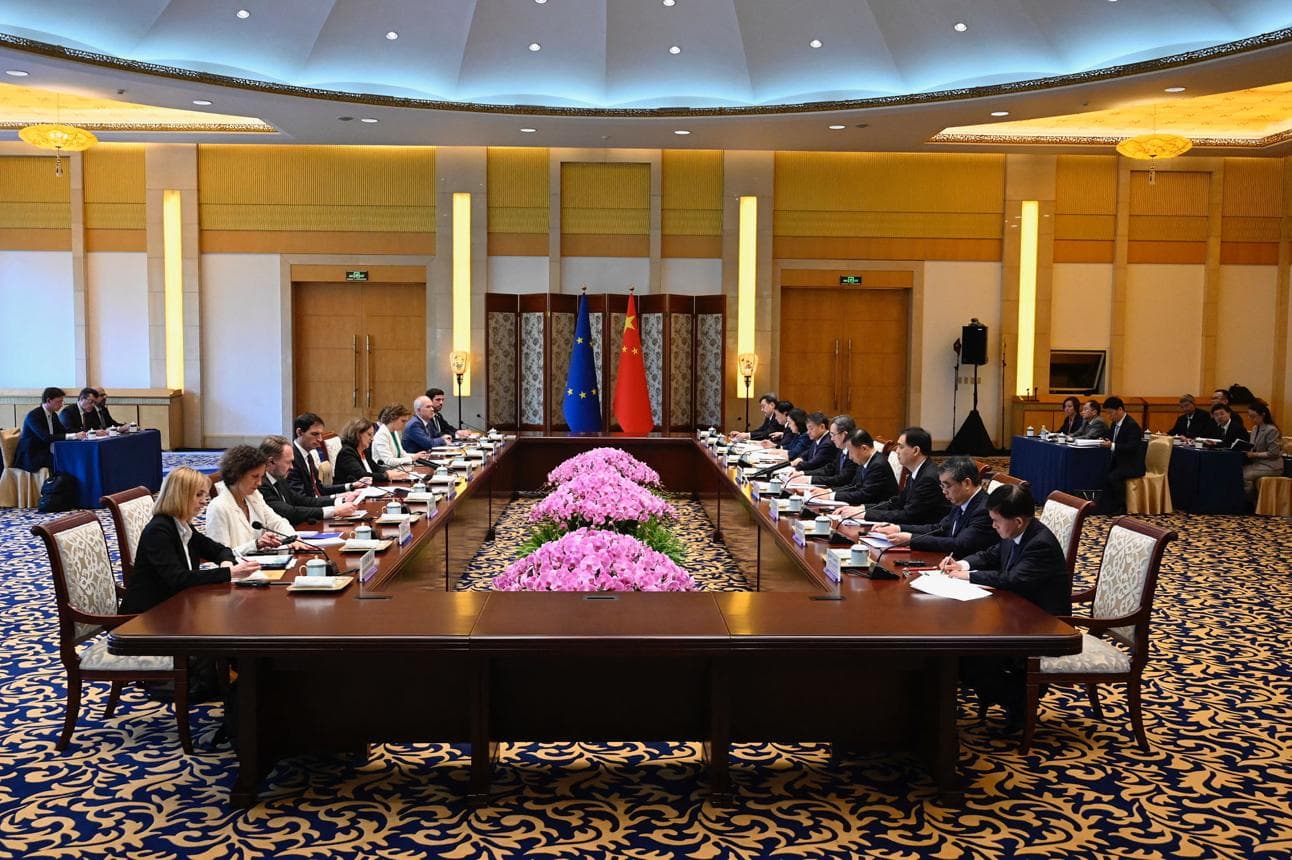
Brussels: The European Commission has settled on a word for its trade relationship with China, and the word is unsustainable. A deficit that has swelled to roughly 360 billion euros, the largest imbalance the bloc runs with any partner, is no longer treated as an accounting quirk to be managed quietly. Ahead of a June summit, Brussels has chosen to name the problem plainly, which in diplomacy is usually the prelude to action rather than the substitute for it.
The hard edge is already visible. Countervailing duties of between 17 and 35 percent now sit on Chinese-made electric vehicles, the product of investigations that concluded Beijing’s subsidies were distorting the European market. Around those tariffs the Commission is assembling a wider toolkit, namely tighter screening of Chinese investment in critical infrastructure and procurement rules that would keep Chinese firms out of sensitive public contracts. The framing remains de-risking rather than decoupling, a deliberate insistence that Europe wants to reduce exposure, not sever the relationship. But the instruments are sharper than the vocabulary suggests.
The difficulty is that naming a problem is easier than agreeing on a cure. Europe’s China policy is pulled between member states with very different exposures. Germany’s carmakers fear retaliation against their large China sales, southern economies court Chinese investment they cannot easily replace, and the Baltic and Nordic states read the relationship through a security lens sharpened by China’s tacit support for Russia. The Commission can label the deficit unsustainable, but it cannot by itself supply the political unity needed to do much about it, and Beijing knows precisely where the fault lines run.
China’s own strategy compounds the bind. Previous summits produced communiques thick with talk of balanced trade and thin on follow-through, and European negotiators enter this one demanding measurable commitments, on market access for European financial and pharmaceutical firms above all. The risk is another round of warm language and frozen substance, a ritual both sides perform while the underlying imbalance grows. Officials describe the current mood as a do no harm phase, an attempt to keep the relationship stable while a longer strategy is worked out, which is candid about its own modest ambitions.
Looming over everything is Washington. A more transactional and unpredictable United States has pushed Europe and China alike to keep channels open, each wary of being isolated if the other strikes a separate bargain with the Americans. That shared anxiety lends the June summit an odd quality, two parties that distrust each other talking partly because they distrust a third even more.
The deeper challenge is coherence. Critics, including economists who study the relationship closely, argue that Europe still lacks a genuine China strategy, possessing instruments without a unifying purpose. Tariffs, screening and procurement rules are tactics, whereas a strategy would say what kind of relationship Europe wants in a decade and accept the costs of getting there. Until that conversation happens among the member states rather than only inside the Commission, Brussels will keep reaching for tools while the imbalance it has finally dared to call unsustainable goes on quietly sustaining itself.