August 9, 2026
LATEST
New EU Gas Market Rules Take Effect With Consumer SafeguardsDeforestation Regulation Holds Its December Deadline Despite CutsDigital Omnibus Delays Europe’s High-Risk AI Deadline to 2027Europe’s Schools Confront a Widening Basic Skills GapRule of Law Report Finds Progress but Trust Still LagsIRIS2 Gains 66 Satellites as Brussels Signs the Rollout DealNature Restoration Plans Come Due as Member States Race a DeadlineECB Rates Hold at 2.25 Percent as Frankfurt Waits on the DataEU Budget Talks Turn to Cohesion as Ireland Takes OverWildfire Response Stretches Europe’s Emergency Fleet ThinCan Europe’s Quantum Plan Match Its Big Ambitions?Armenia Edges West as Moscow’s Grip Slips AwayEurope Inherits the World’s Aid Bill It Cannot Fully PayAir Passenger Rights Get Their First Overhaul in Two DecadesErasmus Opens a 5 Billion Euro Round for Skills and MobilityCeuta Crisis Pushes the EU Toward Faster Migrant ReturnsBulky Parcels Face a Packaging Crackdown From August 12Can Europe Build Its Drone Wall Before 2030 Arrives?Indonesia’s Trade Deal With Europe Nears Its Final SignatureEurope Leans on Beijing to Keep Climate Talks Alive Before AntalyaNew EU Gas Market Rules Take Effect With Consumer SafeguardsDeforestation Regulation Holds Its December Deadline Despite CutsDigital Omnibus Delays Europe’s High-Risk AI Deadline to 2027Europe’s Schools Confront a Widening Basic Skills GapRule of Law Report Finds Progress but Trust Still LagsIRIS2 Gains 66 Satellites as Brussels Signs the Rollout DealNature Restoration Plans Come Due as Member States Race a DeadlineECB Rates Hold at 2.25 Percent as Frankfurt Waits on the DataEU Budget Talks Turn to Cohesion as Ireland Takes OverWildfire Response Stretches Europe’s Emergency Fleet ThinCan Europe’s Quantum Plan Match Its Big Ambitions?Armenia Edges West as Moscow’s Grip Slips AwayEurope Inherits the World’s Aid Bill It Cannot Fully PayAir Passenger Rights Get Their First Overhaul in Two DecadesErasmus Opens a 5 Billion Euro Round for Skills and MobilityCeuta Crisis Pushes the EU Toward Faster Migrant ReturnsBulky Parcels Face a Packaging Crackdown From August 12Can Europe Build Its Drone Wall Before 2030 Arrives?Indonesia’s Trade Deal With Europe Nears Its Final SignatureEurope Leans on Beijing to Keep Climate Talks Alive Before Antalya
August 9, 2026
LATEST
New EU Gas Market Rules Take Effect With Consumer SafeguardsDeforestation Regulation Holds Its December Deadline Despite CutsDigital Omnibus Delays Europe’s High-Risk AI Deadline to 2027Europe’s Schools Confront a Widening Basic Skills GapRule of Law Report Finds Progress but Trust Still LagsIRIS2 Gains 66 Satellites as Brussels Signs the Rollout DealNature Restoration Plans Come Due as Member States Race a DeadlineECB Rates Hold at 2.25 Percent as Frankfurt Waits on the DataEU Budget Talks Turn to Cohesion as Ireland Takes OverWildfire Response Stretches Europe’s Emergency Fleet ThinCan Europe’s Quantum Plan Match Its Big Ambitions?Armenia Edges West as Moscow’s Grip Slips AwayEurope Inherits the World’s Aid Bill It Cannot Fully PayAir Passenger Rights Get Their First Overhaul in Two DecadesErasmus Opens a 5 Billion Euro Round for Skills and MobilityCeuta Crisis Pushes the EU Toward Faster Migrant ReturnsBulky Parcels Face a Packaging Crackdown From August 12Can Europe Build Its Drone Wall Before 2030 Arrives?Indonesia’s Trade Deal With Europe Nears Its Final SignatureEurope Leans on Beijing to Keep Climate Talks Alive Before AntalyaNew EU Gas Market Rules Take Effect With Consumer SafeguardsDeforestation Regulation Holds Its December Deadline Despite CutsDigital Omnibus Delays Europe’s High-Risk AI Deadline to 2027Europe’s Schools Confront a Widening Basic Skills GapRule of Law Report Finds Progress but Trust Still LagsIRIS2 Gains 66 Satellites as Brussels Signs the Rollout DealNature Restoration Plans Come Due as Member States Race a DeadlineECB Rates Hold at 2.25 Percent as Frankfurt Waits on the DataEU Budget Talks Turn to Cohesion as Ireland Takes OverWildfire Response Stretches Europe’s Emergency Fleet ThinCan Europe’s Quantum Plan Match Its Big Ambitions?Armenia Edges West as Moscow’s Grip Slips AwayEurope Inherits the World’s Aid Bill It Cannot Fully PayAir Passenger Rights Get Their First Overhaul in Two DecadesErasmus Opens a 5 Billion Euro Round for Skills and MobilityCeuta Crisis Pushes the EU Toward Faster Migrant ReturnsBulky Parcels Face a Packaging Crackdown From August 12Can Europe Build Its Drone Wall Before 2030 Arrives?Indonesia’s Trade Deal With Europe Nears Its Final SignatureEurope Leans on Beijing to Keep Climate Talks Alive Before Antalya

Cairo Tells Brussels the Migration Envelope Is Already Too Thin

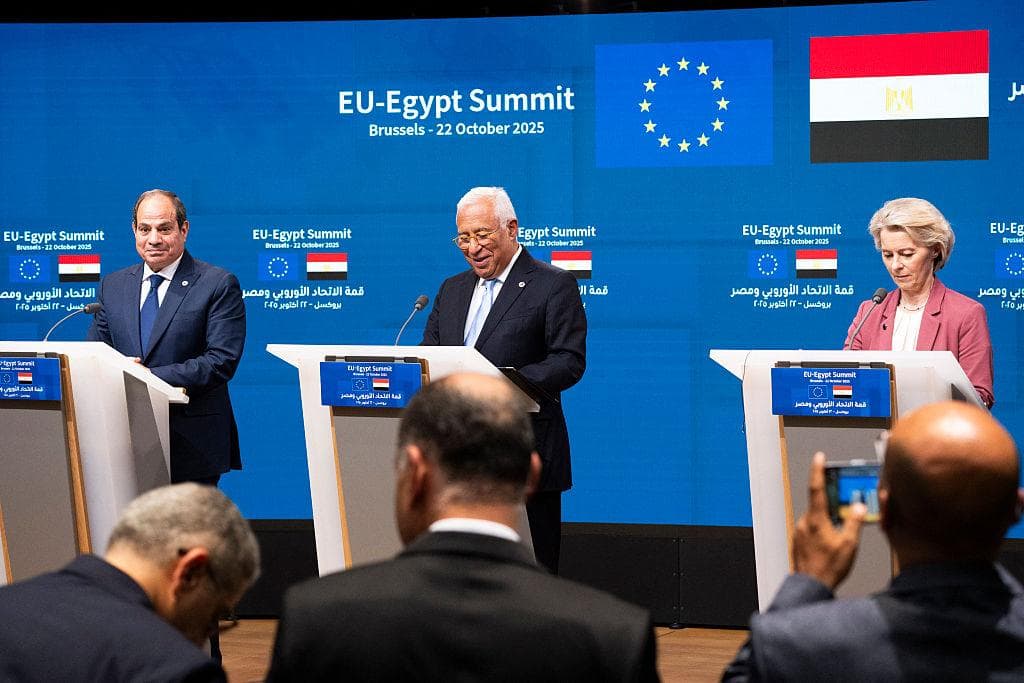
Cairo: The Egyptian government is pressing Brussels to revisit the financial architecture of the 2024 strategic and comprehensive partnership, arguing that the 200 million euro migration envelope sitting inside the wider 7.4 billion package no longer matches the scale of arrivals from Sudan, Syria, and the wider neighbourhood. Foreign Minister Badr Abdelatty told visiting European delegations this week that Egypt now hosts what officials describe as more than ten million migrants and guests, absorbed into urban areas rather than camps, with no separate donor line matching what national budgets are carrying. The message, delivered as the second one billion euro tranche of the package was disbursed in January, is that Cairo will continue to expect upward revisions before the partnership reaches its 2027 horizon.

For the Commission, the discomfort is structural. The Egypt deal is the largest of the migration linked partnerships built around the southern Mediterranean, with Tunis and Tripoli operating on smaller envelopes and Rabat on an entirely different cooperation logic. Cairo’s pricing of its hosting role implicitly resets the floor for every renegotiation that follows. If 200 million euros covers a country with ten million displaced residents, every neighbour with a smaller caseload will read the same per capita math and demand parity. The Commission’s external partnerships service has so far resisted publishing per migrant figures for exactly that reason, preferring to talk about institutional cooperation, border equipment, and asylum capacity rather than fungible budget support.

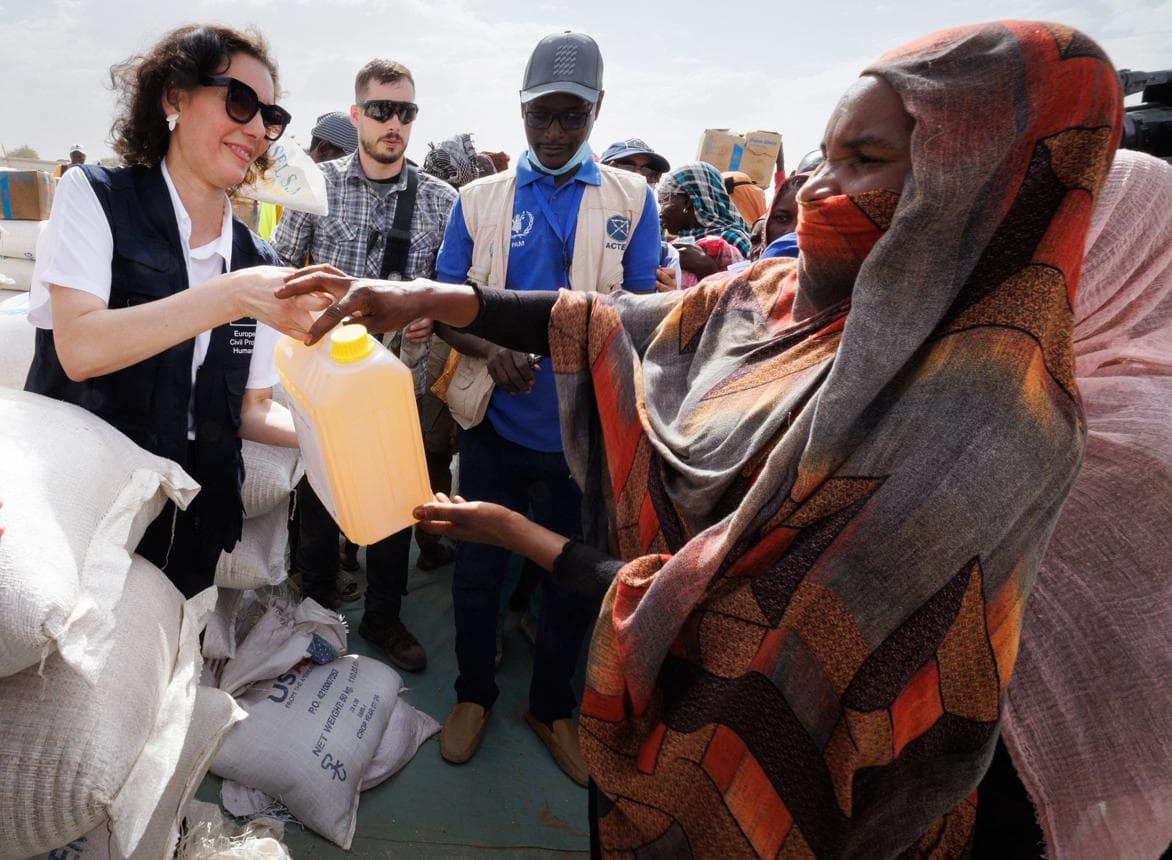
The political backdrop strengthens Cairo’s hand. Annual urban inflation stood at 14.9 percent in April after 15.2 percent in March, rents in Greater Cairo are estimated to have climbed between ten and eighteen percent year on year, and the Sudanese caseload alone now exceeds what UNHCR can credibly register inside Egyptian territory. The Egyptian presidency has reinforced the line in bilateral channels, with Cypriot President Nikos Christodoulides telling President el-Sisi earlier in the year that responsibility for refugee hosting should be shared more visibly across the Union. Nicosia, Athens, and Rome are the loudest member states behind that argument, since their own arrival pressures from the eastern Mediterranean route fall when Egypt holds the line.

The political price of the deal is also rising inside the European Parliament. MEPs from the Renew, Socialist, and Green groups have repeatedly questioned the absence of human rights conditionality in the disbursement schedule, pointing to detention conditions, the treatment of Sudanese asylum seekers, and the lack of independent monitoring of how migration tagged funds are spent inside Egyptian institutions. The Commission’s response, that the macro financial assistance loan and the migration related grant lines operate under different legal bases, has not satisfied the rapporteurs preparing the implementation review due later in 2026. Any top up requested by Cairo will move through that review and risk being conditioned on benchmarks the Egyptian side has so far refused to accept.

There is also a strategic dimension that goes beyond migration arithmetic. Egypt’s stabilising role in Gaza reconstruction discussions, its handling of Red Sea security pressures, and its energy interconnector projects toward Cyprus and Greece have all become tightly woven into Brussels’ calculus on the southern flank. Officials inside the European External Action Service argue that the migration envelope cannot be ringfenced from those files when Cairo controls so many adjacent levers. That logic favours quietly enlarging the envelope rather than publicly renegotiating it. Whether the Commission can move that money without reopening the political wound around conditionality is the question that will define the next six months of the relationship.